Ragweed season is approaching its peak in Philly, and the rains likely gave it a boost
Ragweed pollen counts are likely to peak next week.
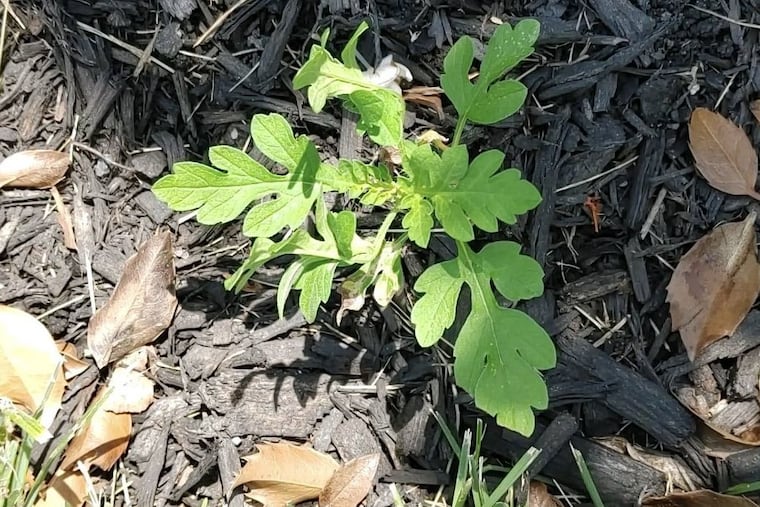
The recent rain rally has been a boon to the Philadelphia region’s plant life, and, unfortunately for the legions of the allergic, the beneficiaries include the homely and ubiquitous tormentor commonly known as ragweed.
It belongs to the plant family Ambrosia, from the Latin for “food of the gods.” One can only assume the gods did not have allergies.
Estimates vary, and it’s not as though it is a census category, but in all likelihood several hundred thousand people in the region annually endure the slings and arrows of ragweed pollen, notorious for setting off episodes of sneezing and attendant dopiness.
It also can induce coughing, wheezing, and chest discomforts, particularly among asthmatics, allergy experts warn.
The season — the third in the equinox-to-equinox pollen trilogy, successor to the trees and grasses — typically begins modestly in early August, then intensifies late in the month and continues well into September. And this year sufferers may pay a price for the episodic drought-easing rains that have been watering the plants in the Mid-Atlantic region since mid-June.
“Ragweed thrives on the nitrates in rainwater,” said Payel Gupta, an allergy, asthma, and immunology specialist based in New York City. The rains’ timing has coincided with “ragweed’s late-summer growth window,” she added, and the result likely will be “denser plants and higher pollen output.”
As for precisely when the pollen will peak: “Every year is different,” said Donald Dvorin, who for more than 30 years was the Philly region’s official National Allergy Bureau pollen counter, “but the first week of September is most common.”
In addition, with the planet’s temperatures increasing and first frosts taking their good old time, the seasons appear to be lasting a bit longer.
The prime pollen flight hours are from 5 to 10 a.m.; effects can linger, however, as pollen can stick to clothing and find its way indoors via unwitting humans and pets.
What is ragweed?
Ragweed is a tooth-leaved plant that can grow in almost any environment, native to North America but spreading worldwide.
For the allergenic, Dvorin said, the heavy hitters are the “short” ragweed (Ambrosia artemisiifolia), and the “giant” (Ambrosia trifida).
A typical pollen grain is a mere 1/25,000th of an inch in diameter, but a single plant can generate a billion of them.
While the plants live for only about a year, do they ever reproduce! Pollen has been found as far as 400 miles from the source, according to the Allergy and Asthma Network.
New York City spent millions after World War II to eradicate ragweed in the city, a war it lost resoundingly. For one thing, the warriors discovered that about half the ragweed pollen in the five boroughs was commuting from elsewhere.
The torments of ragweed
Most people inhale ragweed pollen without incident, but for the allergic, the body interprets the pollen as an invader, and sneezes and other reactions are part of the immune response.
For the sufferers, each season can be a little bit different, said Gupta, assistant clinical professor at the State University of New York and Mount Sinai Medical Center in Brooklyn.
Severity would depend on “how many consecutive high-count days there are,” Gupta said. Exacerbating factors could be “viral infections or air pollution compounding irritation,” she said.
In addition, some patients may be subject to “priming,” a particularly nasty season that might make some more susceptible to pollen discomforts the following year.
And ragweed is nothing to just sneeze at, according to the International Ragweed Society, which is based in Switzerland and aims to promote ragweed research.
In addition to a “socioeconomic burden due to rising healthcare costs” and “productivity losses,” the society states, the weed’s pervasiveness can endanger certain crops and natural habitats.
How much ragweed is in the air?
Unfortunately, that has become harder to know. Dvorin, an allergist who had practiced in Center City and Mount Laurel, stopped counting pollen last year, and that was symptomatic of a trend. The network has been shrinking.
Traditionally, allergists such as Dvorin supplied daily counts on a voluntary basis as part of the National Allergy Bureau network. However, the analyses require expertise and time that allergists could devote to revenue-paying patients.
Fewer doctors evidently have been willing to participate.
The nearest allergy bureau counter who posts frequent counts is in the Washington area.
The Asthma Center in Center City posts daily counts that are AI-generated, and while that technology shows tremendous potential, the allergy bureau has not yet approved any of the machines for official use, said Pamela E. Gabrish, the bureau’s program director.
“There has actually been more backlash against using automated devices than ever,” she said.
Advice for ragweed sufferers
Day-to-day pollen volumes are difficult to predict, but expect the peak to arrive next week.
It is a good bet that counts will be high on a warm, dry, and breezy day.
This will be evident in the online pollen forecasts, but be aware that pollen is commuting on the chaotic whims of the atmosphere.
In a study of five major cities, published in 2024, allergy experts concluded the accuracy of online pollen forecasts was “low.”
Along with medications, here are a few suggestions from allergy professionals:
Limit time outdoors on dry, windy days.
When outside, wear a dust mask.
Inside, keep the windows closed.
Shower before going to bed.
And hope for rain, within limits.