Bill would give $60M in state aid to N.J. farmers who lost crops in April freeze
Farmers have called for direct financial aid, with many saying the freeze was the most catastrophic of their lifetimes.
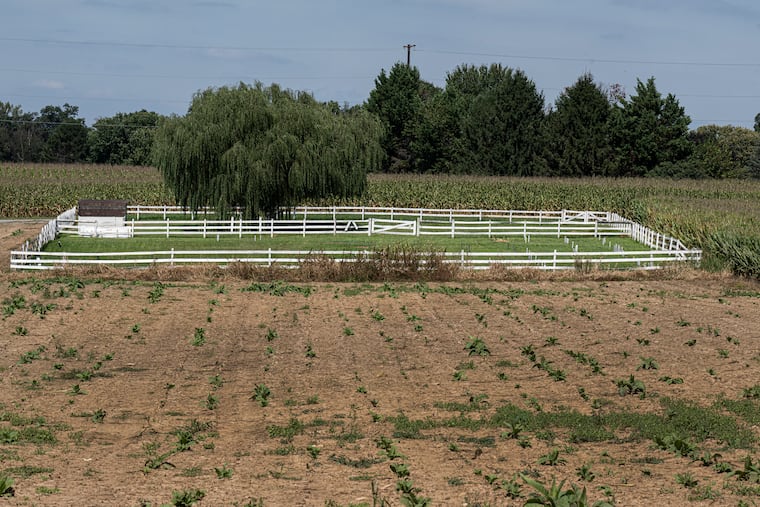
New Jersey farmers whose fruit crops were damaged or destroyed by an unexpected four-day freeze last spring could apply for grants to help them recover their losses under new legislation that would earmark $60 million in state funding for such relief.
The late-April cold snap zapped peach, apple, pear, cherry, and other early-blooming trees, as well as shrub, vine, and ground crops like blueberries, strawberries, and grapes at farms both statewide and throughout the eastern U.S. from Virginia to Michigan. Many growers lost 30% or more of their fruit crops, with some reporting total losses. Officials estimated damages in New Jersey would top $300 million.
Assemblywoman Dawn Fantasia (R., Sussex) applauded the state and federal response, with both Gov. Mikie Sherrill (D) and the U.S. Department of Agriculture making statewide disaster declarations that cleared the way for farmers to apply for emergency loans and other relief assistance.
But in the weeks afterward, farmers called for direct financial aid, with many saying the freeze was the most catastrophic of their lifetimes. So Fantasia recently introduced a bill that would allocate $60 million for grants impacted farmers could apply for, with priority given to those hardest hit. The bill would require the state agriculture secretary to report within a year how the money was spent and advise if more aid is needed.
Seven Republicans signed on to co-sponsor the bill. Sen. Parker Space (R., Sussex), who’s also a farmer by trade, will sponsor the bill in the upper chamber, Fantasia said.
Fantasia said $60 million in aid for farmers is far from the controversial budget add-ons that annually bloat the state budget and make GOP legislators howl in protest.
This year, state budget appropriations critics deride as “pork” included $500,000 for pickleball courts and millions for other “really beautiful things that are absolutely wants and not needs,” Fantasia said. Farm relief “is not a want. It’s a need,” she added.
Farming has a sprawling footprint in New Jersey, she said. Almost 10,000 farms generated nearly $1.5 billion in sales in 2022, federal data shows. They employ about 25,000 farmworkers, the bill says.
“We can sure as hell take $60 million from the general fund and give it to an industry that spans the entire state and brings in over a billion dollars to the state of New Jersey,” Fantasia said. “We’re talking about people’s livelihoods and ability to keep jobs and stay in their homes.”
April’s freeze came as farmers already were struggling with rising labor, fertilizer, and fuel costs. Some smaller farms rely on a single season for their annual income, prompting industry observers to predict the freeze would force some growers to cut staff, sell off acreage, or quit farming altogether.
For those reasons, Fantasia expects legislators from both sides of the aisle will support the bill.
“There’s no question here: Severe losses happened. No product to sell. Devastating to the economy. Devastating to the jobs in New Jersey. I think it’s a no-brainer,” she said.
Hunterdon County farmer John Melick lost much of his peach, apple, cherry, plum, and pear crops to the April freeze.
Crop insurance has helped him recover, he said. But he welcomes any assistance the state wants to offer the fruit-growing industry, noting it would be most beneficial for smaller farmers, those without diversified crops, and the few who couldn’t afford or thought they didn’t need crop insurance.
“It’s not going to put me out of business if I don’t get it, but I won’t turn it away either,” Melick said of state aid.
He’d be more excited for Trenton’s intervention if legislators could control the weather, he joked, because the recent rainy stretch has kept customers away.
“I’m hoping for sunny weekends for October, so that the 30% crop that I do have I can sell to pick-your-own customers,” Melick said. “When it rains every Saturday and Sunday, they’re not coming out.”
This story originally appeared on New Jersey Monitor.