Free speech, hypocrisy, and the real ‘Marxist’ problem at our universities
Remember when right-wingers denounced liberal “snowflakes” on campus? Now everyone is a snowflake — if you don’t like someone’s opinion, just say it threatens your safety.
Here’s what you need to know about free speech on America’s college campuses: We’re all Marxists now.
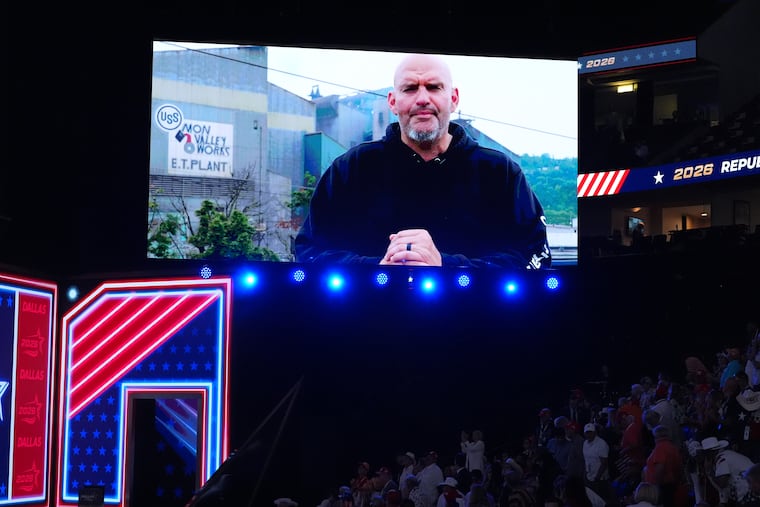
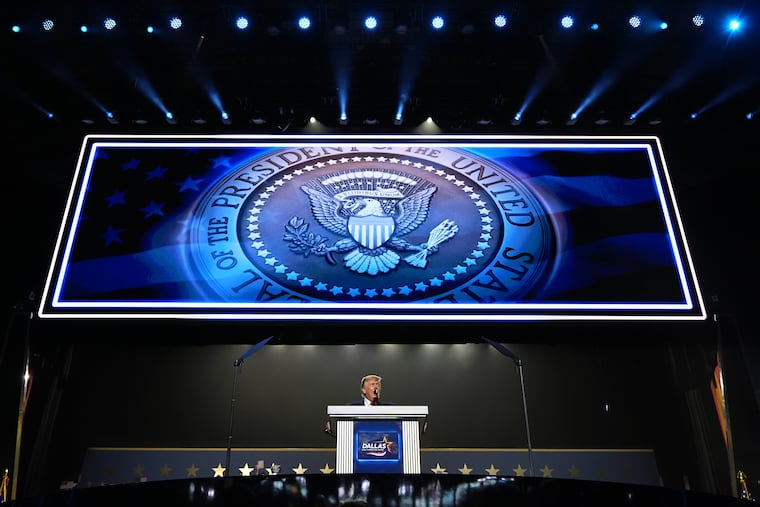
No, we’re not those “crazy communists” whom President Donald Trump denounced at the Republican midterm convention in Dallas last week. I teach at the University of Pennsylvania, where nearly two-thirds of undergraduates enter finance, technology, or consulting. If I’m trying to convert them to Karl Marx, I’m doing a very poor job of it.
I’m talking about the comedian Groucho Marx, who authored the world’s funniest testament to hypocrisy. “These are my principles,” Groucho quipped, “and if you don’t like them … well, I have others.”
That’s the big takeaway from the annual report on campus free speech by the Philadelphia-based Foundation for Individual Rights and Expression (FIRE), which came out on the same day as Trump’s convention diatribe. We’re not communists or anarchists or any of the other slurs he lobbed at us. We’re hypocrites. All of us. On campus, and off of it.
Witness the response to the murder of conservative activist Charlie Kirk last fall. After complaining for years about “cancel culture” in American higher education, GOP politicians led the drive to fire or suspend professors and students who said the wrong thing about Kirk.
Meanwhile, left-leaning academics who had supported speech codes prohibiting “violent” speech insisted that comments praising the violence against Kirk must be protected. They were correct about that: Nobody should have been penalized for what they said about him. But there was no acknowledgment — none — that we had erred in trying to censor others.
Instead, as the FIRE report demonstrates, the censorship continued. Dozens of schools blocked conservative students from establishing chapters of Turning Point USA, the organization Kirk founded. And where chapters already existed, we tried to shut them down.
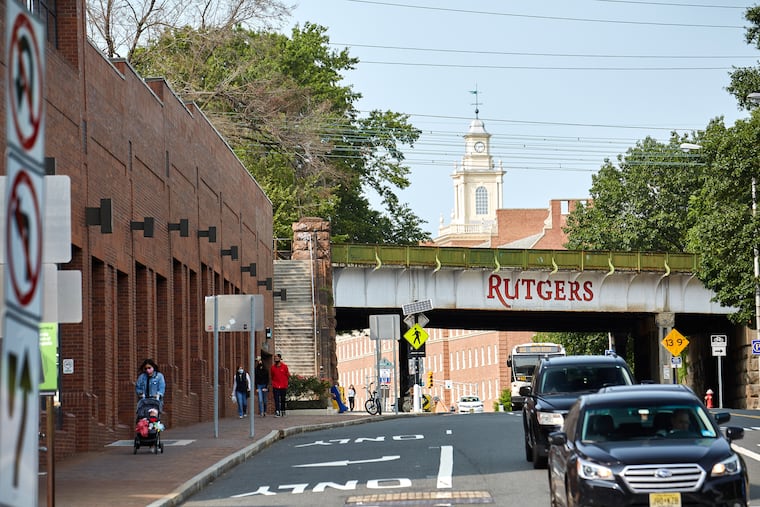
At Rutgers, for example, more than 7,000 people signed a petition asking the university to disband its TPUSA chapter because it made people feel unsafe. “It is imperative that we take decisive action to restore security and the feeling on inclusivity to the campus,” the petition declared.
» READ MORE: How the Haverford antisemitism settlement harms free speech | Jonathan Zimmerman
Meanwhile, the Rutgers TPUSA chapter issued its own petition calling on the university to fire a history professor because of his alleged ties to antifa. Why? You guessed it: People felt unsafe. “Having a prominent leader of the Antifa movement on campus is a threat to conservative students,” the petition claimed.
Remember when right-wingers denounced liberal “snowflakes” on campus? Now everyone is a snowflake, just like we’re all (Groucho) Marxists. If you don’t like someone’s opinion, just say it threatens your safety. It will work.
And it will make everyone afraid to speak, no matter their politics. At Penn, the FIRE report notes, over half of surveyed students said they have self-censored on campus at least once or twice a month. “In classrooms, it is difficult at times to express full opinions without causing someone to become upset,” one Penn student told FIRE.
What’s wrong with that? If I write a column and nobody becomes upset, it was a lousy column. To be clear, I never go out of my way to offend anyone. But I take it for granted that if I have something meaningful to say, some readers will be angered or annoyed by it.
On our campuses, by contrast, causing upset has become a dangerous thing. Best to keep your big mouth shut, lest you get on the wrong side of anyone.
So both pro-Israel and pro-Palestinian students bite their tongues. And so do conservatives and — especially — Trump voters, who often stay in the closet instead of revealing their true selves.
I taught for 20 years at New York University, which was dead last in FIRE’s free speech ranking in this year’s report. I have taught for 10 years at Penn, which moved up slightly — from 261st to 227th — but still received an “F” grade from FIRE.
On our campuses, causing upset has become a dangerous thing. Best to keep your big mouth shut, lest you get on the wrong side of anyone.
And I haven’t heard anyone at either institution acknowledge the report or pledge to do better. You would think the firing of professors for their comments about Kirk — or about gender fluidity, a frequent right-wing target — would make our heavily liberal professoriate rally around the principle of free speech.
But no. I’ve heard colleagues say Trump voters should keep quiet because they are racist and sexist and nobody wants to hear that. Other professors say scaredy-cat conservatives should just show some backbone instead of hiding in the shadows.
Please. Here’s the question we should pose to ourselves: If FIRE reported that any other sizable group of students — aside from political conservatives — felt too afraid to voice their views, how would we react? Would we see righteous protests across our campuses? Or would we tell those who were scared they should just suck it up?
“The secret of life is honesty and fair dealing,” Groucho Marx said. “If you can fake that, you’ve got it made.” We’ve got a lot of fake free speech warriors on our campuses right now. You either believe in it for everyone, or you don’t believe in it at all.
Jonathan Zimmerman teaches history and education at the University of Pennsylvania. He is the author of “Schooling Citizens: How Education Can Save Our Democracy,” which will be published in the spring by the American Philosophical Society Press.