The Philly Boycott Ride: A Jewish and Palestinian movement navigates a moment of tension
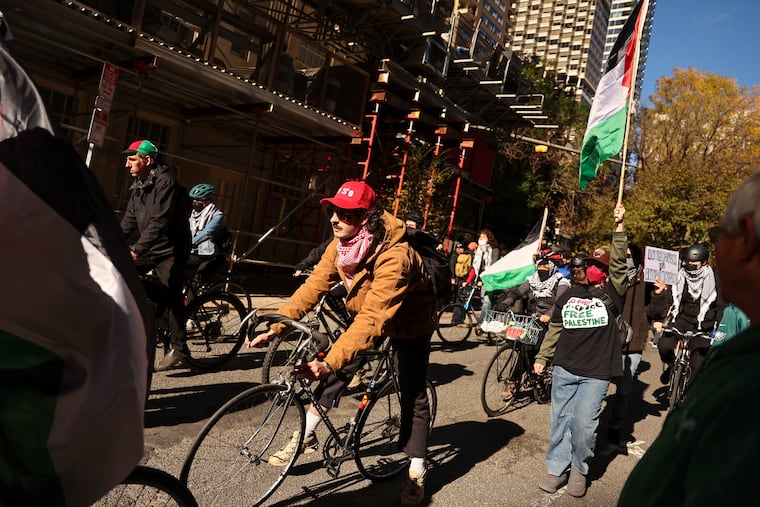
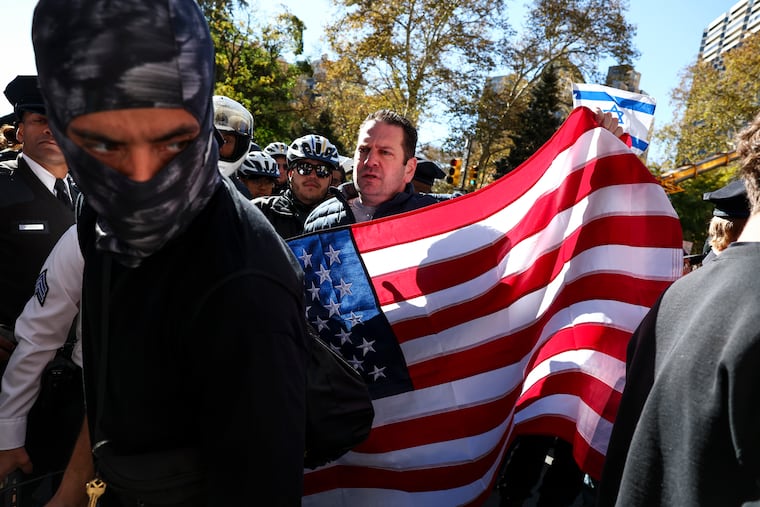
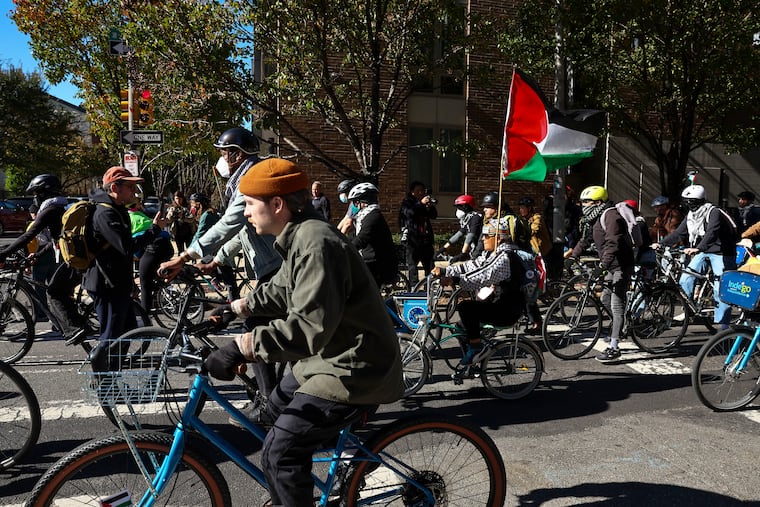
Palestinians were being killed and displaced while the movement that is supposed to center Palestinian freedom was divided over its response to a bicycle boycott ride.
Samah Elhajibrahim is a Palestinian American scholar and peace activist. She is a member of the Prayers for Peace Alliance and holds a doctorate in political science from the University of Pennsylvania. Her work specializes in political theory, citizenship, gender, statehood, statelessness, and colonization, with regional expertise in the Middle East.
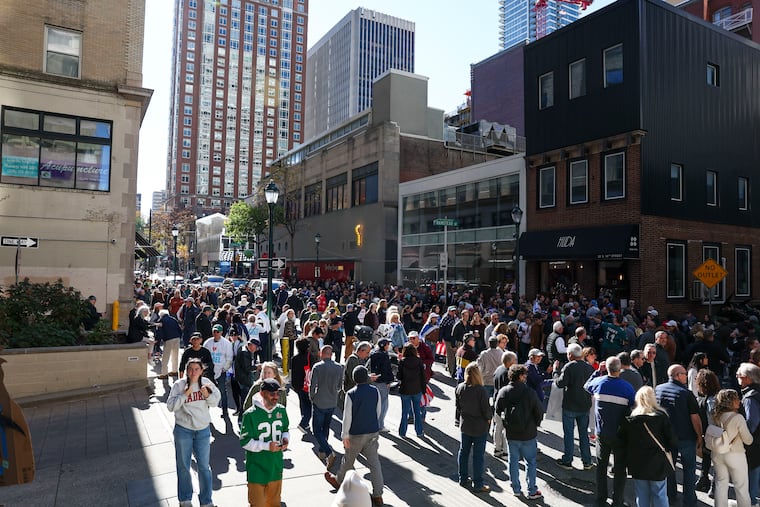
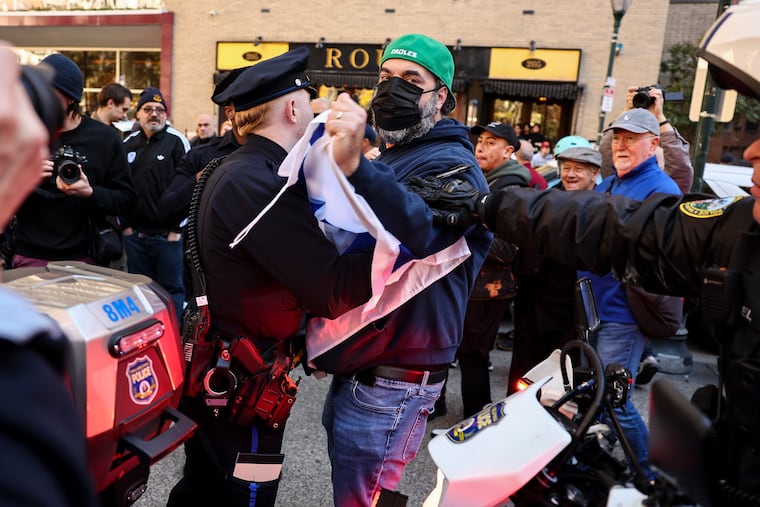
What took place this weekend in Philadelphia? The answer depends on whom you ask. As a member of a Palestinian-Jewish partnership, Prayers for Peace Alliance (PFPA), that believes in mutual solidarity and centers our work on the liberation of the Palestinian people — on ending occupation, genocide, and ethnic cleansing — the answer is clear: division and distraction.
Division within a movement that has worked for so long to cultivate trust and understanding. Distraction from the real and urgent issues. This week, six Palestinians were killed in Gaza by Israeli airstrikes, including two children and three women. In the West Bank, at least three Palestinians were killed in Jenin. Palestinians in Gaza were forced once again to evacuate flooded tents; 70,000 tents were flooded within the first 12 hours of a storm.
Palestinians were being killed and displaced while the movement that is supposed to center Palestinian freedom was divided over its response to a bicycle boycott ride.
It turns potential allies into bystanders and makes trust harder to rebuild.
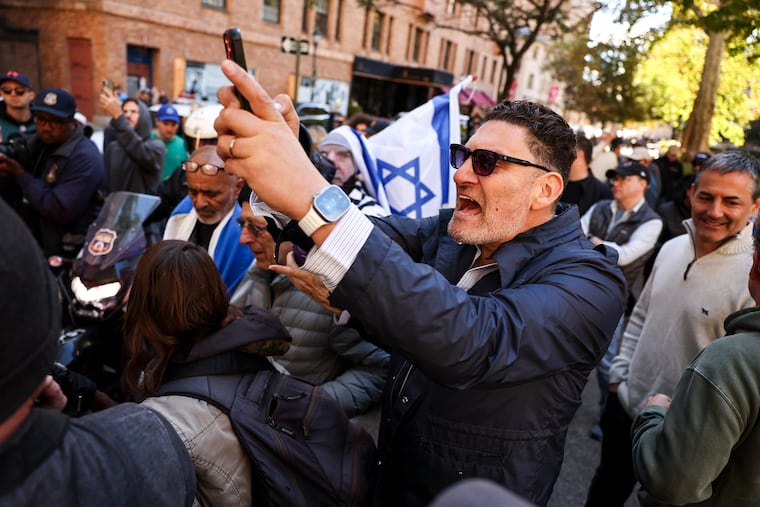
Some wholeheartedly embraced the ride, some were cautious, and others believed it was ill-conceived and crossed a line. Some endorsed it, some denounced it, and some criticized it. We fell into the trap. Rather than centering Palestinians in Palestine, the movement was distracted and divided.
This division is damaging. It drains energy from the urgent work, weakens the pressure we can bring to bear, and gives opponents openings to misrepresent us. It turns potential allies into bystanders and makes trust harder to rebuild.
PFPA is clear: A boycott is a legitimate nonviolent campaign to pressure governments. If governments and the international community had fulfilled their responsibility — sanctioning Israel and holding it accountable for genocide, ethnic cleansing, and its prolonged occupation of Palestine — people would not have to assemble flotillas to break a siege or run boycott campaigns.
The Boycott, Divestment and Sanctions (BDS) movement is strategic in nature. It does not boycott “every boycottable event,” instead opting to carefully select targets and how to intervene. This boycott ride, however, was not strategic. That is precisely why it produced division rather than clarity, and distraction rather than pressure.
We can acknowledge that this particular boycott, as carried out, was a misstep. Its rhetoric and messaging were problematic, and that allowed misinformation and confusion to fill the space. A tactic that is easily misunderstood, and that divides the people it is meant to unite, is not a tactic we can afford to treat as if it were beyond question.
Nonetheless, the outrage that this nonviolent boycott has generated — death threats, doxing, and people getting fired — is deeply disproportionate and troubling, especially when set against the absence of comparable urgency and moral clarity regarding the ongoing genocide in Gaza.
Some might argue that a local boycott is a local issue, while the genocide is a federal matter. This is not true.
Philadelphia is a sister city to Tel Aviv, a relationship formalized by City Council resolution and celebrated as a partnership of “business alliances.” Philadelphia’s institutions and investors have poured tens of millions of dollars into Israel bonds — $45 million at a single Real Estate Power Lunch in 2025 alone. The Pennsylvania Treasury has invested millions more in Israel bonds, funding the very economy that sustains the occupation.
This is not a distant, federal abstraction. This is Philadelphia money, Philadelphia institutions, and Philadelphia political will actively sustaining systems of oppression. The referendum to divest funds from Israel in Providence, R.I., shows that municipal boycotts can be a successful strategy. This success demonstrates the potential of grassroots pressure at the local level.
At PFPA, we believe our energy should also be directed at global corporations located in Philadelphia, like Lockheed Martin, Boeing, and Day & Zimmermann, which are directly aiding and enabling the genocide in Gaza.
We cannot afford to turn every disagreement into a rupture, or every tactic into a purity test.
This is not a call to silence legitimate debate about tactics. It is a call for discipline. We cannot afford to turn every disagreement into a rupture, or every tactic into a purity test. The movement must return to what matters: fighting oppression in Palestine, centering Palestinian voices, and targeting the institutions and corporations that make occupation, genocide, and displacement possible.
So let us get back to work. Eyes on Palestine. Hands on the real targets. Hearts open to one another. And discipline in the struggle against oppression wherever it lives — in Palestine, in Philadelphia, and across the United States.
About guest essays
Guest essays, or op-eds, are commentary pieces that present the opinion or perspective of the author. Many are submitted to us by Inquirer readers and writers with insight on the news, but we also solicit op-eds from authors on specific topics. For more information visit our guidelines.