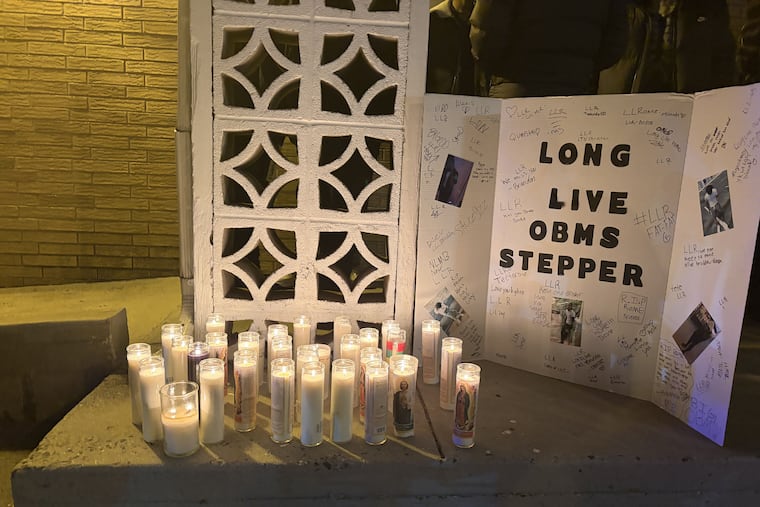
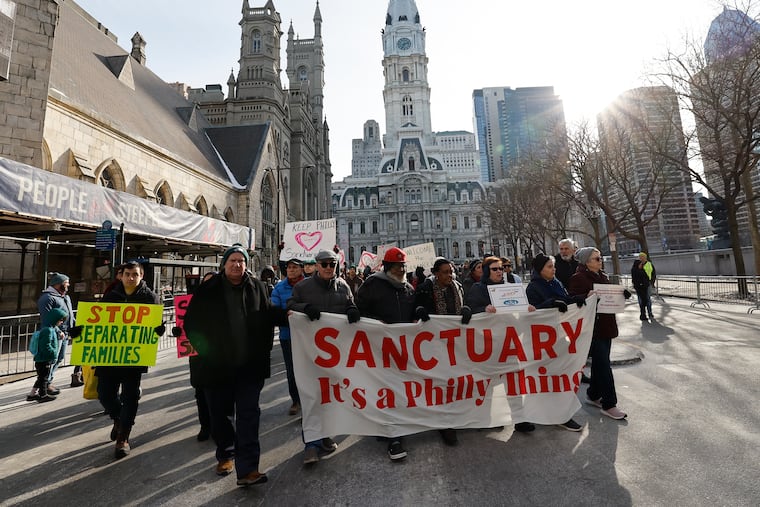
The midterm elections are over. The test of our right to assemble is not.
The government has the authority to enforce the law. Citizens have the right to challenge how that authority is used without being treated as enemies of the state, writes Alaine K. Arnott.

Alaine K. Arnott is the president and CEO of the National Liberty Museum in Philadelphia.
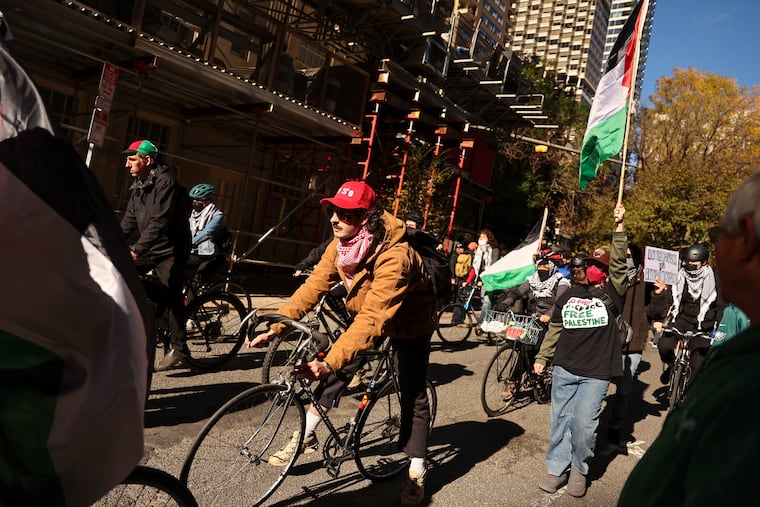
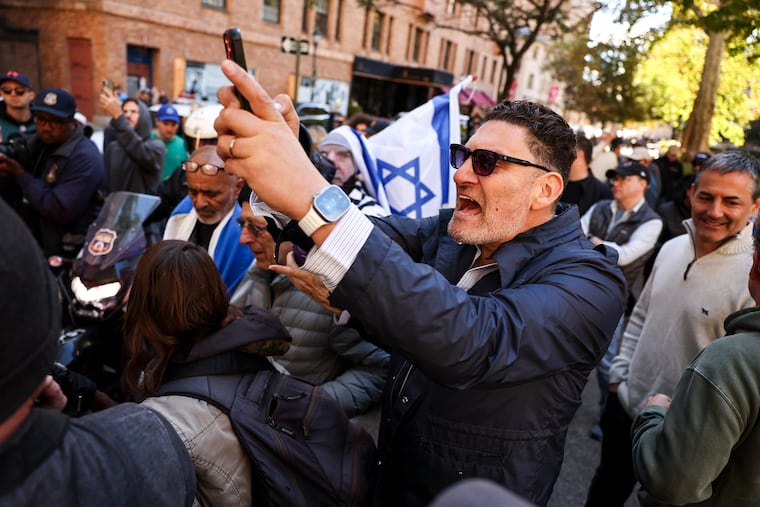
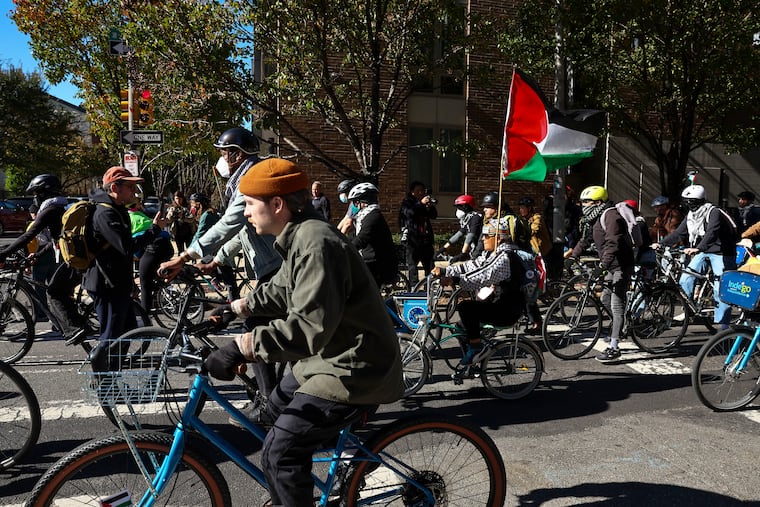
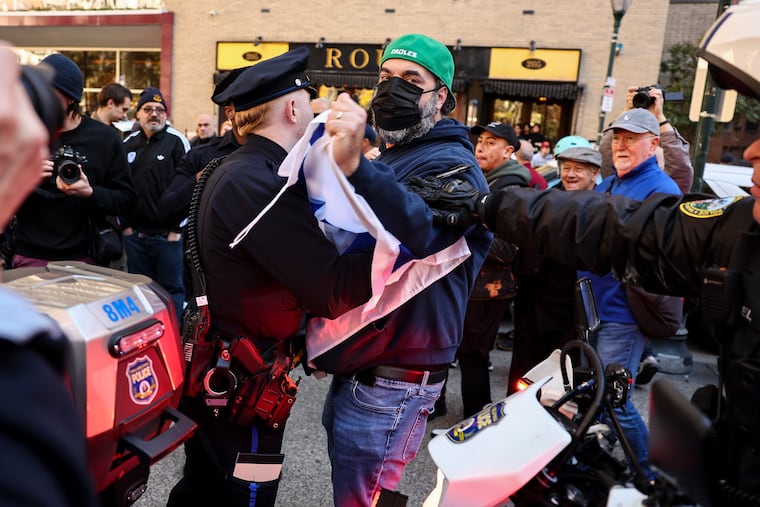
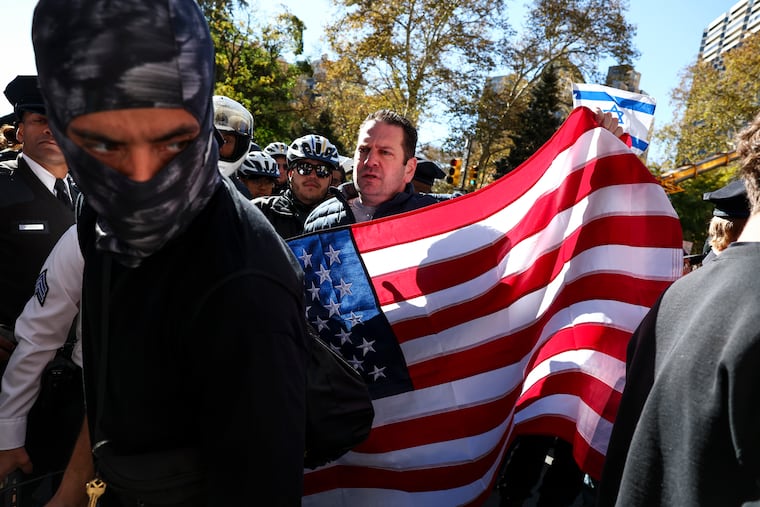
Last Sunday on Walnut Street, a woman held a sign above her head that read “HATE is not Brotherly LOVE.” A few dozen feet away, a man held one that read “Money loving Zionists.” Cyclists carrying Palestinian flags rode past both, while police officers on bicycles moved between the crowds. Each side may have seen the other as a threat. All of them were standing in and utilizing the same American constitutional system.
That system has just faced one of its regularly scheduled stress tests, and the strain is not yet over. Protest activity does not quiet down when the polls close; it often ratchets up. Immigration enforcement, reproductive rights, campus free-speech policies, the Israeli-Palestinian conflict, economic angst, and the election results themselves will continue to converge on our cities, sometimes at the same time.
As Americans, we should plan for a season of demonstrations, not be surprised by one. And at moments like this, civic leaders such as myself should not stay on the sidelines. We have a role to play in defending the right to assemble, and an equally important one in teaching people how to exercise that right safely, effectively, and legally, whatever their cause may be.
The government has the authority to enforce the law. Citizens have the right to challenge how that authority is used. Officers must be able to do their jobs without being threatened, and protesters must be able to object without being treated as enemies of the state. A functioning democracy holds all four ideas at once.
The First Amendment protects the right of the people to assemble peaceably and petition the government. “Peaceably” matters. Violence, threats, destruction of property, and unlawful physical interference with government are not protected simply because they occur during a protest. But “the right of the people” matters just as much. Officials should not treat anger as violence or a crowd as dangerous. The standard must be conduct, not viewpoint or which viewpoint a crowd supports.
Philadelphia just put that principle to the test. A group calling itself Philly Bike On Your Left organized last Sunday’s “boycott ride” through Rittenhouse Square, targeting six Jewish-owned businesses because of their alleged support of Israel. This demonstration also fell on the eve of the 88th anniversary of Kristallnacht, the night when Nazi mobs ransacked Jewish shops and synagogues.
Mayor Cherelle L. Parker, Gov. Josh Shapiro, Attorney General Dave Sunday, and countless other elected officials and faith leaders condemned this assembly as antisemitic. The organizers, however, insisted their quarrel was not with the Jewish community, but with Israel.
Police estimated roughly 500 protesters and counterprotesters in total. Throughout the event, many heated words were exchanged, and three arrests were made, but no property was damaged, and crowds had all but dispersed by early afternoon.
I bring this recent event up not to make a political statement, but to make a constitutional observation. Both sides were exercising the same constitutional right.
The Supreme Court has consistently held that peaceful political boycotts are protected expression, and a government cannot shut one down simply because officials find its message offensive.
In this framing, our elected officials did their duty, balancing and defending the organizers’ right to protest peacefully while also voicing their own personal beliefs regarding the morality of the message that organizers were spreading.
While the Constitution limits how our government may respond to this kind of speech and assembly, it places no such limits on what citizens may say back. And Sunday’s counterprotesters showed us exactly that.
Regardless of your opinion on the cause of the assembly or the content of the speech, one thing is clear: What we saw on Sunday is exactly how our system was designed to work and must operate. Answering speech and assembly not with government intervention and suppression, but with more speech and assembly is exactly the right way for Americans to exercise our freedoms.
As president and CEO of the National Liberty Museum, I have seen too often where things go astray because most Americans have never been taught how to demonstrate safely, effectively, and legally. They are not familiar with their rights when approached by police, how the permitting process works, what “time, place, and manner” restrictions mean, or how a peaceful gathering can be hijacked by a few bad actors.
That gap in civic knowledge is where museums and civic institutions like mine can do real good, and where confusion and fear currently thrive.
We need to teach this directly. We need to teach what the law actually protects vs. what it does not. Organizers need to know how to document a demonstration and spot agitators before they become the story. And everyone should understand how to de-escalate and calmly assert their rights with law enforcement.
That is why the National Liberty Museum created The Freedom to Peaceably Assemble, an online guide that explains where you can protest, when you need a permit, how to record law enforcement officers, and what to do if you are ordered to disperse.
And importantly, what forms of action are and are not protected.
Freedom of assembly is not a political or partisan issue. As Americans, we all possess the same rights and responsibilities. But these rights are only meaningful if we know how to use them. Knowing how to assemble is just as useful for every parent protesting a school board decision as it is for every student walking out over war, every union member picketing for a better contract, and every Philadelphian who stood on Walnut Street last Sunday.
To protect our right to assemble, protesters and law enforcement need to know where dissent ends and unlawful conduct begins.
As keepers of our shared history, museums and other civic institutions play an important role in preserving the record: The signs and banners, the experiences of immigrant families, the officers’ accounts, permits granted and denied, footage before it is edited and twisted and transformed.
Preserving this competing and oftentimes contradictory evidence is how future citizens come to understand what actually happened, not just what the loudest voices say happened.
There will not be one answer for every demonstration in the months ahead, because context, along with time, place, and manner, all play a role. But the integrity of the process depends on rules that are understandable, proportionate, and applied consistently.
To protect our right to assemble, protesters and law enforcement need to know where dissent ends and unlawful conduct begins. And when gatherings begin to boil over, public leaders should focus on lowering the temperature rather than leveraging confrontation for political points.
As a nation, we do not protect freedom of assembly because every crowd is wise or every cause is just. We protect it because government should not decide which peaceful voices deserve to be heard.
The test is not whether we defend assembly when we agree with the people gathering. It is whether we equip every American, whatever their sign or slogan, to exercise that right peacefully and lawfully.
About guest essays
Guest essays, or op-eds, are commentary pieces that present the opinion or perspective of the author. Many are submitted to us by Inquirer readers and writers with insight on the news, but we also solicit op-eds from authors on specific topics. For more information visit our guidelines.