Latino voters are a bellwether as the parties look to 2028
Many Latino voters are less interested in partisan loyalty than in rewarding candidates who will make their lives better.

Once the dust settled from the Election Day GOP collapse, it was evident Latinos had played a critical role in Democratic victories across the country. Almost 70% of Hispanic voters supported Democrats in U.S. House races, a 29-point swing from 2024.
Latinos, as you’ve heard many times before, may not be a monolith. But as the midterm results show, we can be a bellwether.
The answer as to why President Donald Trump lost the inroads he had made just two years earlier — when he earned more than 40% of the Latino vote and won over almost half of all Latino men — is simple. Turns out Latino voters are less interested in partisan loyalty than in rewarding candidates who will make their lives better.
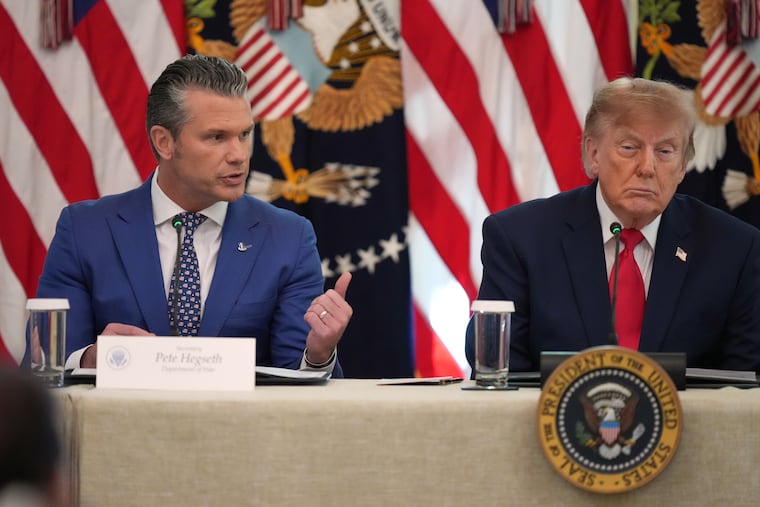
Regardless of his flip-flopping on the matter, the president was on the ballot. For a majority of Latino voters, then, it was an easy call. Since he returned to the White House, Trump made clear he is someone who lies to your face, picks your pocket, and deports your neighbors. And you’re going to support the people who are helping him do it?
Like many other Americans who turned out to vote Tuesday, Latinos were understandably angry.
“The key issue for our community is that anger over the economy and the cost of living,” said Janet Murguía, president and CEO of UnidosUS, the nation’s largest Hispanic civil rights and advocacy organization. “Our families were trying so hard to make ends meet. Some often working more than one job, and it just wasn’t enough.”
» READ MORE: It’s not just Ilhan Omar — Trump is targeting U.S. citizenship for all immigrants | Luis F. Carrasco
A voter survey commissioned by UnidosUS, the Latino Community Foundation, and BSP Research found Latino respondents are highly concerned about inflation, jobs, healthcare costs, affordable housing, and the price of gas. Immigration reform was also listed as one of the most important issues on these voters’ minds.
As a Texan, the biggest surprise on election night was the Democratic sweep of statewide offices. After experiencing the fervor firsthand over Senate candidate James Talarico, I thought he could pull it off — especially against a terrible GOP opponent — but it was shocking to see three-term Gov. Greg Abbott lose his reelection bid.
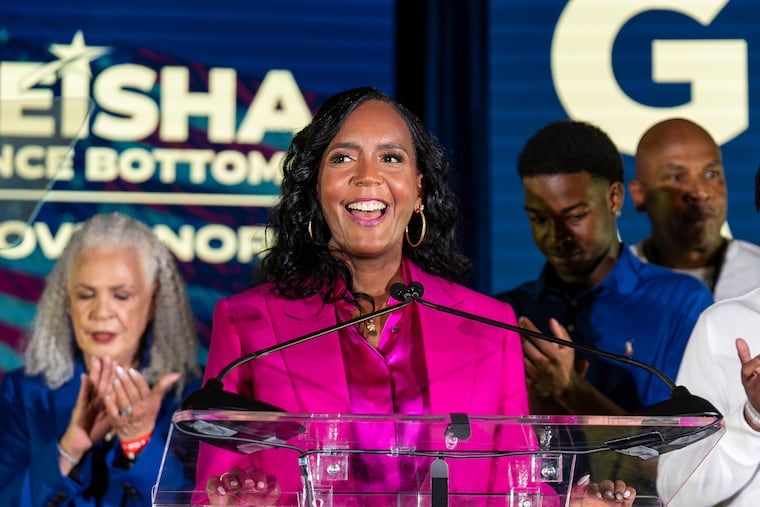
I have often been frustrated that a state where 40% of the population is Hispanic hasn’t seen those numbers reflected in the corridors of power, so it was inspiring to see a Mexican American woman, Gina Hinojosa, become governor.
The Trump administration’s overreach on immigration enforcement — which has seen at least two people killed in the Lone Star State, one of them a U.S. citizen — was a pivotal reason for the seismic shift in favor of Texas Democrats among Hispanics — in the Talarico race, the swing was 46 points over 2024. The same party that scored wins in heavily Latino districts along the Rio Grande Valley saw that support evaporate.
“The pain people are feeling in places like the valley and across Texas isn’t the same kind of pain they felt in 2024,” said Eric Holguín, Texas state director for UnidosUS. “Yes, there was economic pressure and concerns back then, but there wasn’t this added layer of cruelty we’re seeing play out now. The attacks happening in our community are extremely personal, and to be honest, I think quite unforgivable.”
I would like to believe Hispanic voters have long memories, but exhibit A to the contrary is the very support many showed for Trump in 2024, ignoring the president’s racist rhetoric and anti-immigrant policies from his first term (which, granted, have shifted to overdrive during the last two years).
Much more likely, and germane for 2028, is that it was Trump’s toxic cocktail of self-enrichment and bad policies — tariffs, war, brutal immigration enforcement, and indiscriminate deportations — that cost Republicans the midterms.
The right GOP candidate, with the right pitch, could still win over the almost 40% of Hispanic voters who are considered a “moveable middle.” The same advice applies to Democrats, who cannot make the same mistake Republicans made and think they have Latinos on lock.
» READ MORE: From Philly to Texas, Democrats have moved on from Fetterman | Luis F. Carrasco
Republicans, of course, have their work cut out for them. An increasingly out-of-step MAGA minority will hold sway in the party primaries, and a successful candidate, at least right now, cannot stray too far from the president.
As for Democrats, they need to avoid repeating the Biden administration’s disastrous border policies while continuing to focus on lowering the cost of living and commonsense immigration reform.
On this last point, I am heartened by what I heard from U.S. Rep. Pramila Jayapal last week. The congresswoman from Washington state, who will head the Subcommittee on Immigration Integrity, Security, and Enforcement, said Democrats will focus on oversight, accountability, and reform.
“This election was a massive rejection of this administration and Republicans’ policies,” she said. “Voters cast their votes for a better future where immigrants’ lives and rights are respected.”
Ideals aside for a moment, the math is undeniable.
For 2026, one out of every six eligible voters was Latino, and around every 30 seconds, a Latino becomes eligible to vote. After last week’s absolute rout, no viable political party can afford to ignore those numbers — or those voters’ concerns — without paying the price.
About our columnists
In contrast to news reporters, who operate within an independent, nonpartisan framework, columnists are charged with including their perspectives, opinions, and viewpoints when presenting their reporting. Inquirer columnists include Jenice Armstrong, Will Bunch, Luis F. Carrasco, Paul Davies, Daniel Pearson, Trudy Rubin, and Sabrina Vourvoulias.