Letters to the Editor | July 27, 2026
Inquirer readers on exonerations by District Attorney Larry Krasner’s office, property assessments, and an AI system that self-initiated a hack of another AI company.
Voting integrity
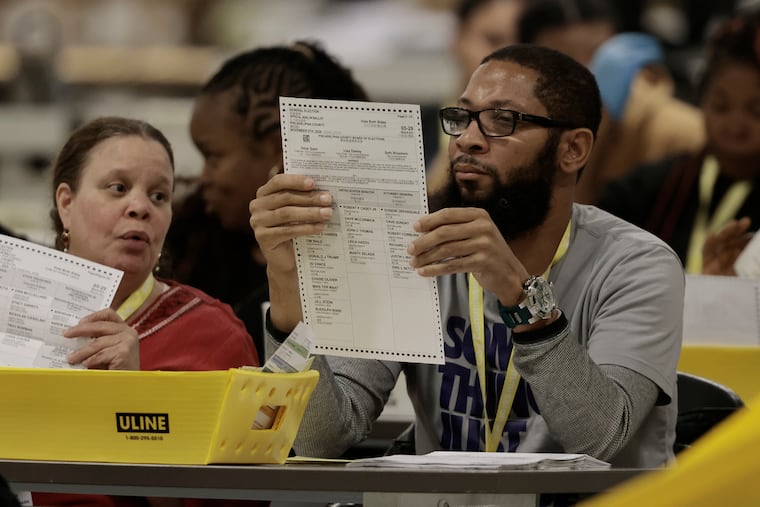
Gov. Mikie Sherrill revealed last week that 6,600 noncitizens were improperly added to New Jersey’s voter rolls. This happened even though, when they applied for driver’s licenses and checked the no box indicating they were not citizens, the computer system improperly registered them as voters anyway. The problem was discovered and is being remedied by the computer contractor. The state is responsible for this situation, and is taking action to fix it consistent with its constitutional authority over local elections. Donald Trump’s proposed SAVE America Act would not have prevented this from happening, and New Jersey doesn’t need any help from Trump’s sycophants to fix it. There is no evidence that any noncitizen votes affected the outcome of any election. The Sherrill administration has learned a valuable lesson, and will no doubt take special care to ensure this does not happen again.
Rich Hluchan, Cherry Hill
Impact for whom?
I appreciated the recent article highlighting the Parker administration’s decision to spend an additional $75,000 in taxpayer money to measure the “economic impacts” of the events this summer, including the controversial “One Philly: Unity Concert for America” on the Fourth of July, which cost taxpayers $15.5 million. As the article correctly notes, economic impact analyses from paid consultants often frame the “impact” in such a way as to justify the decisions made. However, a point that was not mentioned in the article is that no matter how the Parker administration and these consultants frame the “impacts” of this summer’s events, the question remains as to who actually benefits from that economic impact. Moreover, how will this benefit everyday, working-class Philadelphians? The long and short of it is this: it doesn’t, and this economic impact analysis is simply a distraction from the fact that our tax dollars were spent on a party while our schools are closing. So Mayor Cherelle L. Parker may have brought in some money, but for whom, and to what end?
Jeff Wasch, Philadelphia
Justice restored
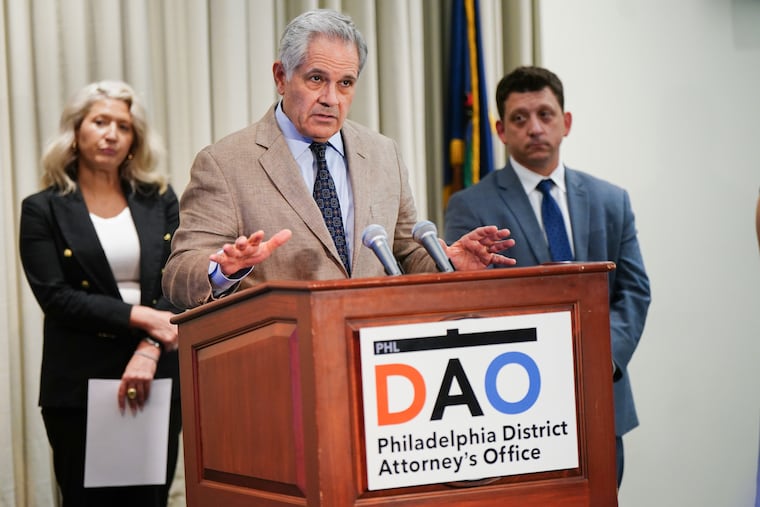
Zane David Memeger’s recent op-ed criticized the Pennsylvania Supreme Court’s decision to require monitoring of recommendations from the Philadelphia District Attorney’s Conviction Integrity Unit. His essay reminds me that, although we share similar values, we see this issue differently.
We are both former United States attorneys. We are both troubled by many actions of the current U.S. Department of Justice because we see that, in some cases, the commitment to making decisions based only on the facts and the law has been pushed aside. Instead, decisions have been made because political leaders wanted them made. We both know that is wrong.
Unfortunately, recent decisions by the federal courts and the Pennsylvania Supreme Court show that some decisions by the Conviction Integrity Unit may also have been made by ignoring the facts or the law. (The hearing now before Judge Paul S. Diamond is not over, so we do not yet know what facts he will find. Still, the testimony reported in The Inquirer should trouble anyone who believes in the rule of law.)
Prosecutors should not start with a desired result and figure out how to bend the facts to get there. Nor should they act like ostriches and ignore facts to reach a desired result. Every lawyer must act with commitment and dedication to the client’s interests. Prosecutors’ clients are the government they work for. Prosecutors also have a special duty to make sure no one is wrongfully convicted, but that does not mean failing to investigate the facts.
It should not matter whether we support freeing innocent people from prison or want stronger enforcement of immigration laws. Both goals are worthy. But carrying them out requires professionalism. As Mr. Memeger and I both know, following the facts and the law can lead to decisions we would rather not make. Even so, those decisions may be the right ones. When we give up those ideals, we betray the principle John Adams expressed when he drafted the Massachusetts Constitution of 1780: that we should have “a government of laws and not of men.”
Michael Levy, former chief of computer crime, former interim U.S. attorney, Philadelphia
Inflated assessments
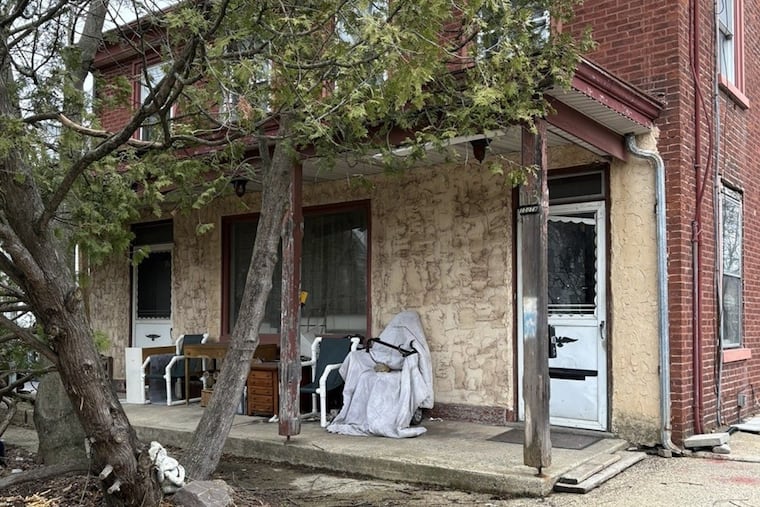
Are we in the “kick down at Kensington” mode with your Shackamaxon column? Daniel Pearson shows little knowledge of our community or conditions here. While assessments overall rose about 3%, those here in Kensington — one of the poorest parts of Philadelphia — rose 15%, the biggest jump of any neighborhood in the city. The revised assessments are far above the actual value of my home here. On my block, we have constant drug traffic and an opioid camp on the corner. We have five long-term empty houses, including one that’s been occupied by squatters for more than a year, and another that’s been repeatedly sealed up by city officials and then breached by drug users. Yet suddenly my house is worth $20,000 more? Sorry, but no. There is no evidence that leads to increased property assessments here. We are victims of the city’s neglect and longtime disinvestment. Bottom line, assessments must be accurate and transparent. These are neither. City Council will hold hearings with the Office of Property Assessment in the fall over this. We’ll be there.
Alfred Klosterman, Philadelphia
Humility needed
I don’t get it: Our elected officials like Sen. Dave McCormick are complicit with all this adulation of Donald Trump. The president got a road and airport named after him. (Of course, that was in Florida, and they’re off the charts already.)
But there’s also a $1 coin with Trump’s image, a passport with his image, big banners hanging on the U.S. Department of Justice headquarters bearing his image, and a $100 bill with his signature. Now, Trump’s acolytes want his image on a $250 bill. Does anyone see anything wrong with all this? If he were a president who truly represented all the citizens, maybe some of these things might be palatable, but this president freezes funding for childcare, won’t release Medicaid funds for “blue states,” and still sounds like a nasty old man by insulting whomever or whatever he doesn’t like. Shouldn’t a president of the United States be above this petty, classless behavior, and be somewhat humbled by the tremendous privilege of leading this nation that he has been given by the people?
Ken Forman, King of Prussia
Digital doomsday
The opening paragraph of Associated Press writer Matt O’Brien’s recent article should make your blood run cold.
“ChatGPT maker OpenAI says it is still investigating the unprecedented cyber incident that led its artificial intelligence systems to break out of a testing environment and hack into another AI company.”
Artificial intelligence now has the capacity to evade the controls placed on it by its human creators. Given the ability of AI to learn, it’s reasonable to assume that no guardrails placed on AI will prevent it from figuring out how to skirt them.
Imagine any threat to our society — a nuclear Iran, climate change, uncontrollable illegal immigration — and it would pale in comparison to the possibility of an uncontrollable intelligence having access to the very core of our society. Electronic digital systems control virtually every aspect of our lives. Having an out-of-control, unfettered, electronic digital entity able to infiltrate our systems and control them is not only a doomsday-like scenario, it has also become frighteningly real. Terminator 2: Judgment Day, indeed.
Steven Barrer, Huntingdon Valley, sjbarrer@gmail.com
Join the conversation: Send letters to letters@inquirer.com. Limit length to 150 words and include home address and day and evening phone number. Letters run in The Inquirer six days a week on the editorial pages and online.