Location, location, avocation: Finding homes and audiences for offbeat artists
WHEN THE stretch of Broad Street running through the heart of Center City was rechristened "Avenue of the Arts" in the early '90s, it seemed to suggest that this would be the epicenter of city culture.
WHEN THE stretch of Broad Street running through the heart of Center City was rechristened "Avenue of the Arts" in the early '90s, it seemed to suggest that this would be the epicenter of city culture.
To an extent, the Avenue has lived up to its moniker; there's undoubtedly a wealth of artistic experience to be had on any given night. But there are also other options scattered throughout the city, some at the usual destinations - bars, nightclubs - but others at alternative sites, curated by nomadic presenting organizations.
Many of these presenters have flourished over the past several years, especially those offering music programming. For the most part, these organizations present music that would be hard-pressed to meet the financial demands of large spaces: emerging artists, challenging repertoire, trend-resistant styles.
But with a blend of organizational savvy, personal dedication and patience, Philadelphia presenters have managed to sustain themselves, growing audiences and cultivating ambitious agendas in what was once the domain of makeshift collectives, often disorganized and short-lived.
"There has emerged in Philadelphia a single presenter in pretty much every musical subgenre that's providing 75 percent of the music for that particular genre, and they're doing it all over the city," said Dustin Hurt, executive director of experimental music-presenter Bowerbird and new-music ensemble Relache.
"They're not in one venue, they're not affiliated with some particular geographic area, which makes it a greater, citywide phenomenon."
Besides Bowerbird, which at less than 2 years old is the most recent of the major presenters, there's R5 Productions, which presents indie rock, punk and hard-core shows; Ars Nova Workshop, dedicated to jazz and improvised music; and Crossroads Music, which offers traditional and world music.
Perhaps the model of the form is the Philadelphia Chamber Music Society, which has been presenting classical music in a variety of venues for 22 years.
There are numerous smaller presenters doing important work for local and touring groups. Some are attempting to represent Philly as a music mecca by showcasing the city with annual festivals.
Lifeline Music Coalition, which presents semiregular jazz performances of a more straight-ahead variety than Ars Nova Workshop, will host its fifth West Oak Lane Jazz and Arts Festival this year, while several independent rock presenters have banded together to create the Popped! Festival, returning for its second year in April. It's been scaled back from six to three nights, but this year will feature The Roots.
Order out of chaos
The modern idea of presenting-organizations is hardly new, reaching back at least to the 1970s, when the D.I.Y. ethic that arose from punk rock inspired musicians and fans alike to take control and stage concerts themselves.
The modern idea of presenting-organizations is hardly new, reaching back at least to the 1970s, when the D.I.Y. ethic that arose from punk rock inspired musicians and fans alike to take control and stage concerts themselves.
But, as Mark Christman, executive and artistic director of Ars Nova Workshop, found when he began attending avant-garde jazz concerts in Philly in the late '90s, many of those so-called "organizations" were hardly worthy of the name.
"The jazz and improvised music community here was very disorganized, very grassroots and inconsistent," Christman recalled.
An organization called Sweetnighter was producing most of those concerts at the time, and when its driving force moved away, Christman dedicated himself to imposing order on the organization, soon rechristening it Ars Nova Workshop. Still, he initially resisted the idea of wholly embracing the role.
"I fought it for a very long time," he explained. "I wasn't convinced that it could be financially realistic to maintain an organization like this and to support this community. It's a slow process, but now we're part of the big leagues and continually growing."
That gradual learning curve, pointed out Sean Agnew, director of R5 Productions, was key to the long-term success of his organization. R5 began in 1996, when Agnew decided to begin promoting his own shows after a few months of assisting other small groups on the local punk scene.
"It was fortunate," he said, "because I learned all of my lessons when things were on a much smaller level. If mistakes were made or there weren't enough people at a show, I wasn't out hundreds or thousands of dollars."
As R5 has grown, so have many of the artists it has presented, and Agnew pointed out that one advantage of operating out of multiple venues is that it allows the promoter-artist relationship to progress over the years, as bands sell out smaller spaces and move to larger ones.
Though the audiences for R5 shows and those presented by the Philadelphia Chamber Music Society would seem to share little in common, music society executive director Philip Maneval echoed Agnew's sentiments.
"Over the years
we've taken a strategic approach," Maneval said, "first presenting young, emerging artists in a small venue, and as the audience for that artist develops, moving to a slightly larger venue, and finally putting them on in the Perelman Theater at the Kimmel Center. It certainly is not in the best interest of young artists to put them in a larger hall than they can fill."
Space: The final frontier
Most of the presenters say that they would prefer ideally to have their own venue.
Most of the presenters say that they would prefer ideally to have their own venue.
R5 came closest in 1999, when the University of Pennsylvania reached out with an offer. After long negotiations, the deal fell through at the last minute, was briefly revived under less-than-ideal circumstances, and, finally, collapsed. Since then, R5 has used the First Unitarian Church, at 22nd and Chestnut streets, for the bulk of its performances.
"I think that Ars Nova probably has some identity issues because it has to travel so frequently," Christman said. "With its own space, it could be doing more programming, whether or not there's a large enough audience in Philadelphia that can sustain that increase.
"I do believe the music is alive and well and being absorbed by a younger audience and younger composers and performers, and that providing them with the opportunity and the space to create and to experiment on an ongoing basis can only be a healthy thing for everybody."
Still, he recognizes the obvious risks in undertaking such a responsibility.
"All the research and all the studies lead us to believe that the venue is often the most crippling blow" to small organizations, Christman said. "It kind of goes without saying that those arts organizations in Philadelphia and beyond that have their own spaces are not driven by their mission anymore, and they become less relevant as each day passes and as each heating bill comes in."
Nurturing the audience
Perhaps the most difficult aspect of these presenters' efforts is competing for audience attention with all of the other demands on people's time and money, especially given the esoteric nature of much of the material.
Perhaps the most difficult aspect of these presenters' efforts is competing for audience attention with all of the other demands on people's time and money, especially given the esoteric nature of much of the material.
"It's kind of strange that in some way we're competing for an individual's entertainment dollar," said Hurt. "Music, particularly the experimental stuff and avant-garde jazz, doesn't fit into my life the same way. It's more synonymous with going to an art gallery. It's evocative, something I do for the curiosity I have in my brain rather than flat-out entertainment."
To that end, many of these organizations have formed partnerships or presented events that provide more than just the music to draw in audiences.
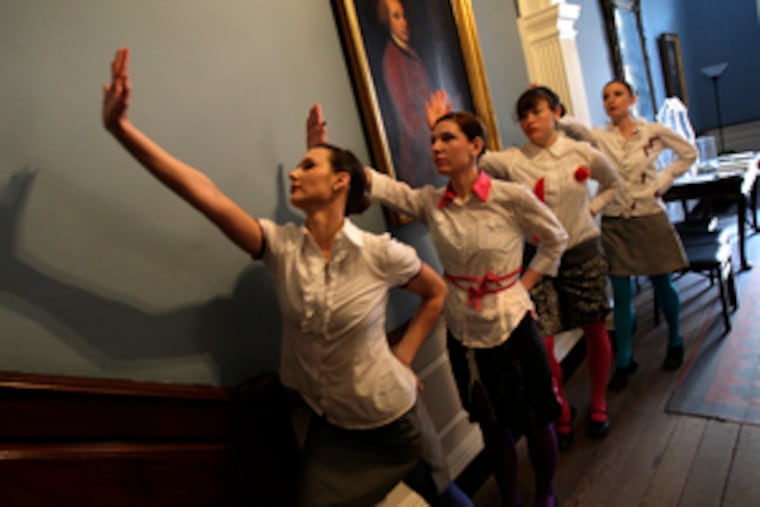
Hurt's Bowerbird, for example, has an ongoing relationship with the Philadelphia Society for the Preservation of Landmarks, which preserves and restores historic homes. This relationship has led to the often incongruous but compelling site of modern experimentalists performing in historic Society Hill manses.
One facet that emerges from conversations with all of these presenters is personal engagement and dedication to the music. There is a serious concern for nurturing the artistic climate that gives the directors of each organization - who in many cases are the sole curators - a personal stake in each performance.
"Although there may be performances with very small audiences," Christman said, "we represent rigorous innovators and emerging and esoteric artists. Not only are they not going to have any sort of mainstream success, but they're not going to speak to a larger audience because the music is that challenging or that alienating.
"But what I've found is that many of the events that Ars Nova's constituents have found most memorable are the very intimate, very modestly attended performances, because they not only feel as if they've experienced something very special and unique, but they've felt a real connection to the musicians, to the music, to that particular performance, and we've done everything we can to facilitate all of that." *
Send e-mail to bradys@phillynews.com.