Europe's classical stars not getting to shine here
The Atlantic Ocean keeps growing wider and deeper for classical musicians attempting to make an international career - and not because ice caps are melting.
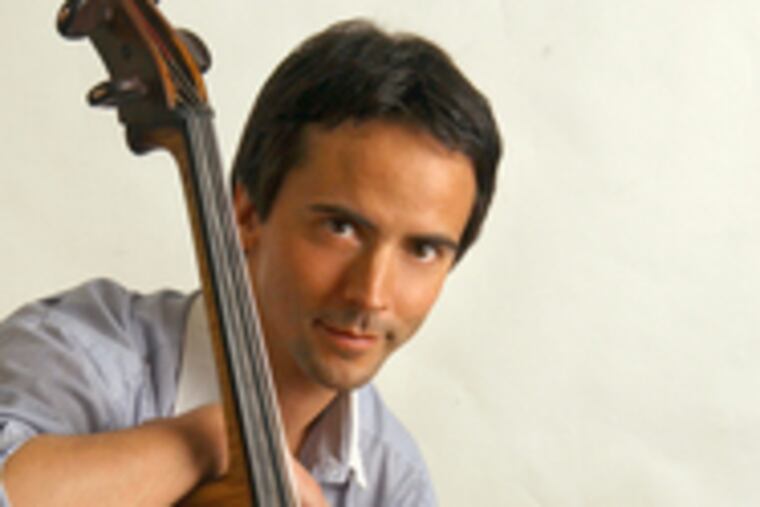
The Atlantic Ocean keeps growing wider and deeper for classical musicians attempting to make an international career - and not because ice caps are melting.
With a weak dollar, strong euro, U.S. visas requiring much paperwork, and risk-wary American presenters, the once-global community of classical musicians has become fragmented in ways that beloved, familiar talents on one side of the ocean are unknown on the other.
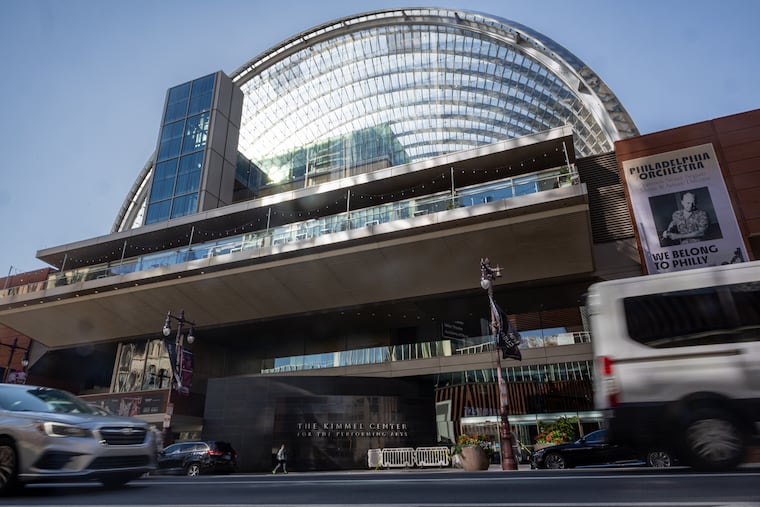
Cellist Jean-Guihen Queyras, for one. To many who will be attending his Chamber Orchestra of Philadelphia concerts at the Kimmel Center next Sunday and Monday, the Provence-raised cellist is a face glimpsed on CD covers of cello-repertoire touchstones, including the Bach Cello Suites, the Dvorak Cello Concerto, and discs of modern works, his specialty since age 16, when he began learning the now-classic works by Henri Dutilleux and Pierre Boulez.
On Oct. 28, when he plays at Washington's French Embassy with the orchestra, he'll be a major, homeland star - one of the best of his generation - making a rare appearance in a hall as small as the embassy's 285-seat auditorium.
Now 41, Queyras talks excitedly about returning to the Haydn
Cello Concerto in C major
in Philadelphia after playing so much modern music of late, how "every time should be a new birth." He fondly recalls the Perelman Theater, where he successfully played on a 2004 tour with the Concerto Köln group.
Miss him, though, and you may have to wait until his tentatively planned 2010 U.S. recital tour. Maybe by then, he'll have some semblance of U.S. representation. Or better contacts. "You meet the right conductor, you have a good feeling, this conductor has ties in the U.S. and you play there more," Queyras says by phone from Paris.
And without that? "What sometimes happens now . . . is they don't have a manager because they don't have concerts and don't have concerts because of a lack of manager," says Peter H. Gistelinck, the Chamber Orchestra's executive director. "It's different from 20 years ago. Now, management is signing up artists who in one way or another already have a presence."
That's most likely to involve musicians who have won an American competition, or Americans who have won competitions elsewhere - not rare birds like Queyras, who was lead cellist with Paris' cutting-edge Ensemble Intercontemporain for years, and improvises Arab music, having spent some impressionable years in Algeria.
As a native Belgian, Gistelinck sees bringing in artists such as Queyras and, prior to his tenure, the eminent Dutch cellist Pieter Wispelwey, as part of a strategy to "create a buzz around the orchestra, not only around Philadelphia but abroad."
That's not difficult considering that much of the under-50 generation of European star soloists is absent from the Philadelphia Orchestra concerts across the Kimmel Center plaza. One recent exception, the 31-year-old German cellist Daniel Müller-Schott, has the distinction of having won the Tchaikovsky Competition in Moscow and touring in a chamber-music trio with Anne-Sophie Mutter and Andre Previn.
Musicians even more talked about in Europe - such as the violin- and cello- playing siblings Renaud and Gautier Capucon - are only getting started here, even with continuing collaborations with the celebrated Martha Argerich at the Philadelphia Orchestra's Saratoga season. Others are lucky to get scattershot concerts. Pianists include David Greilsammer, Cedric Tiberghien, Alexandre Tharaud, and the teen-age firebrand Lise de la Salle. Violinists include Isabelle Faust, Alena Baeva and Laurent Korcia - all smart, charismatic and camera-friendly.
Certain venues, such as the Frick Collection in New York (where Tharaud plays Oct. 26) and the Metropolitan Museum of Art (where the Capucons are Nov. 22), are portals of sorts for debuts by European talents, though in recent years, the proliferation of concerts and the dwindling number of classical-music critics means that important debuts (such as Tiberghien's last season) aren't reviewed.
Follow-ups can be slow. Israel-born Greilsammer had a successful New York debut behind him, with plans to play all Mozart piano sonatas at the prestigious Verbier Festival in Switzerland, but waited years for his next U.S. concerto date - with the Princeton Symphony last spring.
Rather than waiting for a U.S. presenter to take a chance on his trademark program of John Cage, Johannes Brahms and Gyorgy Ligeti, Greilsammer returned to New York last month at the New York City cabaret Le Poisson Rouge on Bleecker Street in the West Village - Steinway and all. Not only were the 300-odd seats filled, but also the audience went home with free promotional CDs.
"I love performing here," he said in a recent e-mail. "But with the private sponsorship system and powerful boards, artistic directors are much more scared to take risks. It is definitely felt."
So are the security hassles. Though savvy European students in the United States can qualify for a green card under the little-known person of "extraordinary abilities" provision, post-9/11 security can be daunting for nearly everyone else. In 2006, Finnish mezzo-soprano Monica Groop was singing in Montreal when she agreed to fill in for an indisposed U.S. colleague in a recital for the Philadelphia Chamber Music Society. But obtaining the proper papers turned into a 12-hour ordeal that had her standing outside for hours in the Canadian winter. "It's a fuss with no end," she said at the time.
Sometimes you wonder why they try, especially in Queyras' case, since he has a Europe-based wife and three children. And when, as a result, does the U.S. become provincial?
Americans won't protest the lack of European talents if they don't know what they're missing. Then again, times are "transitional" these days, says Philadelphia Chamber Music Society executive director Philip Maneval, because of the retirement of mainstay groups such as the Beaux Arts Trio last season and the Guarneri Quartet this season.
Already, some younger groups such as the Jerusalem Quartet have made extraordinary local impressions. But the season is still full of starry return engagements, and that "leaves very few vacancies," he said, ones that are filled not necessarily by artists with splashy-looking compact discs, but recommendations from long-trusted music-industry insiders, as well as the brighter bulbs from the Marlboro Festival.
However few, big breaks do come, and don't always work out. When Queyras was the star soloist playing the Schumann
Cello Concerto
on the Concerto Köln tour, the date after his successful Philadelphia concert was none other than Carnegie Hall.
"Let's be honest: It wasn't my best concert. And a lot can happen in one concert," he said. "Maybe it wasn't the right time or the right concerto. I don't know.. . .
"On the other hand, I don't have enough time to play all the concerts that I want to do [in Europe]. It's not like I'm bored."