Flux finds suspense in 6-hour work
Lights were dimmed. The music often had a soft, exquisite beauty that went beyond Debussy and Ravel. But one of the most insightful moments during Morton Feldman's six-hour String Quartet No. 2, heard while lying flat on my back in the Philadelphia Episcopal Cathedral, was the viewpoint of the building's ceiling frescoes: The heavenly host of angels was upside down.
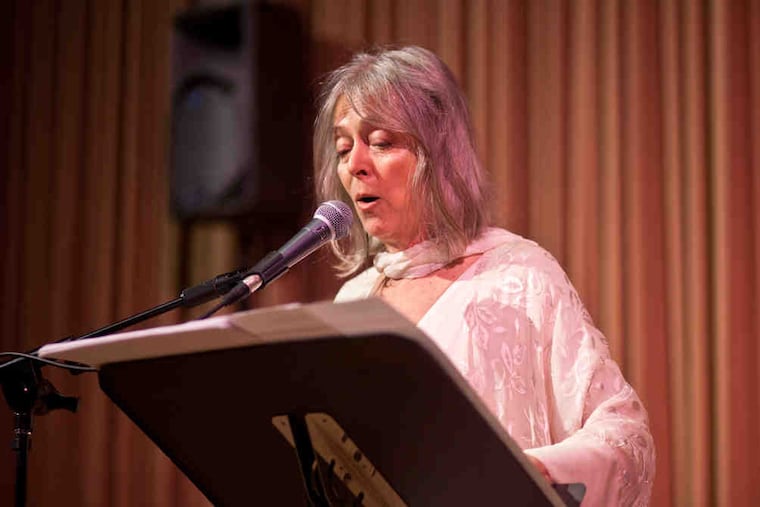
Lights were dimmed. The music often had a soft, exquisite beauty that went beyond Debussy and Ravel. But one of the most insightful moments during Morton Feldman's six-hour
String Quartet No. 2
, heard while lying flat on my back in the Philadelphia Episcopal Cathedral, was the viewpoint of the building's ceiling frescoes: The heavenly host of angels was upside down.
That could be Feldman (1926-1987) in a nutshell. Though this 1983 piece oozes a rarefied, spiritual air, the music goes in none of the usual directions, and often in no direction at all, as if from a parallel universe. Or an upended angel - since the music's ostinatos seem headed for heaven but never get there.
The eight-day Feldman festival titled "American Sublime" was produced by presenter Bowerbird in a succession of thoughtfully chosen venues (a synagogue, an art museum, and, for Sunday's finale, a cathedral) with authoritative performances and program notes that made the event life-changing.
Some 200 people (local composers, poets, and hipsters) attended Sunday. Most shed their shoes. Some sat upright, without so much as a bathroom break. Others sprawled on a large carpet, some sleeping, snoring, or tracing objects in the air.
As much as I've admired and enjoyed Feldman in the past, there was a lingering suspicion, even during the festival, that he was some sort of idiot genius who simply dared to doodle over great swaths of time. String Quartet No. 2, in particular, has been accused of being long for the sake of length. But by the end (five hours and 40 minutes), Feldman's place among the greatest American 20th-century composers was indisputable.
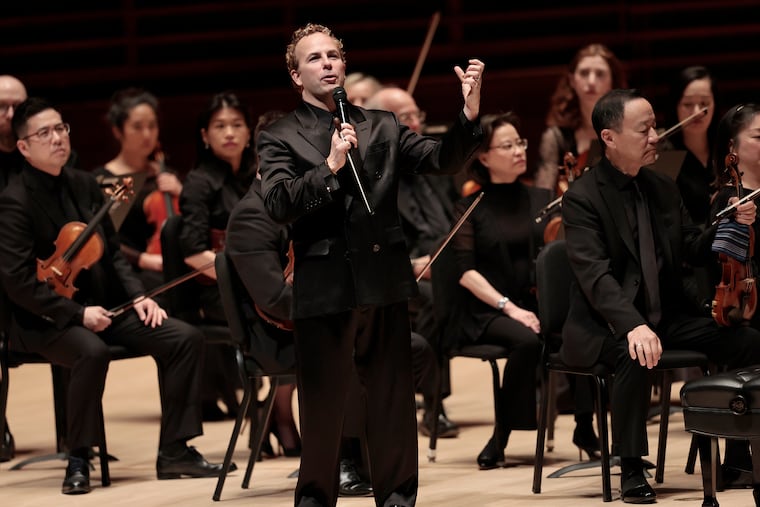
The Flux Quartet made all the difference. Some have said long stretches of the piece are unbearable; this performance had something close to what-will-happen-next suspense. The players displayed an astounding ear for sound that made each gradation of timbre palpable. Feldman never feels like Chinese water torture when performers show how the composer gently (and constantly) thwarts your expectations.
Structurally, the piece is built around a refrain of sorts, two close-by chords gently rocking back and forth. Between them, anything could happen. This piece was a cataloglike exploration of string quartet techniques, plus sounds that such ensembles have never previously made. Refrains always returned changed in terms of harmony and register of the pitch. Most sonorities were built on airy-sounding string harmonics. And when the players dug into their strings in more conventional ways, the effect was staggering.
Did it need six hours? It could have been cut down to five. But only with that kind of expanse could the piece permeate one's consciousness so much that, during my two breaks on the cathedral's front steps, the outside world momentarily seemed to be talking in a foreign tongue. Will that impact be maintained when these concerts are streamed on Bowerbird's website (www.bowerbird.org)? The Web is good for conveying information. But Feldman is beyond information.
Complete lack of aggression has unexpected power that's most apparent from a distance. I played hooky from Feldman for Saturday's program of chamber works by Roscoe Mitchell, a still-living jazz contemporary of Feldman who was the subject of a Composer Portrait series by Ars Nova Workshop. Though they may never have known each other, they breathed the same revolutionary air of the 1960s. Mitchell's Improvisation 15 E was an obsessive exploration of a few notes. Sound familiar?
One fundamental difference: Mitchell wants to make a statement. After all, he's a working saxophonist as much as a composer. Feldman's music only wants to exist. It waits to be discovered - and doesn't need the composer's presence for that to happen. When Mitchell wasn't performing (as he did in Improvisation), his absence was felt: Though his orchestral works (conducted by Feldman champion Petr Kotik) were full of fascinating musical activity, their inner intentions were only intermittently apparent.
Feldman's inner intentions aren't obscure, because there are few, if any. It's sound for its own sake, though exploring a narrow sliver of an idea doesn't always sit well with general audiences. Superficially, this music intends to be underwhelming. The Philadelphia Museum of Art's "Art After 5" concert Friday was one such instance: Its social, drop-in atmosphere with tables, food, and drink fared strangely with Joan La Barbara's performance of Three Voices, in which this original Feldman collaborator sings with prerecorded tapes of herself.
It's one of the few Feldman pieces that might be called descriptive. Though the music splinters Frank O'Hara's poem about snow, it does so with a blizzard of counterpoint. Some people, perhaps expecting a more typical jazz program, looked betrayed. Others who happened onto the performance, seemed ambushed and entranced.
Nonmusical distractions, however, aren't always a problem. Umbrella weather is ideal for Feldman. His Patterns in a Chromatic Field settled easily into the Italianate old-world chapel of the Fleisher Art Memorial, and not just because you weren't longing to be outside. The steady sounds of rain falling couldn't have created a better frame for the music's gradual exploration of piano/cello interaction performed by Amy Williams and Jonathan Golove. Two hours of it was too short. Forever isn't too long.