CLASSICAL NOTES
Aimez-vous Stenhammar? Free compact discs are nothing new with BBC Music magazine, but the October issue has, alongside Grieg's familiar Peer Gynt music, the infrequently heard Symphony No. 2 of Swedish composer Wilhelm Stenhammar (1871-1927). The compose
Aimez-vous Stenhammar? Free compact discs are nothing new with BBC Music magazine, but the October issue has, alongside Grieg's familiar Peer Gynt music, the infrequently heard Symphony No. 2 of Swedish composer Wilhelm Stenhammar (1871-1927). The composer took a while to find his voice, and in this 1915 work he is not there yet, at least in comparison to his later string quartets. But the piece is a good entry point, especially in a performance as fine as this one by the BBC Scottish Symphony under Hannu Lintu. In fact, you can hear the learning curve, and gathering emotional intensity, as the piece goes on.
- David Patrick Stearns
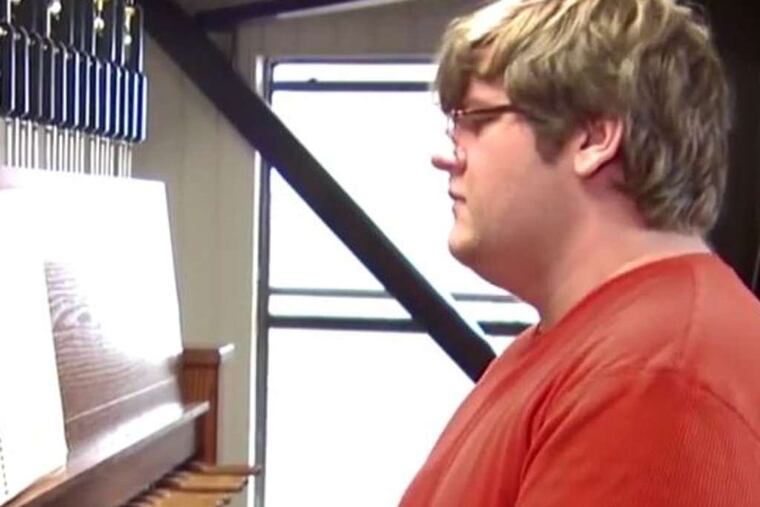
Ringing Refuge. "The tower is an extension of me, I think. This place, it's just surreal enough that I think it really offers kind of an escape from reality for a little while." Everyone needs an escape from reality now and then, and music grants that, but Austin Ferguson might need it a bit more than most. He suffers from bipolar disorder, and finds his refuge as a carillonneur at the University of Texas in Austin. Profiled in a short video on the Mental Health Channel website, Ferguson talks about why medication wasn't the answer for him, the meaning of music, and how being a carillonneur allows him to "block out everything else." Music, he says, "is the most emotional thing there is."www.mentalhealthchannel.tv.
- Peter Dobrin
No hiding from Leo Ornstein. That arresting 45-minute Piano Quintet the Philadelphia Chamber Music Society presented with the Pacifica Quartet and pianist Marc-André Hamelin in 2013 is now out on a Hyperion-label disc, and I'm relieved to report it hasn't been tamed. If anything, the delirious qualities that conjure up intense Jewish mysticism are even more pronounced here. Ornstein's String Quartet No. 2, also written in the 1920s when he was living and teaching in Philadelphia, fills out the disc with its half-hour-plus running time, and is such a continuation of the quintet that you won't want to listen to both pieces in one sitting. It's just too much to take in. Performances are heroic. - D.P.S.
EndText