Nutter says new overhaul of Phila. taxes ahead
While asking business leaders yesterday to help the city pull through its current fiscal crisis, Mayor Nutter promised something in return: another whack at overhauling the city's tax system.
While asking business leaders yesterday to help the city pull through its current fiscal crisis, Mayor Nutter promised something in return: another whack at overhauling the city's tax system.
"Our tax structure is onerous, cumbersome and burdensome," Nutter said just before announcing that he would establish a mayoral task force on tax policy and economic competitiveness.
The task force's charge: to create a plan outlining what must happen to make Philadelphia a less-expensive city in which to do business. The city, he said, has a higher tax burden than any other major U.S. city except New York.
"It's time for change, and change is coming very soon," Nutter promised as he delivered a 30-minute speech at a luncheon with 1,500 regional business leaders at the Philadelphia Marriott in Center City. The event was sponsored by the Greater Philadelphia Chamber of Commerce.
"Our efforts to reform Philadelphia must continue despite the economic environment," Nutter said before signing an executive order creating the 15-member task force.
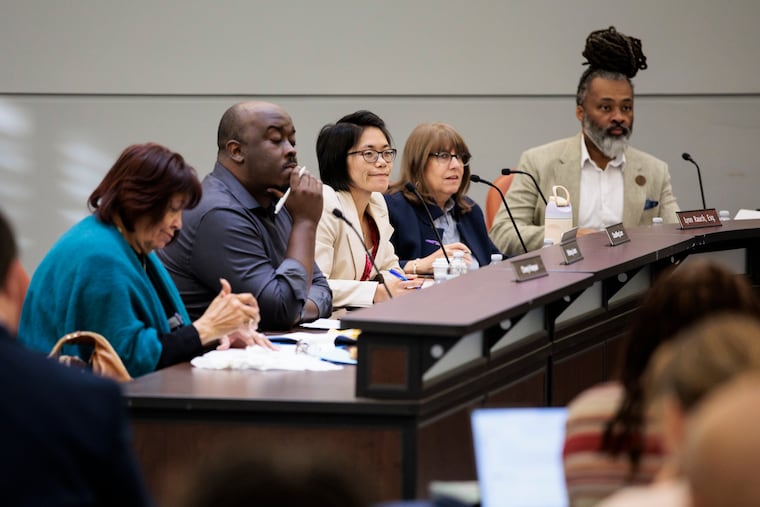
The mayor has not appointed any of its members, but said he hoped to select professionals with business or government backgrounds. No elected officials would be permitted to serve on the panel.
The task force will hold two hearings and issue a report to the mayor by Sept. 14.
As for what company executives can do now to help the city, he asked them to cut the crime rate by hiring ex-offenders, and expand its workforce by giving students summer internships.
He also asked companies to contribute money to a new fund created to help keep city pools open, and to support a mortgage foreclosure program that has prevented 600 families from losing their homes.
"We all need to share the pain if we are going to enjoy the successes," Nutter said. "And so I encourage and expect your participation."
According to the executive order, the task force will analyze the city's current mix of taxes and the impact of current tax policy on the city's competitiveness. It will compare the costs of developing real estate in the city with those in cities elsewhere. More specifically, it will assess city development costs related to labor, construction, permitting, plan reviews and regulatory expenses.
Nutter said he did not expect any findings to influence the budget for the next fiscal year, which begins July 1.
Among those welcoming the renewed effort to overhaul the tax structure was John C. Goodchild, marketing director of Cancer Treatment Centers of America, which owns Parkview Hospital in Northeast Philadelphia.
With 600 employees from various neighborhoods, he said, he frequently hears complaints about the city's high wage and real estate transfer taxes.
"The more reasonable the burden is on [employees], the better it is on everyone," Goodchild said.
M. Christine Murphy, who owns S. Zitner, a small candy-manufacturing company in North Philadelphia, said that with just 35 to 45 employees, her company is not greatly affected by the city's tax structure.
Still, Murphy said, "I like the way the mayor is taking control, targeting what really is important."
Nutter, in a later interview with reporters, said his task force would in part build on the extensive work of the Philadelphia Tax Reform Commission. Funded with $500,000 from the city, the voter-approved commission issued a report in 2003 with recommendations on how to reduce taxes.
The commission's proposals included eliminating the business privilege tax by 2014, and reducing the city wage tax, currently 3.93 percent for residents and 3.5 percent for nonresidents. While some suggestions were implemented, most ran into political obstacles.
A tax-cut proponent, Nutter retracted plans last fall to reduce the business and wage tax rates - they are now frozen - in order to help close a $1 billion budget deficit.
Now the city is trying to plug a second $1 billion shortfall in its five-year budget.
Consequently, Nutter during his speech tried to assure the business group of Philadelphia's promising future. In doing so, he noted that he did not plan to generate extra revenue by rolling back the wage-tax reductions mandated by Pennsylvania's gaming law.
But he also sought to prepare the business leaders for major government changes, saying the city faces "a series of tough choices and some very ugly decisions."