Why Philly students drop out
In Philadelphia, only 57 percent of public school students graduate in four years.
In Philadelphia, only 57 percent of public school students graduate in four years.
On Thursday afternoon, a group of students will say why that's so.
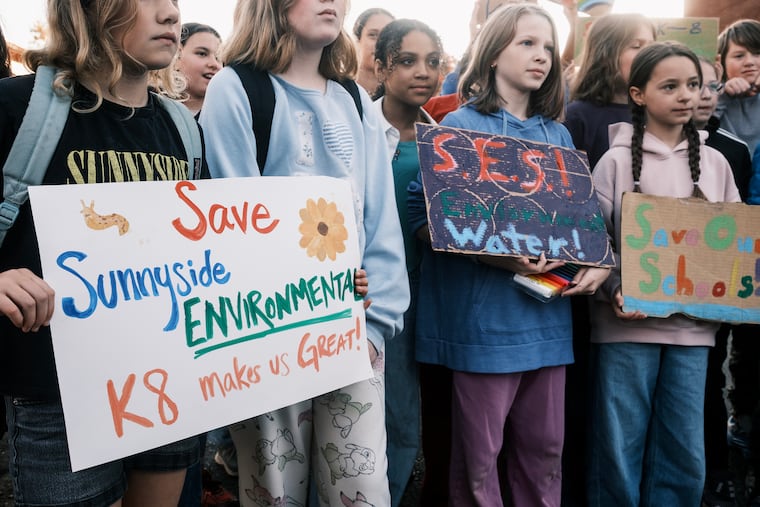
Students from the organizing group Youth United for Change will release "Pushed Out: Youth Voices on the Dropout Crisis in Philadelphia," a report researched and written by teenagers who've either dropped out themselves or been transferred to disciplinary schools.
Their conclusions?
Students drop out because they're bored, because school fails to engage them. They leave because they feel disconnected from their teachers, because they have problems at home, because an uneven Philadelphia School District discipline system that focuses too much on minor infractions.
Many students said district class size is too big, that there is not enough tutoring, counseling, one-on-one attention or extracurricular activities in city schools. Many said their schools feel like a prison.
The report also takes aim at the Philadelphia School District's reliance on suspending students.
"Don't just sit there and suspend someone and then come back to school and you're wondering why they're fighting again because the problem has not been resolved," one dropout said in the report. "Actually help them. Just because you suspend them doesn't mean it's going to be over [and] they're going to come back in a week and everything is going to be OK. Because it's not. In fact, they come back even more mad."
The authors interviewed dropouts, teachers and administrators.
The group's research was supported by Project U-turn, a citywide collaborative of public and private agencies founded to help stem the dropout crisis. In 2007, Project U-Turn published a landmark report explaining the crisis.
Dropouts, the report points out, have a negative impact on the local economy.
"A disproportionate amount of local, state and federal tax revenue is spent on pushouts as they are more likely to enroll in welfare programs or collect some type of government subsidy . . . and are more likely to be incarcerated, and thus contribute less in tax dollars than high school graduates," the students wrote.
Youth United for Change students will present the report at 4 p.m. today at City Hall. City Councilman Bill Green is scheduled to speak.