Commentary: Amid the madness, don't forget players' rights
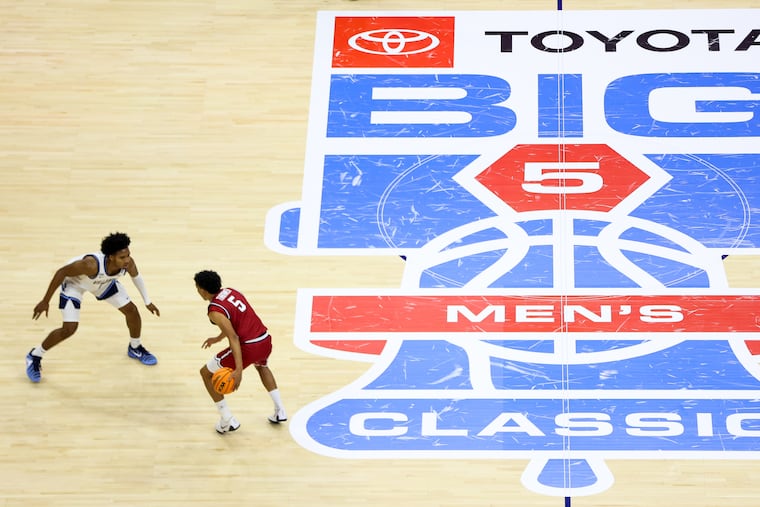
By Ellen J. Staurowsky As the Villanova Wildcats continue their run in the NCAA men's basketball tournament, March Madness fever runs high here in Philadelphia. The magnetic pull of the bracket will overtake the concentration of many a worker and inspire talk around the water cooler. And the narrative that the March Madness athletes competing in a multibillion-dollar industry are "kids" just showing up for the fun of it will kick into high gear.
By Ellen J. Staurowsky
As the Villanova Wildcats continue their run in the NCAA men's basketball tournament, March Madness fever runs high here in Philadelphia. The magnetic pull of the bracket will overtake the concentration of many a worker and inspire talk around the water cooler. And the narrative that the March Madness athletes competing in a multibillion-dollar industry are "kids" just showing up for the fun of it will kick into high gear.
The framing of young men of military age as "kids" is an artful tool shoring up the suggestion that the athletes who compete are just like other college students. However, athletes who provide the labor from which television networks, corporate advertisers, the tourism industry, sports apparel companies, and gambling entities profit are not just like all other students, or like any other group of workers in the United States.
As a measure of magnitude, the NCAA stands to earn $740 million this year from the television deal with CBS and Turner Broadcasting. The economic interest in the tournament exceeds $9 billion, with more people filling out brackets than will vote in the upcoming U.S. presidential election, according to the American Gaming Association.
A little-known fact about the tournament is just how different the lives of college basketball players are from those of other college students.
As the strains of college bands reverberate, fans cheer, and betting lines are calculated, somewhere in a quiet space away from public view, the players competing in the NCAA tournament will meet with university officials. In those meetings, players are presented with the requirement that in order to be eligible to participate, they sign an affidavit and attest under oath before a notary public to certain facts regarding interactions with agents and gambling interests.
The question of whose interest is served by the affidavit is not transparently disclosed to the athletes. The form is administered by a representative of their school's interests. Athletes have no one representing their interests. Thus, athletes may be told, as suggested on the form, that they could violate the NCAA's standards regarding ethical conduct if they misrepresent information on the form. And agents who have contacted them could be subject to prosecution. There is a general statement that athletes' questions should be addressed during the administration of the form. The onus, however, is on the athletes to ask the right questions.
Consider how likely it is that athletes on a team that has just experienced the jubilance of Selection Sunday are in a mindset to fully understand the implications of what they are signing, most particularly the possibility that they themselves, not just agents, might be subject to legal ramifications that extend beyond the NCAA Manual. The instructions never suggest that an athlete can decline signing the form or should request legal representation before signing.
It is this behind-the-scenes moment that reveals the lie in the March Madness narrative. The games are not played by "kids" but by young adults who work in a system that routinely imposes decisions upon them in the best interests of the business of college sports but not in their interests as players. It also points to the fact that college sport is no game for amateurs. The stakes are high for everyone. And yet the players - the assets around whom the enterprise is built - are barred from the kind of advocacy and knowledgeable representation they need to ensure that they are treated fairly and equitably.
This story within the story is the reason Drexel University is hosting the College Athletes' Rights and Empowerment (CARE) Conference Thursday through Saturday. Thought leaders and influencers who understand what is at stake for the players in terms of fair compensation, access to meaningful education, safe workplaces, appropriate medical coverage, and affordable medical care will meet in Philadelphia to address issues associated with college athletes and their rights as citizens.
The National Constitution Center will host opening night of the CARE Conference starting at 5 p.m. Thursday. Among the speakers and moderators attending the free conference are Pulitzer Prize-winning author Taylor Branch; New York Times columnist Joe Nocera; retired professional basketball player Ed O'Bannon; the University of California, Berkeley's Harry Edwards; and ESPN panelist Kevin Blackistone. For more information and to register, visit constitutioncenter.org/calendar.
Ellen J. Staurowsky is a professor of sport management at Drexel University. ejs95@drexel.edu