Commentary: Philly makes a bold move
The city's bold policy move to solidify a revenue source to invest in our young children and our neighborhoods creates exciting new opportunities for Philadelphia. This new funding will launch an effort to guarantee all children in the city access to a hi
The city's bold policy move to solidify a revenue source to invest in our young children and our neighborhoods creates exciting new opportunities for Philadelphia. This new funding will launch an effort to guarantee all children in the city access to a high-quality early education and strengthen their start in life. It will also jumpstart the Rebuild initiative to revitalize parks, libraries, and recreation centers so that Philadelphians have safe and engaging places to learn, play, and come together. These efforts promote quality of life and economic opportunity for all.
The William Penn Foundation has supported early-childhood education and public-space development for decades, but never have we witnessed today's level of momentum and energy. This could be a defining moment for Philadelphia if we ensure strategic decision-making, disciplined implementation, and engagement of residents and the broader civic and business communities.
Fortunately, successful government and philanthropic initiatives, as well as valuable data and research, provide information upon which to base these strategies and decisions. We have learned much from our investments of nearly $130 million in public-space improvements and more than $100 million in early-childhood education.
We saw evidence-based investments in Pennsylvania's child-care quality rating system - one of the first in the nation - elevate the level of care and education provided in early-childhood settings, improving outcomes. Investments in the Fund for Quality quickly expanded the availability of high-quality early education to serve more children by supporting smart business planning and providing funds for capital expenses. Engaging new parent ambassadors from the community in the West Philadelphia Action for Early Learning Initiative resulted in more effective education for parents about the importance of high-quality care in a child's earliest years.
In the public-space arena, resident engagement in developing the Reading Viaduct Rail Park is energizing longtime neighborhood residents and others throughout the city in creating an exciting new shared civic space. This project is part of Reimagining the Civic Commons, an initiative we funded in partnership with the John S. and James L. Knight Foundation to revitalize and create public spaces across the city to build community. Through this effort, many have been inspired to think differently, to engage in transforming community spaces in innovative ways, and to imagine dramatic improvements of our neighborhoods.
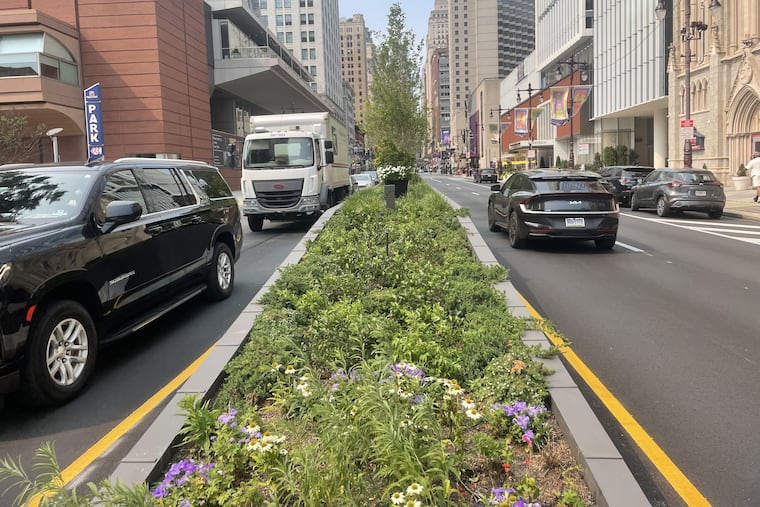
We have seen what can happen to a city's future when it invests strategically in public spaces. The stunning renaissance of Center City over the last two decades demonstrates clearly the transformative nature of civic assets and public amenities, including parks, public spaces, and trails, in enhancing local quality of life. At Dilworth Park, children from across the city splash in the fountains amid parents, businesspeople, elected officials, and the city's least fortunate; this is a place for all. The Delaware and Schuylkill waterfronts attract thousands of city residents daily to exercise, enjoy our natural resources, and take in the city. The development of these public places adhered to comprehensive and deliberate planning efforts. Collectively, they have generated national and international attention for the city.
Today presents a new opportunity for Philadelphia to rise. Other philanthropic resources have their eyes turned toward Philadelphia, watching to see whether the city will be as strategic in resource allocation and rigorous in implementation as it has been bold in the decision to invest in the future. They are looking to see whether to partner with Philadelphia in this effort.
The city can build on the extensive work of the Universal Pre-K Commission and the Philadelphia Industrial Development Corp. to prioritize investments in strategic ways that maximize the impact of every dollar, focusing on areas of greatest need and where the greatest number of people can benefit. Extensive information is available to help maximize the impact of public and private investments through tools such as childcaremap.org, which indicates where there are shortages of child-care centers. The Penn Child Research Center at the University of Pennsylvania has analyzed data to identify areas of the city where children are most at risk of later academic challenges. A strong future depends on putting limited resources to work in the most strategic ways.
We encourage the private and philanthropic sectors to join the government by finding ways to get involved and contribute. This is a once-in-a-generation opportunity for each of us to invest in our city's future. In an era of increasing social and community fragmentation and polarization, working together to strengthen our future and our connections to one another must be a priority for our communities, cities, and nation to thrive.
Janet Haas, M.D., is board chair of the William Penn Foundation. JanetFHaas@williampennfoundation.org