I am a rabbi who wanted to help with the olive harvest in the West Bank. I was denied entry.
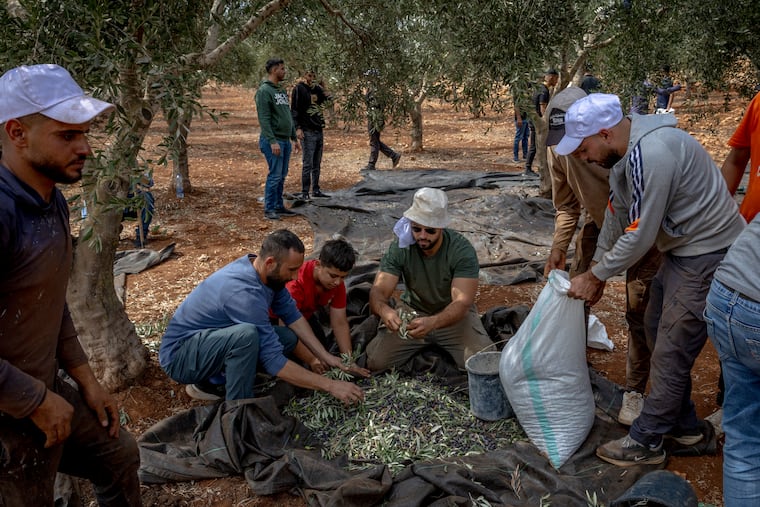
For Palestinian families, the olive harvest is a vital source of income, a cornerstone of cultural heritage, and an enduring connection to their ancestral land.

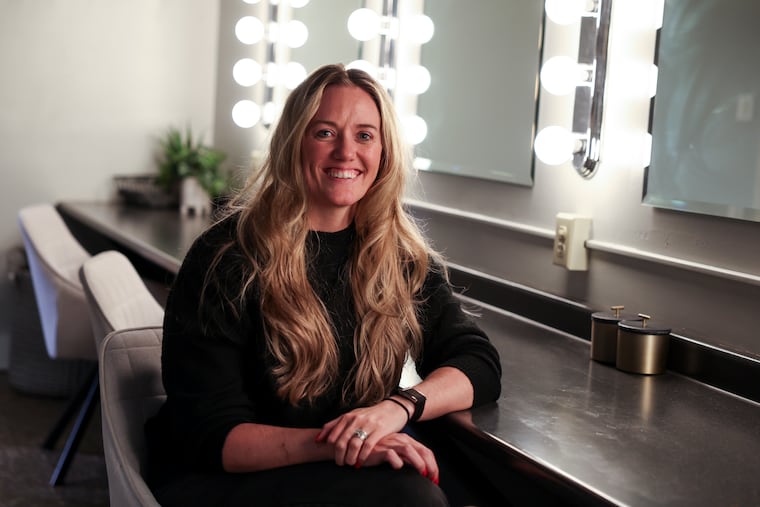
Rabbi Alissa Wise graduated from the Reconstructionist Rabbinical College in Wyncote in 2009 and is the founding director of Rabbis for Ceasefire. She lives in West Philly.
When I recently arrived in Israel to join a delegation of rabbis traveling to the occupied West Bank to support the Palestinian olive harvest, Israeli authorities denied me entry. They cited “public security or public safety or public order considerations,” but it is clear that my decades of advocacy for Palestinian freedom on the West Bank and in the U.S. are why I was denied entry.
When I was studying to become a rabbi, I spent my summers in the occupied West Bank accompanying Palestinian shepherds as they grazed their flocks, farmers as they worked their fields, monitoring Israeli military checkpoints, and taking accounts of midnight attacks by settlers and the military.
Doing that work as an integral part of my rabbinic studies solidified in me the understanding that my work as a Jewish communal leader was inextricable from my commitment to Palestinian rights and freedom.
I am now the director of Rabbis for Ceasefire. I was barred from entering and supporting Palestinian farmers who only want one thing: to tend to their land.
Israeli settlers have been terrorizing Palestinians for decades, but their attacks have increased to unprecedented levels in the last few years. This year’s olive harvest season has been especially brutal for Palestinians in the West Bank. Israeli settlers are violently attacking Palestinians, keeping them from harvesting on their land. Make no mistake, these attacks are not isolated incidents, but are backed by the Israeli state and military because they serve Israel’s objective of removing Palestinians from the land.
The United Nations documented more than 1,600 settler attacks against Palestinians in the first eight months of 2026 — nearly seven a day, up from five a day in 2025. Those are just the ones that are officially recorded. Between Sept. 1 and Oct. 12, the U.N. documented 199 olive harvest-related settler attacks, with one Palestinian killed, 124 injured, and damage to more than 2,500 trees and saplings. These attacks occurred even before the official start of the harvest season.
For Palestinian families, the olive harvest is a vital source of income, a cornerstone of cultural heritage, and an enduring connection to their ancestral land. Palestinians in the West Bank see their daily realities shaped not only by Israel’s electoral politics but also by ongoing military occupation, settler violence, and restrictions on their freedom and security.
I arrived just days before Israeli voters participated in an election in which no candidate believes in full freedom and equality for Palestinians. Prime Minister Benjamin Netanyahu’s coalition is nakedly genocidal and singularly committed to further entrenching Israel’s apartheid system, and the opposition rejects a Palestinian state and offers no credible path to Palestinian freedom, equality, or safety.
National Security Minister Itamar Ben-Gvir has called for West Bank Palestinian communities to suffer Gaza’s fate. Finance Minister Bezalel Smotrich has declared that Israel is “killing the idea of a Palestinian state — day by day, hour by hour.”
And Palestinians in the West Bank, Gaza, and east Jerusalem do not even get to vote in these elections, though the Israeli government dominates their lives.
Changing the faces in government will not, by itself, change conditions for Palestinians. So we must act beyond the ballot box to put a stop to Israeli settler violence.
I am sad that I am not with the rest of Rabbis for Ceasefire’s delegation, which made it into the country. Organized in collaboration with the Center for Jewish Nonviolence, our delegation brings together rabbis and student rabbis from the United States, Canada, and the Netherlands, alongside other supporters. My colleagues will work alongside Palestinian farmers and families, following the leadership of local communities and their assessments of conditions on the ground.
Though the presence of our rabbinic delegation cannot end Israel’s apartheid system or its genocide in Gaza, it can provide support and solidarity to Palestinians, and public accountability. Even if my colleagues can’t provide protection, they can at least be witnesses, testifying that this violence is not a Judaism we recognize or can support.
As rabbis, we have a responsibility to speak out against wrongdoing. The Talmud teaches that those who can protest against the sins of the world but do not are held responsible for them. American rabbis have a particular obligation: Our tax money funds Israel’s apartheid system, including the weaponry settlers use to attack Palestinian olive harvesters. U.S. officials say they want settler violence to stop. If they mean it, they must hold Israel accountable and stop giving it a blank check.
My fervent prayer is that one day we will merit a world where helping harvest olives is not seen as a threat.
About guest essays
Guest essays, or op-eds, are commentary pieces that present the opinion or perspective of the author. Many are submitted to us by Inquirer readers and writers with insight on the news, but we also solicit op-eds from authors on specific topics. For more information visit our guidelines.