'Boycott Ride' targets Jewish and Israeli-owned businesses. We have seen this tactic before.
It is hatred of Jews with a new label. Replacing the word “Jewish” with “Zionist” does not change who is being targeted, writes Andrew Goretsky.

Andrew Goretsky is the senior regional director for ADL Philadelphia.
Free speech protects the right to criticize a government and its policies. It does not protect a campaign of discriminatory action targeting Jewish and Israeli-owned businesses for removal from a city.
The “Boycott Ride” planned for Sunday in Rittenhouse Square does exactly that. The flyer promoting it targets six Philadelphia restaurants that have Jewish owners, including Dizengoff, Goldie, K’Far Café, Mac Mart, Huda, and Schlesinger’s.
The people who work at the restaurants are our neighbors, and they are being told they do not belong.
These restaurants are owned by American Jews and Israelis. Everyone should see this for what it is: targeting people because of where they come from or the minority group they belong to.
For Yehuda Sichel, the chef and owner of one of the restaurants, the timing is particularly painful. His grandfather was just 10 years old in Germany during Kristallnacht, and later immigrated to the United States.
“We’re not going anywhere,” Sichel told a local news station.
That is not politics. It is hatred of Jews with a new label. Replacing the word “Jewish” with “Zionist” does not change who is being targeted.
We have seen this tactic before.
And when the stated goal is to push people out of the city, and the people chosen are Jewish business owners, this is discrimination and attempted intimidation.
The timing heightens the impact on the Jewish community. The ride falls on the eve of the 88th anniversary of Kristallnacht, when Nazi mobs destroyed thousands of Jewish businesses, homes, and synagogues.
We know where it leads when Jewish businesses are marked and the public is told to stay away.
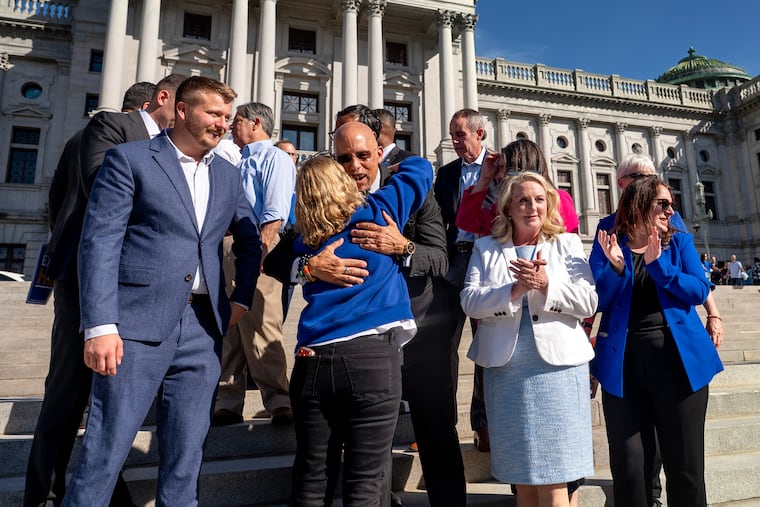
Unlike the horrible riots during Kristallnacht, local leaders have spoken out forcefully and clearly. Mayor Cherelle L. Parker affirmed the right to protest peacefully while making plain that singling out businesses because of who owns them has no place in Philadelphia, and she directed the police to prepare for the weekend.
Pennsylvania Attorney General Dave Sunday called out the ride for targeting Pennsylvanians because of their Jewish identity, not because of any policy.
Gov. Josh Shapiro’s office condemned it as antisemitism meant to drive Jewish businesses out of our communities.
Council President Kenyatta Johnson, State Rep. Ben Waxman, and the co-chairs of the Pennsylvania Legislative Jewish Caucus all stood with the businesses — as did the Pennsylvania Restaurant & Lodging Association and the Philadelphia Council of Clergy.
These voices matter. They tell every Jewish Philadelphian that they are not alone.
“We’re not going anywhere.”
Now we all have a role to play. The best answer to a discriminatory act is to show up for those it targets.
Here is what you can do:
Speak up. Tell your family, friends, coworkers, and neighbors that no one should be targeted because of who owns a business.
Share facts. Explain what this campaign is, and why the language matters. Criticizing a government is free speech. A campaign to push Jewish-owned businesses out of a city is not.
Show strength. Patronize these businesses. Do it today. Do it tomorrow. Keep doing it next week, next month and for years to come. Bring friends, leave a positive review, and book your next dinner or event there. Make them your regular spot. Hate counts on us staying away. Let’s fight it by showing up.
Philadelphia is stronger because these businesses are part of it. They belong here, and we will make sure they stay.
About guest essays
Guest essays, or op-eds, are commentary pieces that present the opinion or perspective of the author. Many are submitted to us by Inquirer readers and writers with insight on the news, but we also solicit op-eds from authors on specific topics. For more information visit our guidelines.