Justice for Malayshia begins by admitting the foster system is not safe for our children
April Lee and Sarah Katz write that we must end our reliance on the foster system to keep children “safe” and redirect resources outside of the child welfare system so families can stay together.
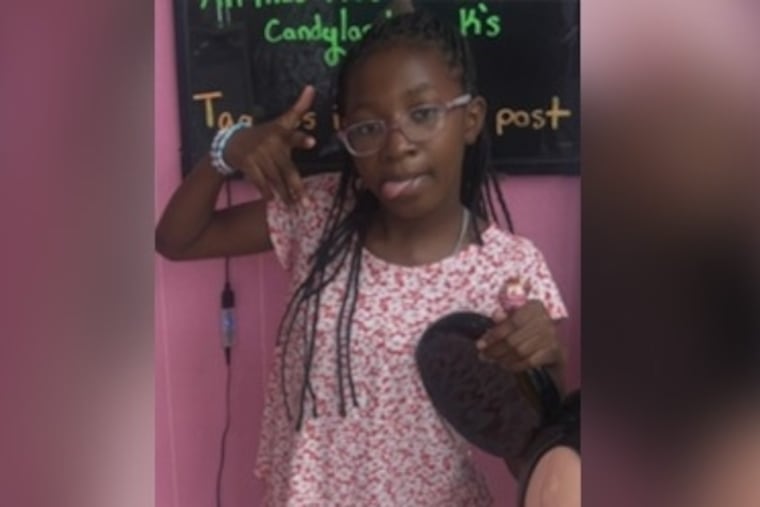
April Lee is a cofounder of Philly Voice for Change. Sarah Katz, a clinical professor of law, directs the Family Justice Clinic at Temple Law.
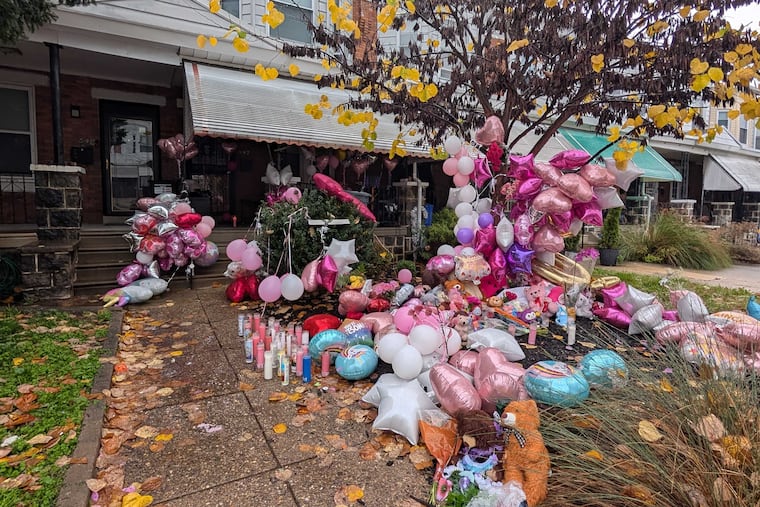
The tragic murder of 10-year-old Malayshia Allford in a Philadelphia foster home underscores what Black families who have experienced the involvement of Philadelphia’s youth protection agencies already know: the foster system is not a safe place for our children.
Malayshia’s death is not random or the case of one “bad apple”— it is the predictable result of a system rooted in chattel slavery and designed to annihilate Black families. In other historical contexts, family separation has long been used as a tool of genocide, and scholars argue that the child welfare system perpetuates those mechanisms by destroying family bonds and terminating parental rights.
Justice for Malayshia should not mean simply tightening enforcement of foster system regulations and more family separation. It is an invitation to admit the foster system is not safe for our children and imagine something new: meaningful resources to keep families together.
Sadly, Malayshia’s death is not unique. Children in the foster system are 42% more likely to die than in the general population. Children within the foster system are physically and sexually abused at astounding rates, with youth reporting physical abuse (16%), sexual abuse (4%), and neglect (53%) in foster placements.
It is time to break our reliance on harmful systems and imagine something different.
We know these numbers do not capture the full extent of the problem — youth survivors of the foster system routinely tell the harms they suffered — many of which go unreported. These rates are also far greater than the rate at which children are torn from their families for allegations of physical (13%) or sexual (4%) abuse.
Currently, only 32% of all children who enter Philadelphia’s foster system return home and are reunited with their family. When children are returned, they’re often returned broken, with significant trauma and behavioral health challenges because of the experience of being separated from their family and mistreatment in the foster system. Twenty-five percent of children in the foster system develop post-traumatic stress disorder (PTSD), a rate twice as high as that of U.S. war veterans.
While we are not privy to the circumstances that resulted in Malayshia being placed in the foster system, we do know that Malayshia, like most children in the foster system, came from a family that loved her. We also know that the vast majority of children are separated from their families and placed in the foster system because of allegations of neglect, not abuse.
Every day, the city’s Department of Human Services (DHS) and family court deem parents unfit because of failures to provide for their children, unjustly holding parents individually accountable for living in poverty with no accountability for systemic failures. Black parents living in poverty fight against, but are often defeated by, the overwhelming narrative of unfitness. When children cannot safely live at home, the law requires family placements to be considered by DHS.
But relatives and family members are frequently disqualified by DHS as a placement option for any number of reasons: a home is deemed not big enough, income levels are said to be too low, someone in the home has a criminal record, and many other factors.
However, the solution is not just more kinship care, because while arguably better for children, it is still family separation and children still experience harm. No amount of increased funding, policy change, different leadership, or increased oversight changes the harm our families are experiencing. The solution is ending our reliance on the foster system to keep children “safe” and to redirect these resources outside of the child welfare system so that families can stay safely together.
While child welfare agencies say family separations are meant to offer protection, our children are being killed, abused, and silenced, dragged from foster home to foster home with virtually no safeguards.
In the past five years alone, Hope Jones, Sul’yah Williams, and Sy’Vir Hill were each killed by caregivers whom DHS deemed safe. Despite well-publicized closures, residential facilities continue to have rampant abuse, sex trafficking, and regulatory issues.
It is time to break our reliance on harmful systems and imagine something different.
We already know what will prevent family separation — guaranteed income, access to affordable housing, childcare, medical care and treatment, and other tangible resources have all proven to mitigate the need for child welfare involvement and family separation.
Families do not need more surveillance, separation, or policing. Families need tangible resources to thrive.
About guest essays
Guest essays, or op-eds, are commentary pieces that present the opinion or perspective of the author. Many are submitted to us by Inquirer readers and writers with insight on the news, but we also solicit op-eds from authors on specific topics. For more information visit our guidelines.