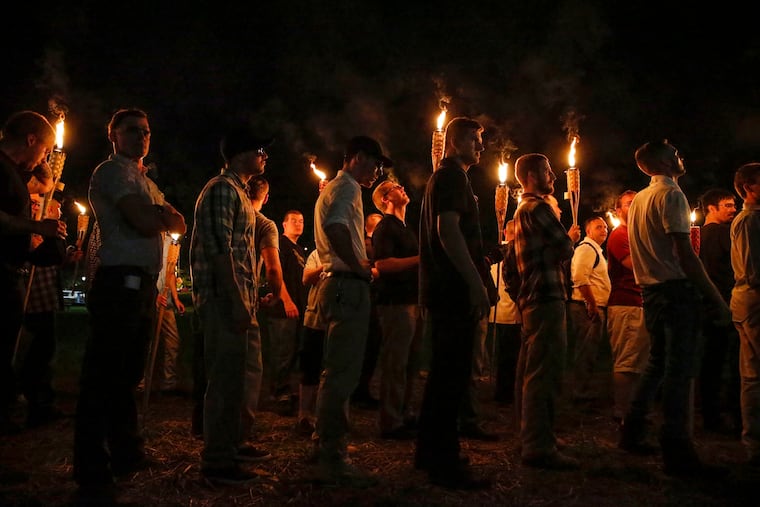
MAGA’s white nationalist agenda was also on the midterm ballot. If gas were cheaper, would it have won?
For all of the talk about threats to democracy, the key issues for many voters were economic, not constitutional. That raises the question of what Americans would have tolerated if prices were better.

Delgreco Wilson, who formerly taught comparative politics and international relations at Lincoln University, is a political analyst, educator, and advocate whose work centers on empowering Black Americans through a deeper understanding of political strategy.
There can be little doubt that many of the victories in the midterm election were built on a coalition of voters who clearly recognized the stakes for democracy, with nearly a third of all voters saying it was their most pressing concern.
Exit polling and media reports, however, suggest that the dominant language of the election was economic, not constitutional. Roughly four in 10 voters said the economy was their top issue, and many blamed high prices on President Donald Trump’s policies. The war with Iran, which spiked fuel costs, and the tariff regime that raised consumer prices were the proximate causes of Republican losses.
The rebuke of MAGA, therefore, was largely a rejection of governance that made life more expensive, delivered by an electorate that has never been taught to evaluate the deeper architecture of democratic exclusion.
With that in mind, the most revealing insight about the 2026 election may not have been what voters punished, but what they would likely have tolerated.
Imagine a MAGA regime that had pursued its white nationalist domestic agenda with the same zeal it brought to tariffs and deportation, but had managed to keep inflation near the Federal Reserve’s 2% target.
Imagine the same assaults on voting rights, the same purges of civil service professionals, the same rhetorical accommodation of white supremacist constituencies — but with a grocery bill that did not climb.
On the evidence of the past 250 years, that MAGA regime would probably have won.
This is not speculation. It is the lesson of American political history. For most of the republic’s life, Americans have accepted explicit racial oppression and suppression as the ordinary cost of doing political business.
They accepted slavery as the constitutional foundation of the Union.
They accepted Jim Crow as the natural order of the South.
They accepted Japanese internment, Chinese exclusion, the gutting of Reconstruction, and the century-long disenfranchisement of Black voters.
» READ MORE: How the MAGA gerrymander in Texas resurrects Jim Crow’s racist playbook for voter suppression | Opinion
At no point did a majority of white Americans treat any of these as disqualifying. What they could not abide was material hardship.
One of the main drivers of the MAGA movement is explained in political science as “racial accommodation backlash,” when dominant groups mobilize politically in response to concessions that have been made to minorities — and it is not a fringe phenomenon. It is the mainstream of American electoral history.
The Voting Rights Act, for example, passed only after Bloody Sunday made inaction intolerable. And even then, the backlash was immediate and enduring: Richard Nixon’s Southern Strategy, Ronald Reagan’s welfare queen, the crime bill, the gerrymander. Each was an invitation to white voters to prioritize racial hierarchy over economic redistribution, and each succeeded.
What the Trump regime has revealed is that the invitation still works — provided the price is right. MAGA’s mistake was not its agenda. It was its arithmetic. It paired the cultural program that has historically been electorally viable with an economic program that made life worse for the very voters it needed.
Runaway inflation, in other words, was the bridge too far.
Racial oppression alone was not.
American students are taught a story of democracy achieved rather than democracy contested — and this miseducation leaves them ill-equipped to recognize structural regression. The 2026 results offer a partial test of that claim.
On one hand, the Democratic coalition assembled a broad majority that included the white working class and voters of color, and it elected candidates who explicitly campaigned on democratic protections. This suggests that the capacity for democratic self-defense is not absent. On the other hand, the mechanism of that defense was largely reactive: voters punished the party in power for material suffering, a dynamic as old as the republic itself.
The deeper question — whether Americans can identify and resist the slow erosion of democratic institutions when the grocery bill is manageable — was answered, and the answer was discouraging. They cannot, or at least they did not.
American students are taught a story of democracy achieved rather than democracy contested.
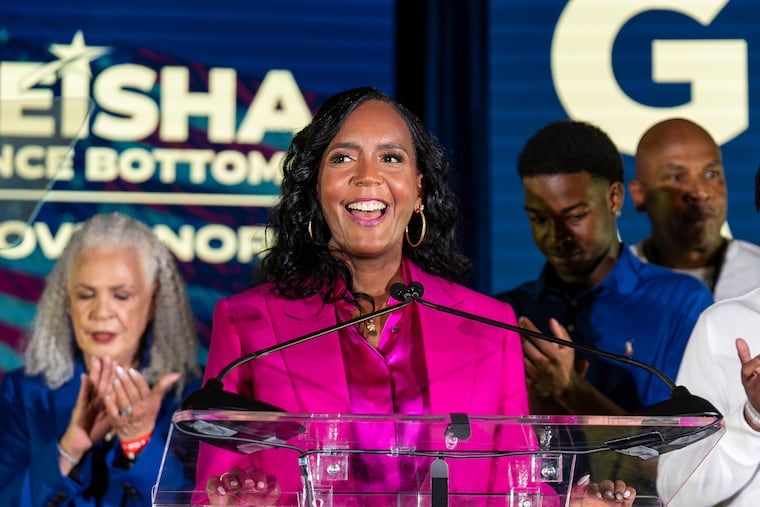
The prescription of self-education and conceptual literacy — Carter G. Woodson’s call for intellectual independence — finds validation in a different corner of the results. The candidates who won — Sen.-elect James Talarico in Texas, Sen.-elect Annie Andrews in South Carolina, and Gov.-elect Keisha Lance Bottoms in Georgia — ran as explicit foils to Trump, not as technocrats promising procedural reform.
Their victories depended on the same narrative clarity our civics education has suppressed: a story of who is included and who is excluded, of whose interests the system serves. When that story is told plainly, voters respond.
The midterms of 2026 demonstrated that American voters can deliver a decisive rebuke to a movement that threatens democratic norms. That is not nothing. It is, in fact, the minimum condition for any subsequent progress.
But a country that has never taught its citizens to understand democracy as a contested, incomplete, and reversible project will remain vulnerable to the next assault — especially when that assault arrives wrapped in the language of economic grievance rather than constitutional rupture.
The Democratic victory of 2026 may have bought time. It did not, by itself, build the democratic literacy that would make the next defense unnecessary. Worse, it may have taught the wrong lesson: that the way to stop authoritarianism is to lower the price of eggs.
The real lesson is harder. MAGA nearly succeeded because it understood something our civics classes have spent generations denying — that a substantial share of the American electorate will accept, and even embrace, the suppression of others so long as their own material conditions hold steady.
The task for democrats, small-d, is not merely to win the next inflation cycle. It is to build an electorate that would reject the white nationalist program even when the grocery bill is affordable.
About guest essays
Guest essays, or op-eds, are commentary pieces that present the opinion or perspective of the author. Many are submitted to us by Inquirer readers and writers with insight on the news, but we also solicit op-eds from authors on specific topics. For more information visit our guidelines.