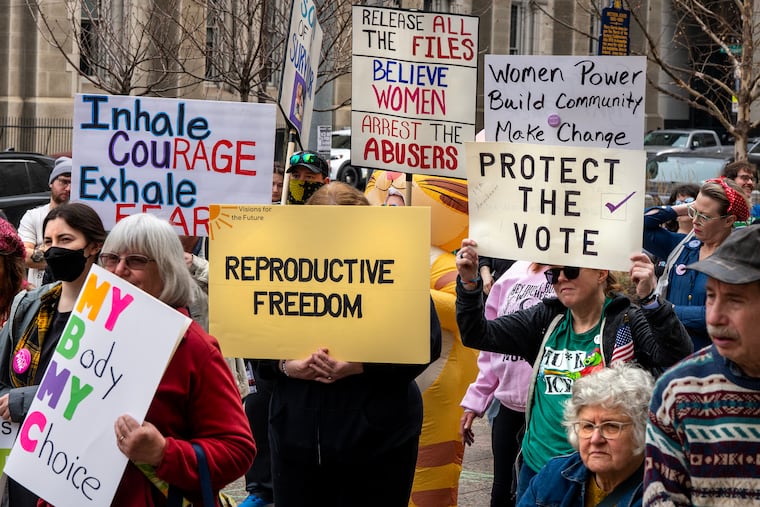
False narratives prevail in cases of sexual assault
It is hard for most of us to believe that someone we know and trust would be a rapist, yet the vast majority of sexual abusers are someone the victims know and trust.
Women can't be trusted, and men you trust don't rape. These are the false narratives that led to a mistrial in Bill Cosby's sexual-assault case.
Now, Cosby is planning town halls to educate men on how to avoid sexual-assault allegations because "a brush against the shoulder" or "anything at this point can be considered sexual assault," his representatives said recently. They also said young men, athletes, and married men are the ones affected by sexual-assault cases, implying that the real epidemic is women lying about being assaulted rather than the number of women assaulted each year. This is just the latest in Cosby's decades-long use of fake news to hide his actions.
(Fake news - a term bandied about since the 2016 election - encompasses not just fabricated stories but also narratives that "work in enough falsehoods as to be misleading," according to Robert Schlesinger, managing editor for opinion at U.S. News and World Report.)
Unfortunately, this false narrative is deeply rooted in our culture. Last year's U.S. Department of Justice report on the Baltimore Police Department found detectives complained that all of their sexual-assault reports were false and routinely suggested victims were lying during their interviews with them. In fact, the majority of sexual assaults go unreported, and legitimate research estimates that 2 percent to 8 percent of reports are false.
The fact that women are still not believed when they report being assaulted by men supports the other fake news Cosby has been crafting for most of his life: That he is "America's Dad."
It's not uncommon for male perpetrators of violence against women to present themselves as nice guys and family men. As one survivor said of her abusive ex-husband, everyone thought "he loved and adored me and we had a perfect family" because that's how he acted in public.
Cosby has been able to commit his actions precisely because of the falsehood and fiction of his sitcom Dad persona, woven into the story of his life for so long that it made him unthreatening and unassailable.
His own alleged victims admit this. As outspoken Cosby accuser Lili Bernand said in a confrontation with a Cosby supporter two days before the mistrial, "It was hard for me to have to contend that a man I loved and adored as a father did this harm to me." It is hard for most of us to believe that someone we know and trust would be a rapist, yet the vast majority of sexual abusers are someone the victims know and trust.
It's understandable that much of the United States felt confused and conflicted when rape allegations against Cosby gained traction. But believers in Cosby may not realize that they are victims, too, of the false narratives that abusers use to gain access to victims, keep victims silent, and cover their own tracks. Cosby remains believable to some because he has mastered a classic abuser strategy.
Cosby would have us believe that he is being persecuted because of his race, but he is much different from the overcriminalized and underprivileged black men disproportionately targeted by our justice system. His alleged victims were threatened into silence by his immense privilege - as a man, as a rich person, as a beloved superstar, and as the standard-bearer of wholesomeness and respectability.
Dona Yarbrough is the senior director and senior associate dean of learning and innovation at Emory University in Atlanta. yarbroughdona@gmail.com
Ulester Douglas is the executive director of Men Stopping Violence in Decatur, Ga. Udoug@menstoppingviolence.org