Democrats flipped Trump country in South Jersey and beyond. Can they keep it?
As the dust settles on the midterms, the question is whether the party can hold its new majorities. Or, put another way: Are we rid of MAGA once and for all?

Tom Moran is the author of the Substack Jersey Lowdown and the former editorial page editor of the Star-Ledger in Newark, N.J.
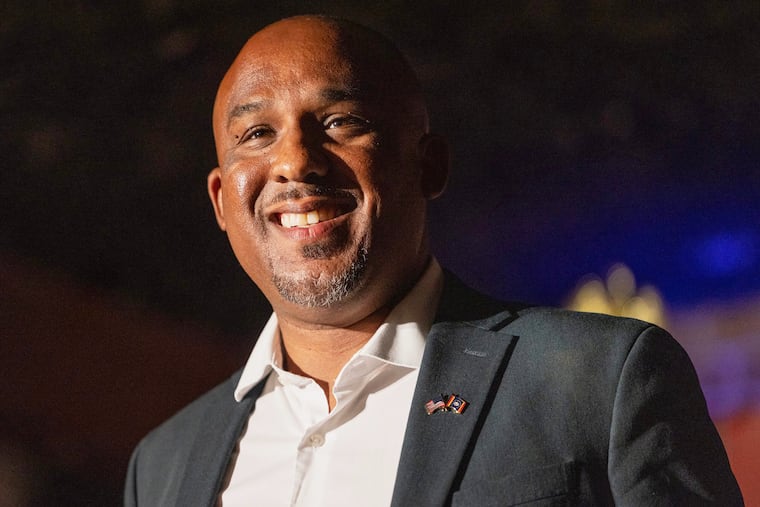
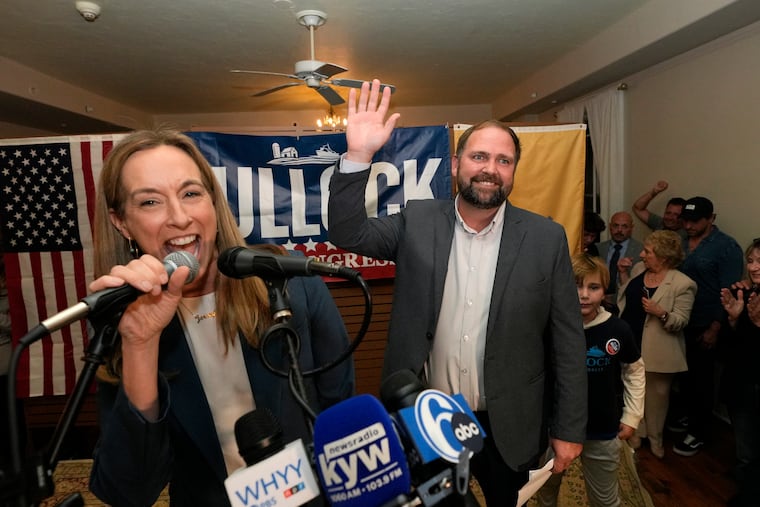
Zack Mullock, the mayor of Cape May and a newcomer to national politics, is among the surge of Democrats who just won congressional seats in red districts, thanks mostly to the political malpractice of Donald Trump. Even Texas and Kansas went blue.
The big question now is whether Democrats can hold their new majorities and make this moment more than another swing of the pendulum.
Put another way: Are we rid of MAGA once and for all, or is the beast crouching just offstage, waiting for an opportunity to come back?
The Republican who just lost to Mullock, Rep. Jeff Van Drew, is hungry for a rematch. He’s kept his campaign staff intact, had $900,000 in the bank as of mid-October, and is planning a “listening tour” of his South Jersey district, where he’s been winning elections at every level for nearly 30 years. If Democrats blow this moment, Van Drew will have his chance.
“It’s going to be fun for me,” he told the New Jersey Globe.
I can think of two distinct ways Democrats might falter.
They could overreach by going hard left. The best example is the Medicare for All bill championed by Sen. Bernie Sanders. Polls show that most people who say they support his bill don’t realize it would phase out private insurance over four years, like it or not. Van Drew would love that, given 80% of those with private insurance say their plans are “excellent” or “very good.”
Or, at the opposite extreme, Democrats could fail to deliver by playing it too safe, confirming to many voters that neither party has made their lives more affordable, or addressed the widespread feeling that the economy is obscenely rigged in favor of the rich. In that case, why would they keep electing Democrats?
So how do they thread this needle? I talked it over with Mullock, and he put my mind at ease. If Democrats navigate these political fault lines as well as he does, their majorities could last.
Mullock wants to open Medicare to all, but would not force anyone to give up their private insurance if they prefer to keep it. “I’m for Medicare for All who want it,” he said.
» READ MORE: For GOP, Trump’s self-enrichment is a taboo topic — and a vulnerability | Opinion
He says Democrats “screwed up” under President Joe Biden by failing to secure the border with Mexico, but he wants a deal on immigration that would provide a path to citizenship for law-abiding immigrants who lack documentation.
“We need a strong border and to be selective about who we let in, but it’s time to treat people with decency and dignity,” he said.
He wants a big increase in the minimum wage, calling the current federal minimum of $7.25 “absolutely insane.” He wants to immediately reverse the Republican cuts to Medicaid and restore the Obamacare subsidies that were allowed to expire. And he wants to increase taxes on the rich, but never on the middle class.
“We’ve got to deliver,” he said. “And that means working together. That means all of us compromising and focusing on the big goals.”
Mike DuHaime, a Republican strategist based in New Jersey who ran Chris Christie’s campaigns, has seen the pendulum swing back and forth, but believes it’s possible this moment might be different.
“Democrats will be successful if they realize they didn’t really win; the Republicans all lost,” he said. “Van Drew would not have lost if not for Donald Trump … To stay here, they’ll need to govern in a way that the center-left and center-right are comfortable with.”
I’m optimistic for two reasons. One is that Trump just showed Democrats how bad it can get if they screw up, that our democracy is on the line. That terror focuses the mind.
And two, their wins are so big that they can afford defections and still pass bills. So if a candidate like Mullock needs to vote against a Democratic bill that he feels goes too far left, the party leaders can give him free rein without pressure. Unlike Republicans today, they won’t need every vote.
The paradox for Democrats is this: Progressive candidates scored big wins, and not just in high-profile races like Abdul El-Sayed’s in Michigan. The Congressional Progressive Caucus expects to add at least 25 new members, and even centrist Democrats benefited from their passion and volunteer efforts.
But the bulk of the wins came in red districts Trump won in 2024, places like New Jersey’s 2nd District, which he carried by 13 points. In all, Democrats took 30 seats in districts Trump carried by double digits. Of the eight Senate seats they won, all but Maine voted for Trump in 2024.
Mullock, at least, seems to understand that voters who abandoned Republicans this year could abandon him just as easily. The question is whether his party does, as well.
About guest essays
Guest essays, or op-eds, are commentary pieces that present the opinion or perspective of the author. Many are submitted to us by Inquirer readers and writers with insight on the news, but we also solicit op-eds from authors on specific topics. For more information visit our guidelines.