U.S. oligarchs who act at Trump’s behest do so at their peril
America is coming to resemble Russia, where oligarchs get rich off the state. But if the superwealthy in the U.S. think they can empower an authoritarian and remain unscathed, they are mistaken.

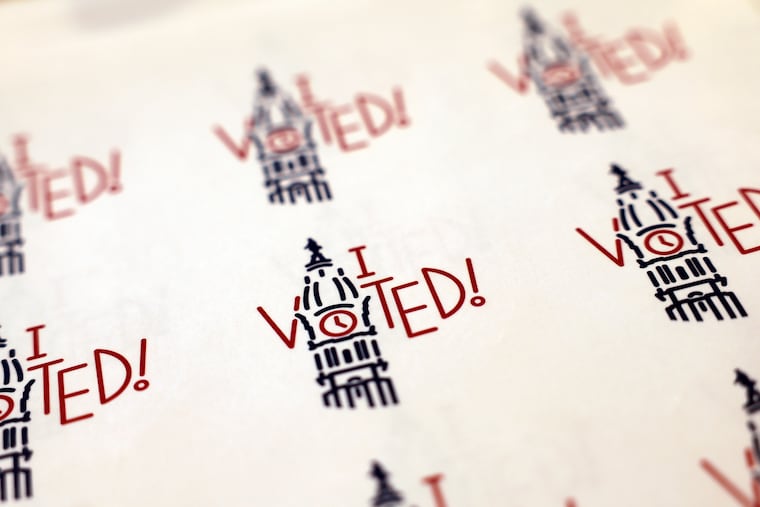
I always vote in person because the ritual reminds me of how lucky Americans are to still have the privilege. Inevitably, after exiting the booth and grabbing an “I voted” sticker, I say a silent thank you to my grandparents who emigrated from Russia in 1905, enduring weeks in steerage before making it to Ellis Island.
Yet this year, as I left the polls, I couldn’t stop thinking of how shocked they’d be to see that the goldene medina — the golden land they struggled to reach — was developing ugly similarities to the country they left behind.
As this election proves, at least with the way it was funded, America is sleepwalking toward the kind of Russian-style oligarchy that exists around Vladimir Putin. In an oligarchy, a handful of extremely rich people amass outsized power and help finance a corrupt authoritarian leader, who can reward or punish them as they serve his needs.
U.S. Sen. Chris Murphy (D., Conn.) eloquently described this threat after the 2024 elections:
“What it means is that a handful of really rich people run the government. And they steal from ordinary people using their access to government in order to make themselves and their families even richer. That is likely what we are headed for in the United States of America. I don’t think it is a coincidence that Trump’s cabinet is filled with billionaires.”
In the United States, America’s oligarchs are even more powerful than Russia’s.
Think Elon Musk, the world’s richest man, who poured nearly half a billion dollars into funding GOP candidates in 2026, including more than $150 million into the Texas Senate race alone.
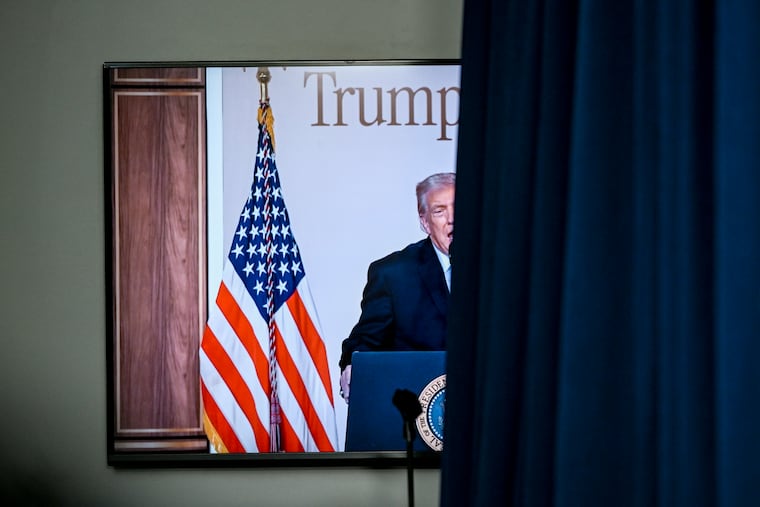
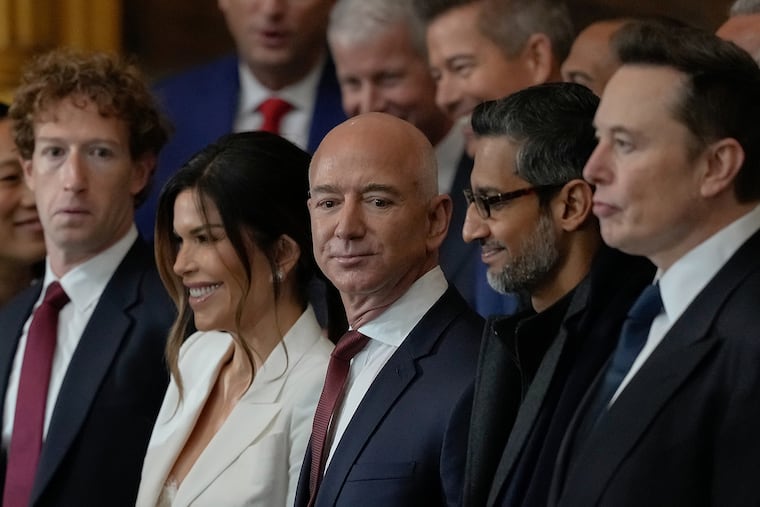
Under Donald Trump, the tech-bro billionaires, including nine out of the 10 richest people in the United States, adorned his side at his inauguration. They obtain immense government contracts, and in return fund his whims — and his campaigns.
This hit to democracy will only worsen if Republicans retain the Senate (I am writing before the complete vote is in). But even if Democrats win both chambers, it will take immense effort to reverse this antidemocratic slide and require a turnover of power in the 2028 presidential election.
Yet, a look at what has happened to the Russian oligarchs should warn the U.S. breed that their illusion of godlike powers won’t guarantee their survival if they facilitate authoritarian rule.
I watched and interviewed the Russian oligarchs in their prime during the 1990s as they facilitated Putin’s rise to power. Their story offers a pointed warning to the would-be “masters of the universe” here.
In Russia, the system developed after the collapse of the Soviet Union. In the 1990s, a few canny individuals managed to gain private control of flailing state-owned companies that controlled Russia’s media and its national resources, including oil and gas. In return, these moguls provided the funding and favorable coverage that enabled President Boris Yeltsin to be reelected in 1996 in a difficult campaign.
In that same year, I interviewed Boris Berezovsky, the cocky leader of the seven most prominent oligarchs who engineered Yeltsin’s win. Preening at the 2006 World Economic Forum in Davos, Switzerland, he bragged that the Russian oligarchs resembled the American “robber barons” who had built U.S. industry in the late 1800s. He made clear his belief that only the oligarchs had the talent to rule, and it was he who engineered the installation of Putin as acting president at the turn of the millennium when Yeltsin suddenly resigned.
Yet, as Putin centralized power and took control of the security services, from which he built his own circle, he retook control of Russian national TV, which had been privatized — including Berezovsky’s prominent channel. One of Putin’s top aides told me at the time that “If we need independent media, we will create it.”
Putin then drove Berezovsky into exile, where he died of a suspicious “suicide” in 2013.
When one of the remaining oligarchs, international oil magnate Mikhail Khodorkovsky, tried to enter politics and dared to critique constant Kremlin demands for payoffs, Putin had him sent to Siberia after a fake trial. A decade later, Khodorkovsky was allowed to go into exile, followed by other leading oligarchs whose property was also taken by the state.
There is still a powerful oligarchy in Russia, headed firmly by the top dog, ultra-rich Putin. He and his allies control the bulk of Russia’s natural resources that haven’t been retaken by the state. But the Russian leader has ensured that, these days, they are mostly personal friends drawn from security circles and know better than to bark.
On the surface, the richest U.S. oligarchs look like a different breed, since they have mostly created their own companies. But as they move to exert political power and bend their politics to suit Trump’s, they strengthen the autocratic power of any president they serve.
According to the Washington Post, Musk’s companies — primarily SpaceX and Tesla — have received at least $38 billion in government funding (including contracts, loans, subsidies, and tax credits) over the past two decades, which helped Tesla survive and SpaceX ramp up.
In return, among other favors, Musk viciously slashed (some would say destroyed) whole agencies at Trump’s behest (scoring new contracts in the process) while plowing almost half a billion dollars into this election cycle, which is the most expensive ever.
The money Trump can access for his favorite projects from his circle (not to mention from foreign favor-seekers) destroys any concept of conflict of interest. Helped by a U.S. Supreme Court that gave us Citizens United v. FEC and by a supine GOP-led Congress, these moneymen turn democracy into a farce.
But what is most frightening is that, as they feed from the government trough, the oligarchs are growing to resemble their Russian counterparts in their fatal dependence on the Kremlin — whoops, I mean Trump’s White House.
A U.S. oligarch knows who butters his contracts. So we must ask whether media mogul David Ellison (whose father, Larry, is worth $200 billion and a bona fide oligarch) can avoid pandering to Trump, or if tech bros can avoid squelching any burst of conscience calling for restraints on artificial intelligence, or if Musk can avoid pandering to a Trump desire to harm Ukraine via cutting Starlink access.
And let’s not forget Trump’s increasing appetite for taking U.S. government equity stakes and ownership positions in prominent U.S. companies, including an approximate 10% stake in Intel. I won’t call it socialism, but the White House has an awful lot of leverage over companies such as Google or Meta or Nvidia, whose billionaire owners are part of the Trump oligarch team.
Consider the midterms a stark warning.
The GOP megadonors who dominate the Top 20 contributors to federal races this year are a symbol of the Russification of our politics. Money talks, especially when it funds politics and predominantly supports one side.
And despite their brilliance, if U.S. billionaires enable an authoritarian to solidify executive power with the Supreme Court’s help, if he can take full control of the intelligence agencies and the military — then that wannabe dictator will rule all.
It is up to the next Congress, especially if it comes under Democratic control, to focus on how to rein in Trump’s oligarchs. Or else we will watch the U.S. turn into an imitation of the Russian-style oligarchy that, thanks to my grandparents, I never had to endure.
About our columnists
In contrast to news reporters, who operate within an independent, nonpartisan framework, columnists are charged with including their perspectives, opinions, and viewpoints when presenting their reporting. Inquirer columnists include Jenice Armstrong, Will Bunch, Luis F. Carrasco, Paul Davies, Daniel Pearson, Trudy Rubin, and Sabrina Vourvoulias.