‘People are sacrificing necessities.’ Ahead of Pa. governor’s race, the economy weighs heavily for Latino voters
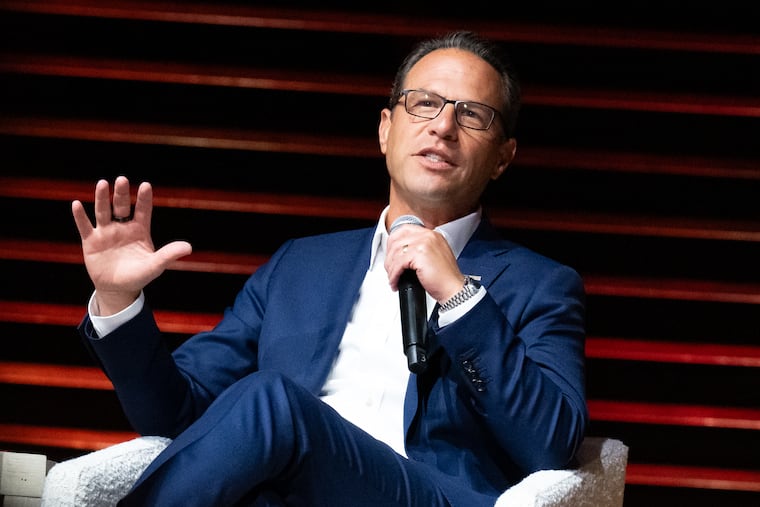
Latino voters shifted toward President Donald Trump nationally in 2024, but several Philly Latino voters say they're all in on Democratic Gov. Josh Shapiro as November approaches.
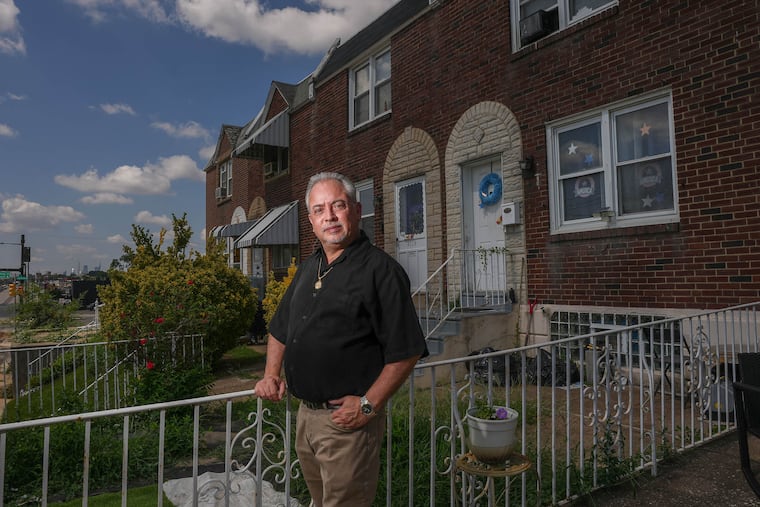
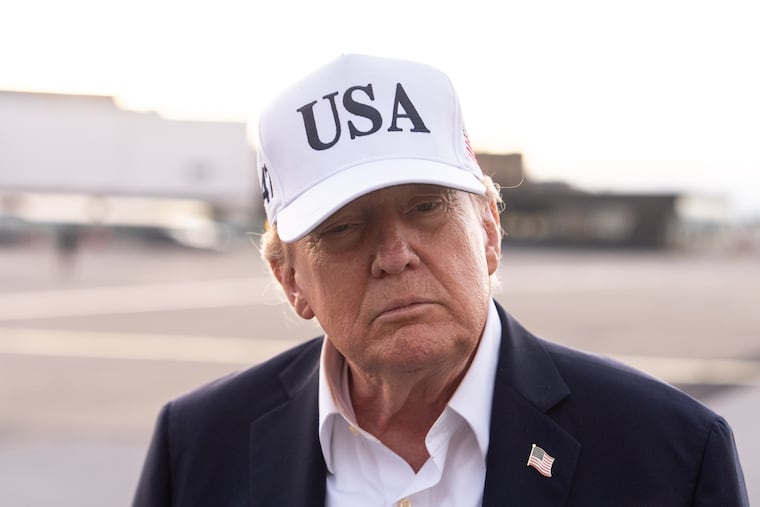
Jorge Luis Burgos of North Philadelphia, a registered Democrat, was one of many Latino voters who shifted to the right and voted for President Donald Trump in the 2024 presidential election.
Now he’s planning to shift back and vote for Democratic Gov. Josh Shapiro as he runs for reelection in the key swing state.
“Shapiro 100%. I love the way he manages everything,” Burgos said while attending Arte en las Calles, an event last weekend celebrating Latino culture held by the Esperanza Art Center in North Philadelphia.
Burgos, 57, who moved to Philadelphia from Puerto Rico in 1980, said he voted for Trump in 2024 because he was worried about inflation and felt betrayed by the last-minute switch that swapped then-President Joe Biden for Vice President Kamala Harris as the Democratic nominee. But he said Trump has failed to fulfill his promises, and he has found himself turning back to the Democratic Party.
“I was disappointed, and that’s why I switched. But you ask me now, I’m disappointed, too. Big time,” Burgos said. “Trump didn’t accomplish his promise: ‘On Day One,’ inflation is gonna go down. It didn’t happen.”
In the past decade, support of Republican candidates, specifically Trump, has grown in the majority Latino precincts of Philadelphia — with Trump’s share of the vote increasing from 6.1% in 2016 to 21.8% in 2024.
While Harris still won these wards — and a slight majority of Latino voters nationally, according to exit polls — Trump’s improved performance with this voter group helped him win both Pennsylvania and the presidency.
Burgos, like many other supporters who shifted to the right, said Trump’s promises to bring the cost of living down to its pre-COVID rate ultimately won over their vote.
Ninety-three percent of Trump’s Latino supporters cited the economy as the main issue driving their vote in the 2024 election, according to a September 2024 Pew Research Center poll.
But now many Latino voters have not seen the outcomes they were hoping for, with a May poll from Pew finding that Trump’s support has fallen more sharply with Latino voters than other voters. Only 66% of Hispanic Trump voters approved of his job performance in the poll, falling 27 percentage points from the start of his presidency.
According to a May poll from UnidosUS, a national Latino civil rights organization, 66% of Latino voters say Trump and congressional Republicans are not focused on fixing the economy.
Pennsylvania Democrats and Republicans will be seeking to sway these voters in November when Shapiro faces off against Republican nominee Stacy Garrity, the state’s treasurer, in the race for governor.
What are the issues on the minds of Latino voters?
Latino voters, who make up more than 600,000 of eligible voters in Pennsylvania and are the fastest-growing demographic group in Philadelphia, said in interviews that the economy, immigration, and support for small businesses are the issues that will determine who they vote for.
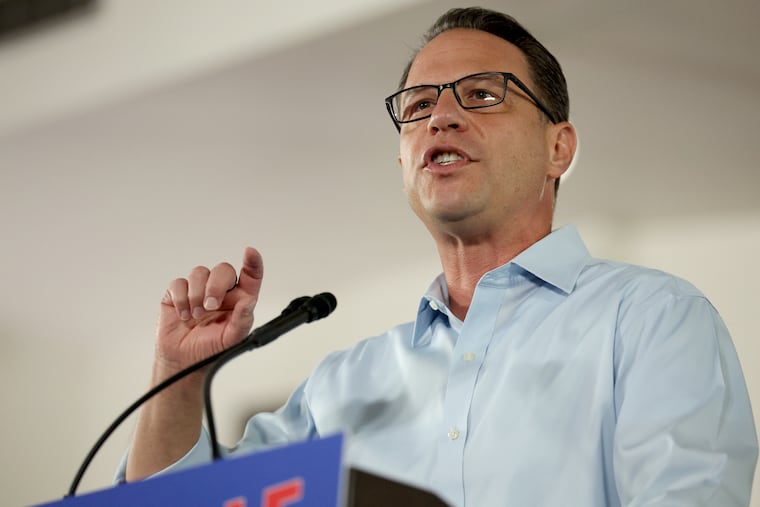
“They’re focused on cutting costs,” Shapiro said of the region’s Latino voters at a rally with congressional candidate Bob Brooks and House Minority Leader Hakeem Jeffries in the 7th Congressional District, one of four GOP-held seats in the state Democrats are hoping to flip after the area accounted for some of Trump’s biggest Pennsylvania gains in 2024.
“They’re focused on their small businesses getting help,” Shapiro said. “They’re focused on more cops on the street for safer communities and schools that are stronger.”
Jaime Negrone, 67, from North Philadelphia, has lived in Pennsylvania his whole life but has roots in Puerto Rico. He said the cost of living is the major issue he is hoping to see tackled.
“Everything has become so expensive,” Negrone said. “People are sacrificing necessities on one end to cover for the other end: food, gas, housing.”
Negrone said he will vote for Shapiro over Garrity because the governor seems to be more connected to the people of Pennsylvania.
“Shapiro has a pulse on the issues in Pennsylvania,” Negrone said. “He’s been in the office, he knows the politics, and he seems to be a politician for the people.”
Seth Ortiz, 30, a second-generation Puerto Rican from Northeast Philadelphia, said he’s going to vote for Democratic candidates in November because he feels that’s the only way to protect people’s rights amid increased immigration enforcement.
“I don’t like the fact that ICE is pretty much doing what they want in U.S. cities. At some point, even killing American citizens and getting away with it, it’s horrible,” Ortiz said. “So anyone who is going to stand up for immigrant rights is probably the most important thing for me. And it’s probably always going to be the Democrat.”
Gladis Avila, 55, a Venezuelan business owner from South Philadelphia, said she is not sure who she is going to cast her vote for yet. She wants a candidate who is going to stand up for her community and small businesses but has not heard much outreach from either campaign.
“The Latino community needs people who work more for our community,” Avila said. “...When we vote, we want to feel like we are voting for someone who is going to help our community. Because that’s our voice, and our voice has an impact.”
Echoing this, Jennifer Rodriguez, president of the Greater Philadelphia Hispanic Chamber of Commerce, a nonprofit focused on the economic growth of the Hispanic community, said she’s heard worries from businesses about being able to keep up with their expenses.
“Small businesses are very, very concerned about the viability of their businesses,” she said. “And in the really escalating cost environments. Particularly, the labor force has become very costly.”
How are campaigns reaching the Latino community?
Matt Beynon, a representative for the Garrity campaign, said that helping small businesses is the main concern the campaign has heard from Latino voters.
“And a lot of concerns she’s hearing are about the overregulation and red tape that is preventing them from either starting a business, growing their business, expanding their business,” he said.
Outreach to the Latino community has so far included attending community events in Philadelphia and other communities with large Latino populations, like Allentown, Beynon said.
Shapiro has also spent time in majority Latino areas. In May, he attended and co-hosted “Fiesta on Hamilton,” in Allentown, a street festival that celebrates Latino culture in the Lehigh Valley.
“During Fiesta on Hamilton, Gov. Shapiro met with local small business owners, entrepreneurs, creators, cultural leaders, and local officials as part of Shapiro for Pennsylvania’s ongoing commitment to engaging, uplifting, and investing in Latino communities across the Commonwealth,” the Shapiro campaign wrote in a statement.
Samantha Reposa, a representative for the Shapiro campaign, said the campaign is also running Spanish-language radio ads to further engage voters.
‘I feel left behind’
Despite this, many Latino voters in Philly said they haven’t felt reached by either campaign.
Rodriguez expects messaging to ramp up closer to the election. Because of the Latino community’s lower voter turnout in relation to other groups, Rodriguez said they are often the last to be reached, a strategy she is hoping to see change
“One thing that typically happens is that the Latino community oftentimes is the last community to be approached by politicians and their systems,” Rodriguez said. “The Latin community’s voter engagement is relatively low. And a lot needs to be improved, but a lot of it has to do with candidates really seeking the relationship with our community much earlier on.”
Carolina Hansell, 61, immigrated from Venezuela 33 years ago and is planning to vote for Shapiro, but said she has seen and felt the conservative shift in her community and that it’s in part due to a lack of outreach.
“They need to work and talk to real people and the neighbors over here,” Hansell said. “It’s the only way to convince people and have a good plan. There’s not a plan right now, not in that Democratic Party.”
Anjoli Santiago, 41, said it’s not just the Democrats that are lacking but feels like both political parties have lost touch with the Latino community and sees that trend continuing.
“I think it will continue if we don’t have more conversations about how diverse our people are and the different needs that our people have,” Santiago said. “I feel left behind by both parties definitely. It feels like we are voting and those who we vote for no longer represent us.”
Staff writer Michelle Baruchman contributed to this article.