More than 2,000 of N.J.’s ‘noncitizen voters’ could actually be citizens, Gov. Sherrill says
New Jersey Gov. Mikie Sherrill said the state is removing 4,500 voters from the rolls but that counties will determine if the remaining individuals identified as noncitizens are actually not citizens.
About 2,000 New Jersey voters identified last week as noncitizens could actually be citizens after all, Gov. Mikie Sherrill said Tuesday, a week after her disclosure of a voter registration glitch put the state at the center of a heated national debate over election security.
Sherrill announced last week that approximately 6,600 noncitizens had been registered to vote ahead of the 2024 election due to a software glitch with the New Jersey Motor Vehicle Commission’s automatic voter registration program. She said fewer than 400 of those people had voted and there is no evidence that they affected the results of any election. The finding came in the midst of a political fight over President Donald Trump’s claims of widespread voter fraud, including by noncitizens, and his aggressive push for an overhaul of the country’s election system.
The first-term governor said Tuesday that the New Jersey Department of State’s Division of Elections has begun a process to remove more than 4,500 individuals who were registered because of the software error, but that the rest of the registrations will be referred to county election officials for further review “to ensure that any lawfully registered voters are not being disenfranchised.”
“We are taking this extra step because our initial review indicates that a number of these individuals may be citizens,” she said in a statement. “That has been the case in other states where clerical and administrative voter registration errors have occurred, and we’re determined to get this right.”
Her office announced the discovery a little more than one hour after celebrating New Jersey’s new John R. Lewis Voter Empowerment Act, which Sherrill signed July 2. Lewis was a civil rights leader who represented Georgia in Congress from 1987 until his death in 2020.
The law, which is based on a federal proposal that former President Joe Biden unsuccessfully tried to pass, promotes equal opportunity to voting and voter outreach to communities that do not speak English proficiently, and prohibits intimidation, deception, violence, or restraint of voters or election workers.
The law lays out a process for individuals who want to file a complaint over voting rights and requires public hearings for redistricting.
If jurisdictions have a history of discrimination, the law requires approval from the attorney general before they can make changes to their election administration. It also gives the attorney general authority to enforce the law through litigation, investigations, and studies, and by representing the public in federal court.
“Here in New Jersey, if your rights are violated, you have a right of action,” Sherrill said at Union Baptist Church in Trenton.
Sherrill said New Jersey is the 10th state to enact the model, but the first to do so since an April Supreme Court ruling that weakened part of the Voting Rights Act as the court’s conservative majority ruled against a majority-Black district in Louisiana.
Supporters of the bill said they had been advocating for it for four years in New Jersey.
Sherrill’s Tuesday celebration at the church shows the governor is not shying away from the issue of voting rights even as the state becomes a talking point for Republicans who want enact new national restrictions — including requiring voters to provide proof of citizenship to register with documents like a birth certificate or passport.
Sherrill opposes the national legislation, known as the SAVE America Act, which has been championed by Trump as a way to make elections more secure but which opponents warn could make it tougher to vote for millions of Americans.
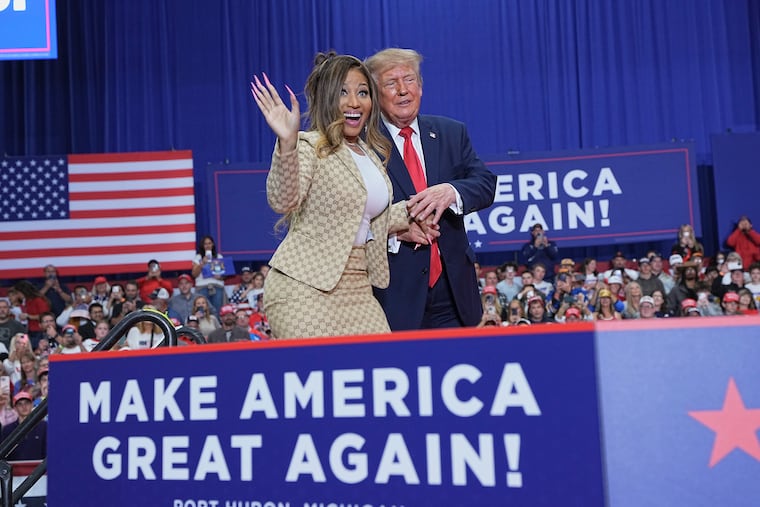
“Trump has only one concern: winning at any cost, and he’s willing to put the right to vote at risk,” Sherrill said Tuesday. “There’s no line he won’t cross, no rule he won’t break, no norm he won’t violate. But we will not stand idly by.”
The former member of Congress will likely continue to have a role in the debate as Republicans ramp up their advocacy ahead of November’s midterm elections.
U.S. Rep. Jeff Van Drew, a South Jersey Republican who was elected as a Democrat in 2018 before vowing his loyalty to Trump a year later, led a public letter with other House Republicans calling on Sherrill to answer a series of questions about the noncitizen voting issue. He questioned how she knows it was “just a software glitch and not a nefarious act.”
Van Drew, who chairs the House Judiciary Subcommittee on Oversight, said he plans to hold hearings over the issue and is “absolutely exploring” the possibility of subpoenas, Politico reported.
On Tuesday, Sherrill said Van Drew “has a very sordid history as far as elections go.” She said Van Drew’s campaign had hired a political operative who was a “known ballot harvester” — referring to Craig Callaway, who worked on Van Drew’s 2022 bid.
Callaway, a former Atlantic City Council president, had previously served prison time for blackmail and bribes when Van Drew’s campaign hired him. In 2025 under former U.S. Attorney Alina Habba, Callaway pleaded guilty in connection with fraudulent mail-in ballots during the 2022 election, but Van Drew said he was not aware of any illegal activity and was not accused of wrongdoing.
Sherrill said her administration hired the CSG law firm to conduct an independent investigation into the voting registration glitch. One of the firm’s main partners, Jeffrey Chiesa, served as attorney general under former Republican Gov. Chris Christie, who later appointed him to the Senate.
“We have a bipartisan, independent investigation going on right now because we have nothing to hide,” Sherrill said.