Trump tightens grasp on GOP as Cassidy loss shows cost of defiance
The president's push to oust Republican lawmakers who have crossed him claimed its most prominent name yet in Louisiana this weekend, retiring Sen. Bill Cassidy.
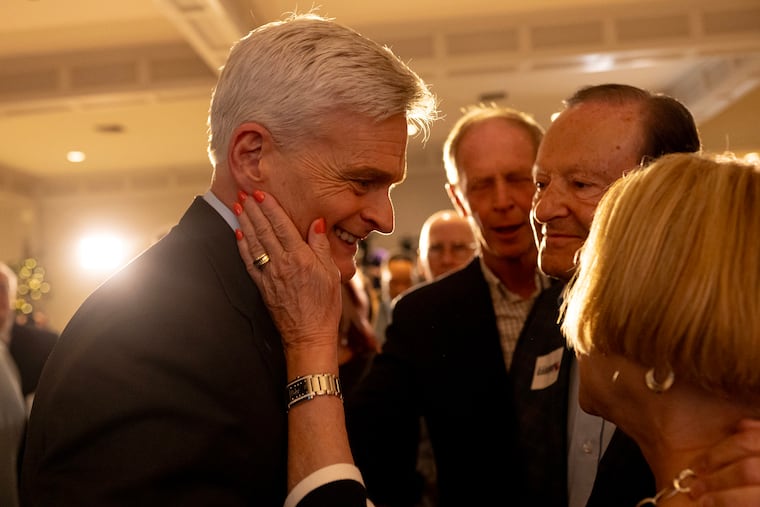
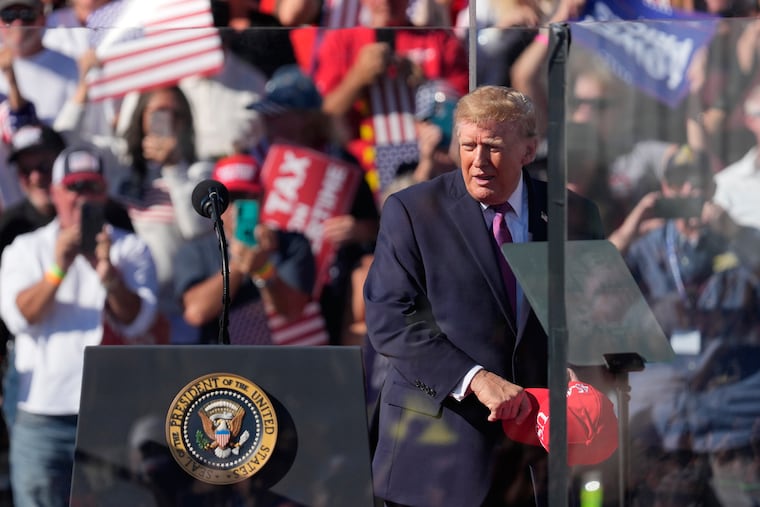
President Donald Trump’s push to oust Republican lawmakers who have crossed him claimed its most prominent name yet in Louisiana this weekend, reinforcing Trump’s dominance in the party, even as the GOP braces for a potential backlash to his presidency in the midterm elections.
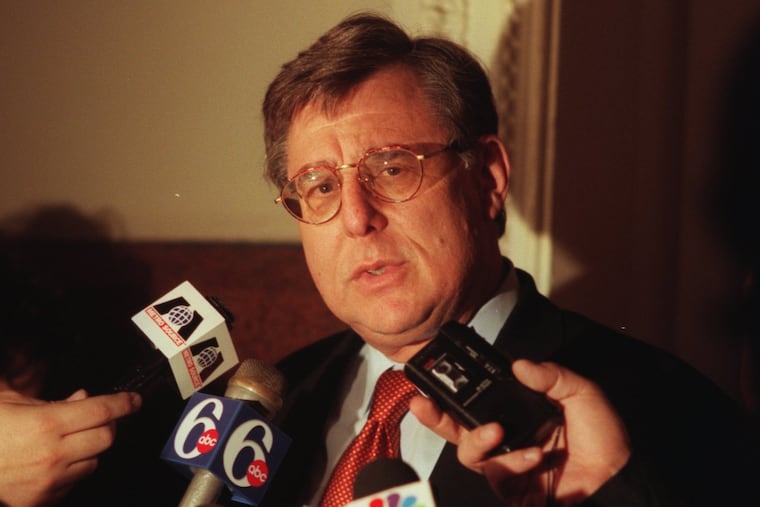
For the second time this month, Republican primary voters sent a message about the price of defying the president, this time by retiring Sen. Bill Cassidy, who voted to convict Trump in his impeachment trial after the Jan. 6, 2021, attack on the U.S. Capitol. The outcome in Louisiana on Saturday followed losses by a group of Indiana state lawmakers whom the president targeted for political payback. And it arrived just before another big test on Trump’s retribution tour: a House primary in Kentucky on Tuesday.
In each case, Trump trained his ire at Republicans for different reasons. He endorsed against the Indiana lawmakers after they opposed a redistricting plan; turned on Cassidy over the 2020 election and subsequent impeachment vote; and is now trying to take down Rep. Thomas Massie of Kentucky, a Republican who has criticized him over the Epstein files and the war with Iran.
But the moves combine to form a picture of a second-term president who brooks little dissent in his party — and whose sagging standing with the general public is doing little to deter him from asserting his influence on a party in his thrall.
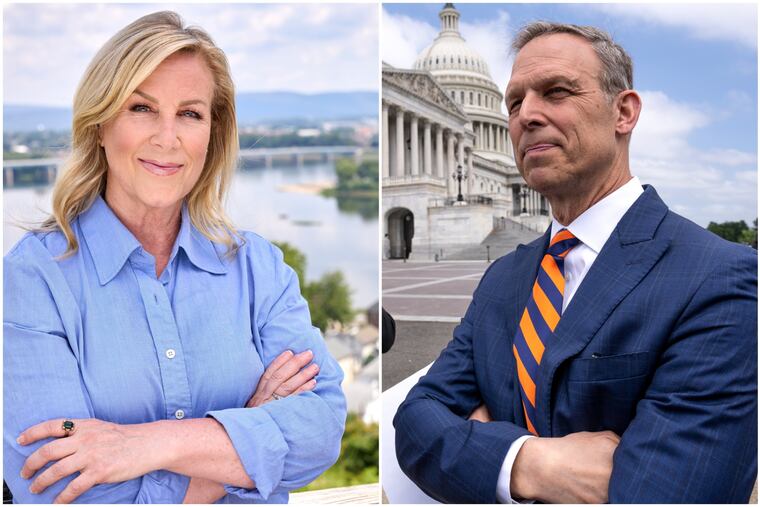
“You get on the wrong side of Donald Trump in one of these primaries, and it’s highly likely to be a bad day for you,” said Scott Jennings, a Republican strategist and CNN analyst. “Donald Trump’s word and judgment in a Republican primary is the thing that matters the most. In many cases, it is the alpha and the omega.”
As voters cast their ballots in Louisiana on Saturday, Trump signaled interest in a new potential target, assailing Rep. Lauren Boebert (R., Colo.) over her support for Massie.
“Even though I long ago endorsed Boebert, if the right person came along, it would be my Honor to withdraw that Endorsement, and endorse a good and proper alternative,” Trump wrote on social media. (In response, Boebert posted that she was still “MAGA” and was simply standing with a friend in Massie.)
It is a risky approach for Trump, whose party is hurtling into midterm headwinds posed by high consumer prices, the unpopular war with Iran, and a concern among some swing voters that the president is distracted from pocketbook issues, consumed by overseas conflicts and various feuds. Polls show that Trump’s approval rating is well underwater, an indicator of danger for the GOP this fall.
Now, vulnerable Republicans may feel that they have even less space to dissent from the administration. Even as some prominent voices in Trump’s Make America Great Again movement have rebelled since the war broke out, the president’s hold on the party’s base has appeared durable.
“It’s an important reminder that while overall his popularity’s pretty low, he still remains extremely popular amongst his Republican base,” Jon Fleischman, a Republican strategist, said of the result in Louisiana.
The next test of Trump’s influence will come this week when Massie, a longtime Trump critic from a deep-red state, faces Ed Gallrein, a farmer and former Navy SEAL. Massie led the charge among congressional Republicans to release files related to convicted sex offender Jeffrey Epstein, taking on Trump over his initial resistance. More recently, Massie has accused Trump of violating campaign promises by starting the war with Iran.
Trump, in turn, has endorsed Gallrein, campaigned with him in Kentucky, and showered Massie with insults, calling him a “RINO,” short for Republican in name only.
In some ways, Massie is a challenging target for Trump: The seventh-term member of Congress has a unique pull on an independent-minded section of rural Kentucky, local Republicans say, and he has fended off challenges before.
“My situation is a little bit different,” Massie told ABC News on Sunday, noting that four members of Congress had joined him on the campaign trail Saturday. “Plus, I’ve had millions of dollars come in from the grassroots, tens of thousands of donors, to my website.”
Trump hasn’t shied away from picking tough primary fights. On Saturday, Cassidy, a well-funded incumbent, was the latest victim.
Cassidy, facing a hail of insults from Trump, failed to make a runoff in his Republican primary battle. He finished behind Trump’s choice, Rep. Julia Letlow (R., La.), and state Treasurer John Fleming, a former member of Congress who served as an official in Trump’s first administration.
“Our country is not about one individual,” Cassidy said in his concession speech. He added, “If someone doesn’t understand that and attempts to control others through using the levers of power, they’re about serving themselves.”
Cassidy’s loss offered another signal that Trump’s false claim that the 2020 presidential election was stolen from him remains a live issue for many Republicans. Cassidy had urged voters not to focus on “events from five years ago, six years ago,” saying that the race was “about the present and the future.”
Trump and some voters did not appear ready to move on.
In social media posts Saturday, Trump celebrated that Cassidy had “lost by such large numbers” and declared that the senator’s “disloyalty” was now “a part of legend.”
Derek Babcock, chairperson of the Louisiana Republican Party, said that Cassidy had been a strong supporter of Trump since the president returned to office and that the senator had labored to persuade Republicans to “forgive” the vote in the impeachment trial.
“He’s worked hard to try to earn that forgiveness,” Babcock said Saturday. “I just can’t say that I’m seeing it.”
Trump took his revenge on Republican state lawmakers in Indiana who refused to answer his call to redraw the state’s congressional map, endorsing primary challengers to seven of the legislators. Five of the Trump-backed candidates succeeded in ousting the incumbents in early May.
Rep. Barry Moore, an Alabama Republican running in a competitive Senate primary, said in an interview Saturday that the recent results sent a “strong message” that Trump continued to have a “very, very powerful voice” in the party.
Moore, who is on the ballot in Alabama’s primary Tuesday, was endorsed by Trump in January. He said the development had “moved the needle dramatically” for him, offering him a roughly 30-point lift in the polls.
But if Trump’s latest success was welcome news for the candidates he supports, it may have made some vulnerable Republicans uncomfortable. Matt Rexroad, a Republican consultant, said the president’s approach to primaries was “really a quandary” for swing-district Republicans who would like some space from the president but now must consider how their votes will land with Trump.
The interventions by Trump have been concentrated in deep-red states, and the president has apparently shown a degree of sensitivity to Republican concern that some of his moves could backfire in the midterms.
On Thursday, Vice President JD Vance offered warm words to Sen. Susan Collins (R., Maine), a vulnerable incumbent who joined Cassidy in the 2021 impeachment trial vote, saying she was “doing a great job,” even if he sometimes becomes “frustrated” with her.
And in February, Trump withdrew his endorsement of Rep. Jeff Hurd (R., Colo.) over his opposition to Trump’s tariff regime, instead backing a right-wing primary challenger. The move landed poorly with some Republicans, who warned that Trump’s new choice, Hope Scheppelman, could imperil the party’s chance of keeping the seat in November.
Trump backed off. In March, he reversed and reendorsed Hurd, clearing the field by inviting Scheppelman to join his administration.
In that race, Trump spoke not of bruising intraparty disputes or unseating “RINOs,” but of a need to unite going into November.
“Every true MAGA supporter and Republican,” he wrote on social media, “if they truly care about saving our Country, will do everything in their power to unify together.”