Philadelphia’s taxi fleet is shrinking. This app is helping keep cabs alive in Boston and beyond.
Could allowing taxi drivers to respond to Uber requests in Philadelphia help save an ailing taxicab industry?
Uber and Lyft helped flatten the taxicab industry. Now they are joining forces.
Last month, Boston became the latest city where drivers of licensed taxicabs can respond to rideshare trip requests, using apps that are integrated with the Uber and Lyft platforms.
But don’t expect to see this change in Philadelphia, even as the city’s taxi business continues its free fall.
Curb, the leading app company for cabs, and Uber petitioned the Philadelphia Parking Authority, which regulates taxis in the city, to allow coordination of rides on a pilot basis but eventually withdrew the proposal.
Pennsylvania law strictly separates licensed cabs and transportation network companies like Uber, said Christine Kirlin, deputy general counsel for the PPA and former head of its Taxi and Limo Division.
“It was a handful of regulations that just couldn’t be integrated,” Kirlin said, adding that state law would need changes for it to work.
For instance, she said, taxi fares in the city are set by the PPA and cab operators are not allowed to flex prices, as rideshare companies do during periods of high demand. Drivers also need a commercial license, and taxi vehicles are subject to safety inspections — and regulatory fees — that rideshare is not.
In other cities, referrals from rideshare companies account for 30% to 60% of total taxi trips, said Dorel Tamam, vice president for mobile business at Curb.
He is in charge of Curb Flow, an open API platform that aggregates available rides from multiple sources, including Uber and Lyft, direct hails from taxi apps, fleet dispatches, and taxi ranks.
“This program is helping actually reduce idle time, increase the overall trips, giving drivers the add-on opportunity to earn more,” Tamam said.
Curb Flow is being used in 17 U.S. cities, including Newark, N.J.; Seattle; Los Angeles; New York; Reno, Nev.; and Charlotte, N.C.
Philly’s taxi nosedive
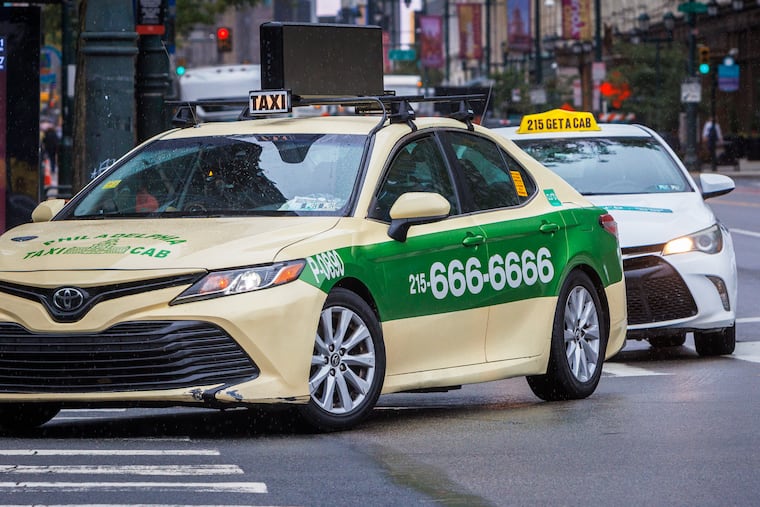
The taxi business has been declining in Philadelphia for more than a decade, coinciding with the arrival of Uber and Lyft in the city. Pandemic restrictions also hurt.
Taxi rides dropped 88% from 2015 to 2025, PPA data show.
Fewer cabs are available. In 2010, a monthly average of 1,600 taxis were on the road. In 2025, there were 674, reflecting a 58% drop.
As of June, 633 taxis were active in the city, suggesting a continued decline.
“Things have not really improved. There’s less people out there driving,” said Ron Blount, president of the Taxi Workers Alliance, who believes the number could be even smaller.
“A lot of drivers do both taxis and [rideshare] switching back and forth, trying to make it work,” Blount said.
He said that Curb Flow would lead to more trips for drivers here, but that it was unclear how much their net incomes would improve.
And the average sales price for a taxi medallion, a license required for each cab to operate in the city, fell to an average of $12,857 last year.
The average price was just over $500,000 during several months of 2014, according to PPA numbers.
“We really hope one day to bring it to Philadelphia,” said Tamam, the company vice president in charge of Curb Flow. ”We’re open to further collaboration with the regulators."

A passenger will request an UberX or Lyft Standard ride and then the rideshare company’s app would decide whether to route the job to a taxi or one of its own drivers.
“Usually the decision is based on what vehicle has a better ETA,” Tamam said. “The concept is to service the passenger as fast as possible.”
Because they are integrated with the taxi elements of Curb Flow, the rideshare platforms know when a cab is available and not already carrying a passenger hailed on the street, for example, he said.