DA Larry Krasner will not be called to testify about a case that has roiled his office
Two city prosecutors testified Tuesday and continued to paint a portrait of an office consumed by internal conflicts. But U.S. District Judge Paul S. Diamond said he won't seek Krasner's testimony.

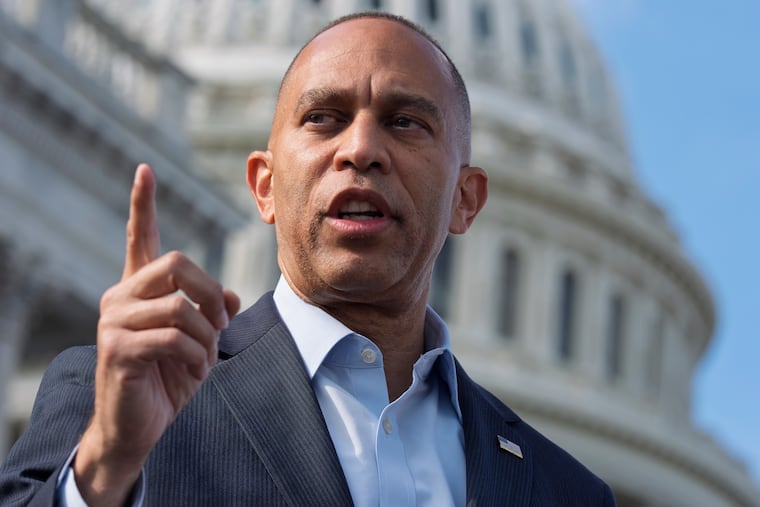
A federal judge said Tuesday that he will not call Philadelphia District Attorney Larry Krasner to testify about his actions in a controversial post-conviction case — despite the fact that some of Krasner’s own staffers have accused him of overseeing the matter in ways they viewed as inappropriate.
The decision by U.S. District Judge Paul S. Diamond came at the end of a multiday hearing at which two of Krasner’s prosecutors testified about the discord that emerged among lawyers in the office as they worked to determine whether a man’s murder conviction should be overturned.
Both prosecutors who testified Tuesday, David Napiorski and Peter Andrews, largely echoed assertions two of their colleagues made on previous days of the hearing — including that Krasner vehemently opposed referring the case to the state attorney general’s office, and that he threatened unspecified “consequences” for those who didn’t follow his orders.
In earlier testimony, other staffers accused Krasner of calling state prosecutors “Nazis” and growing “apoplectic” when they memorialized their disagreements with him in writing. Diamond last week also suggested that some actions in the case could amount to crimes including perjury, conspiracy, or obstruction of justice.
Napiorski and Andrews continued to paint a portrait of an office consumed by internal conflicts over its actions in the matter. And they accused Krasner of sometimes amplifying the drama.
Despite that, Diamond said at the conclusion of the hearing that he did not intend to hear from any other witnesses, including Krasner. Instead, Diamond said, his next step would be to determine whether Krasner’s office should be allowed to continue participating in the case moving forward. He did not specify how quickly that ruling might come.
Krasner declined to comment Tuesday. He has previously declined to talk about the matter, saying it would violate ethical rules to do so while it remains pending.
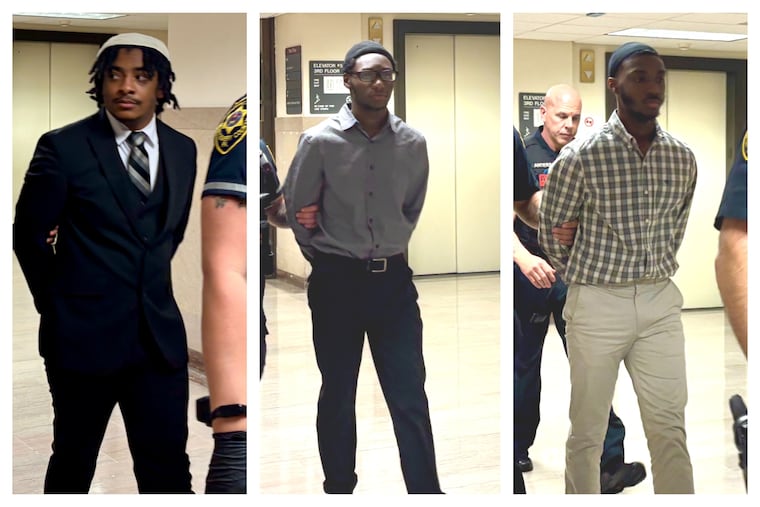
The underlying case is the conviction of Dennis Johnson, who was found guilty of second-degree murder in 2009 for fatally shooting Kenyatta Smith outside a North Philadelphia convenience store.
Johnson appealed his conviction, in part because he said his trial attorney was ineffective. And in 2022, a newly hired prosecutor in Krasner’s law division, Jaclyn Mason, filed court documents agreeing with him and saying his conviction should be overturned.
But this spring, some of Mason’s colleagues began reviewing the case and took the opposite view — in part because they said she’d made clear and important mistakes in her brief supporting Johnson’s position.
That set off a sequence of events that has gone on to roil Krasner’s office.
First, Mason’s supervisors said they had to withdraw her brief and apologize to Diamond for her mistakes — an unusual step for lawyers to take in court.
And although they said they offered Mason a chance to join that effort, she resigned instead, saying she’d only filed her brief because her boss, Matthew Stiegler, had pressured her to do so, and that she didn’t want to be used as a scapegoat for the office.
In the weeks that followed, prosecutors testified, Krasner became involved in a series of disputes with those who remained on the case, including Napiorski, Andrews, and two of their colleagues: Katherine Ernst and Steven Wildberger.
All four went on to testify that they believed their office should recuse itself from handling Johnson’s case because their internal discussions had veered into areas of self-preservation rather than the merits of Johnson’s claims.
But Krasner disagreed, they said, at times angrily. He said he would not refer the case to the attorney general’s office because he viewed their staffers as “Nazis,” according to Ernst and Wildberger. And they and Napiorski said Krasner also wanted to keep the case in-house to “protect the office.”
By mid-July — about six weeks after Mason resigned — Ernst, Wildberger, Napiorski, and Andrews filed documents with Diamond saying they could no longer participate in the case due to the behind-the-scenes drama.
Krasner, in a court document of his own, called their assertions unauthorized and “ill-informed.”
As Diamond weighs how to sort out the turmoil, Roy Clark, Johnson’s father, said he’s become demoralized by how attention has shifted away from whether or not his son should be released from prison.
“With all the in-house fighting and stuff for the DA’s Office, it takes the human component out of the case,” he said outside the courthouse Tuesday. “We’re trying to get my boy home.”
Staff writer Jesse Bunch contributed to this article.