The answers on getting an infant an MMR 'dose zero' | Expert Opinion
As measles rises again, parents are concerned about their babies, who have been considered too young for their first dose of vaccine against measles, mumps, and rubella. Is there help available?
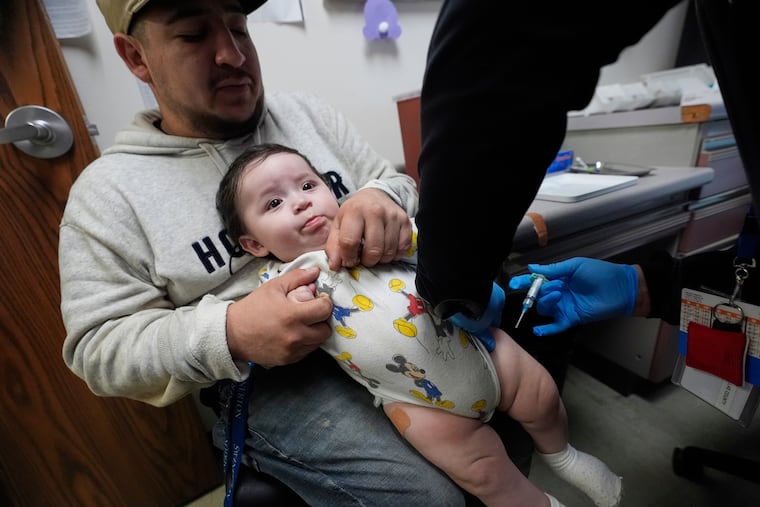
“Should I get my 7-month-old the MMR vaccine?” a worried mother recently asked me. She wasn’t the first, and unfortunately, she won’t be the last. Pediatricians’ offices across the country are hearing the same question: Should an infant receive an early MMR dose, sometimes called “MMR dose zero,” before their first birthday?
Disinformation, confusion, and fear are contributing to outbreaks of vaccine-preventable diseases throughout the United States and locally. Whooping cough (pertussis), meningitis caused by pneumococcus and Haemophilus influenzae, and severe intestinal infections caused by rotavirus have been almost eliminated because of vaccination, until now. Even delaying the Hepatitis B vaccine at birth to 2 months of age, is estimated to cause 1,400 preventable infections a year and 480 deaths.
But the most immediate threat that we are seeing daily in real time is measles.
As of Oct. 14, there were 1,222 cases reported in Pennsylvania in 41 counties this year, with six deaths. Nationally, measles cases are at a 35-year high. Measles is one of the most contagious infectious diseases known, and children are particularly prone to its serious complications, including brain injury and death.
Approximately 95% of a community must be vaccinated to stop the virus from spreading and protect the public. In 2025 almost 250 kindergartens in the Philly area had less than this. One school had a rate less than 80%.
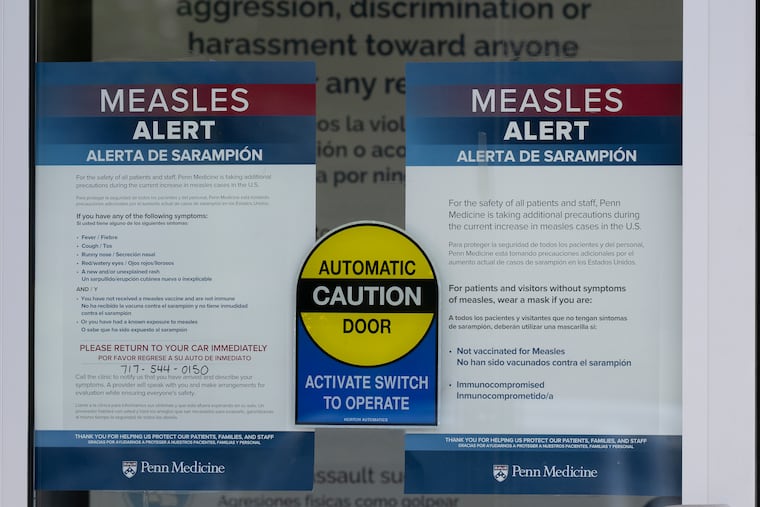
Measles symptoms typically occur 7-14 days after infection, so an infected person can spread the disease before they even know they have it. The classic triad of measles infections are the 3 Cs: Cough, coryza (a runny nose), and conjunctivitis (red watery eyes). Another finding is Koplik spots, tiny white spots inside the mouth. Three to five days after symptoms begin, a telltale rash appears on the face and spreads downward over the body often accompanied by an extremely high fever.
The complications can be devastating. About 1 in 5 unvaccinated people with measles is hospitalized. About 1 in 20 children with measles get pneumonia, the most common cause of measles-related death in children. Approximately 1 in 1,000 children with measles develops encephalitis, which can cause swelling of the brain. And between 1 and 3 of every 1,000 children infected with measles will die a preventable death.
Measles is also a public health nightmare. Each case of measles leads to massive contact tracing to find those exposed and help protect them and their loved ones. CDC guidelines consider anyone who occupied shared air within 2 hours of an infectious measles patient’s exit from the area to be exposed. Depending on an exposed person’s vaccination status, they may have to be quarantined for almost a month.
I have been practicing medicine for over 30 years and saw one case of measles in the late 1990s. Now, measles is back on the radar of every health practitioner.
Before the vaccine became available in 1963, many children in the United States were infected with measles, resulting in some 48,000 hospitalizations and 400 to 500 deaths a year.
In 1991, Philadelphia witnessed a large outbreak that killed nine unvaccinated children, a harbinger of the crisis we are facing more than three decades later.
After the vaccine became a routine part of pediatric care, measles cases plummeted. In 2000, measles was declared eliminated in the United States. No more.
“Those who cannot remember the past are condemned to repeat it,” is an old quotation that takes on new life as measles spreads.
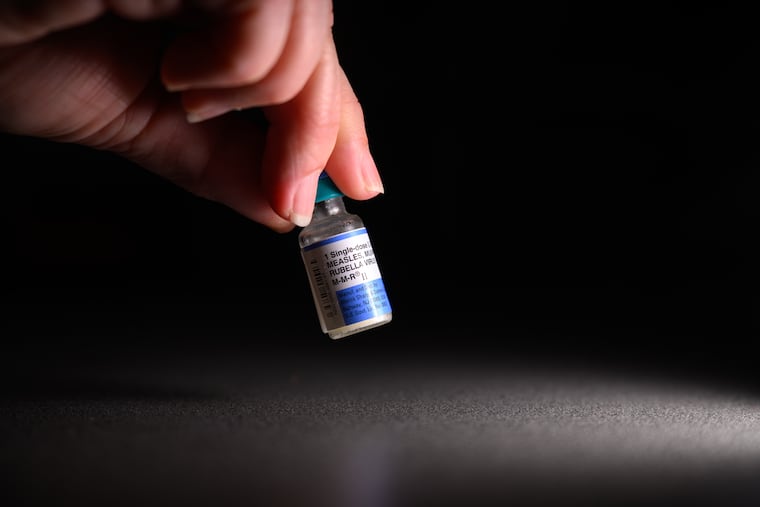
The MMR vaccine is recommended to be given at age 1 because maternal antibodies can interfere with the infant’s immune response when the vaccine is given earlier. However, in certain circumstances, an earlier dose may be recommended.
This early dose is now called “MMR dose zero” because it does not count toward the routine vaccination series. Infants vaccinated before their first birthday will still need two additional doses after turning 12 months old.
The Philadelphia Department of Public Health has issued guidance on early MMR vaccination. An early first dose is recommended for infants ages 6–11 months who are traveling internationally or to areas experiencing domestic measles outbreaks, including certain counties in Pennsylvania, where numerous cases have been reported as close to Philadelphia as Chester County.
An early dose may provide important protection, but it does not replace the two routine doses administered after the first birthday. Children 12 months and older may also receive their second dose earlier than the usual schedule, provided at least 28 days have elapsed since the first dose.
“I’m scared,” another parent admitted after I asked whether she had any questions about her 8-month-old. “Does she need the measles vaccine?”
I reviewed the public health recommendations with her. At that time, she wasn’t in an area with reported cases, so I didn’t recommend the dose.
But at the rate this outbreak is continuing, my recommendation may change soon.
Daniel R. Taylor is director of the Patient Advocacy Program and an associate professor at Drexel University College of Medicine.