Construction & minorities: Short-sited?
THE ONLY African-American contractor that bid on erecting steel for the Pennsylvania Convention Center's $800 million expansion was rejected - despite the state-run project's affirmative-action rules, enforcement watchdogs and months of pre-bid minority-inclusion meetings.
THE ONLY African-American contractor that bid on erecting steel for the Pennsylvania Convention Center's $800 million expansion was rejected - despite the state-run project's affirmative-action rules, enforcement watchdogs and months of pre-bid minority-inclusion meetings.
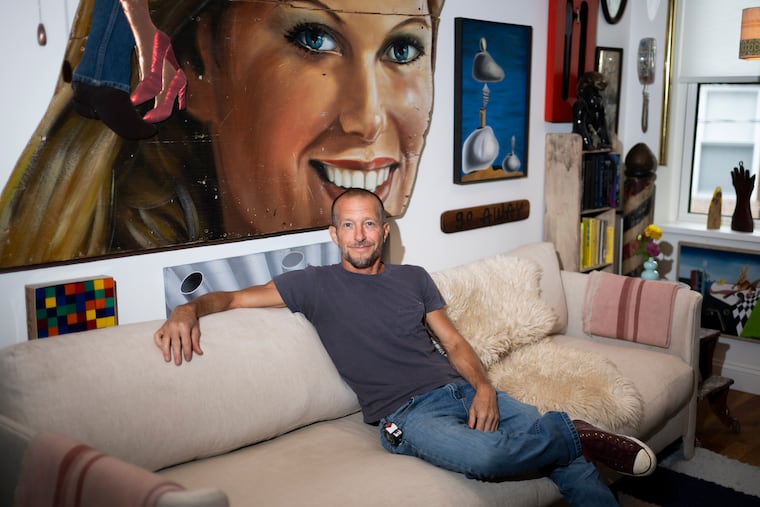
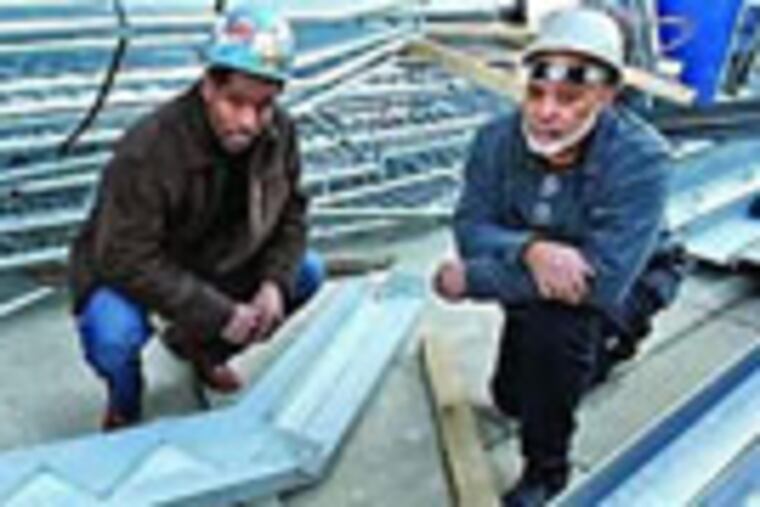
Al Brown, 55, a steel fabricator for more than 20 years, and his business partner, Kevin Lumpkin, 47, a union ironworker for 27 years, said that they did everything right to get a reasonable piece of the Center City project for their North Philadelphia company, Umoja Erectors.
Brown and Lumpkin said that they attended the Convention Center's minority-inclusion meetings for more than a year, where they were assured that majority contractors had to make their "best effort" to negotiate in "good faith" with minority contractors in order to satisfy the project's diversity requirements.
Umoja Erectors had successfully completed dozens of steel-erection jobs in Philadelphia, including a $3 million portion of SEPTA's Market Street El project, when it bid for a $2 million portion of the Convention Center expansion: erecting the steel decking that supports concrete floors.
Instead, Pierce Keating, CEO of Narberth-based Daniel J. Keating Co., gave Umoja $150,000 of miscellaneous work in Phase 2 of the project.
"We wanted real jobs, and he threw us a bone," said Brown, who owns both Umoja Erectors and Komplete Welding Inc., on 19th Street near Girard Avenue.
"Chump change'
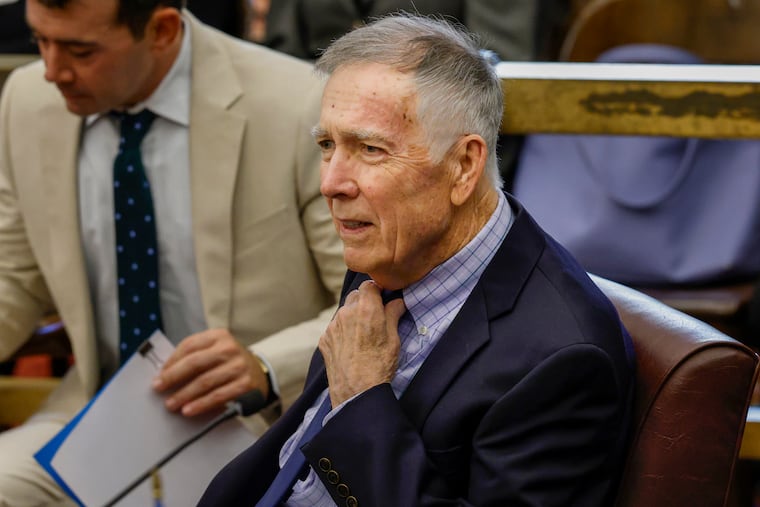
"That $150,000 is chump change when you look at the price of the project," said Joseph J. Dougherty, longtime business manager of Ironworkers Local Union 401, who has known Lumpkin for 27 years.
"Despite the fact that Mayor Nutter is pushing inclusion and diversity in construction, and our union is 20 percent minority, I see a wall," said Dougherty.
"How do you lose a bid when you're the only legitimate minority contractor bidding on a steel-erection job?"
Last month, Brown and Lumpkin protested peacefully with excluded African-American masonry, electrical, carpentry, plumbing and concrete contractors in front of the Convention Center work site.
Carl E. Singley, chairman of the Convention Center oversight committee that is supposed to prevent unfair exclusion of minority contractors, quickly responded by issuing a written statement to city officials, claiming that "our superb management team of [construction diversity director] Jim Roundtree and Joe Resta has remained vigilant and . . . provided appropriate guidance and input to manage the inclusion process."
Singley reported "preliminary" projections of an expansion-project workforce that will be 36 percent "minority male."
That number is misleading, Lumpkin said, because it is inflated by lower-paying work categories such as laborers.
"When Mr. Singley says that 36 percent of the work force is minority male, I'm asking, 'Minority male what?' " Lumpkin said.
"I'm not a laborer. I'm an ironworker. How many African-American steel-erection contractors does that number include? Zero?
"Umoja Erectors employs 10 African-American ironworkers who are not on the project because the steel-erection contractor would not bargain with us in good faith for a piece of the work," Lumpkin said. "So, as far as I know, the project's African-American steel-erection number is zero."
Singley did not respond to several interview requests in the last three weeks, including messages left at his law office, his Convention Center office and his cell phone.
'They felt they didn't have to'
Umoja Erectors co-owner Brown blames the man Singley is supposed to be overseeing - general contractor Pierce Keating - for giving the entire $15.4 million steel-erection contract to Helmark Steel, a large Wilmington company, instead of breaking it into smaller bundles and awarding them to several firms like Umoja.
"We tried to negotiate with Helmark Steel, hoping they would subcontract a scope of the steel erection to us," Brown said, "but they made it clear that because they are a woman-owned business, they felt they didn't have to give a minority-owned business a piece of the work."
"Helmark didn't come to the table with anything," Lumpkin said. "They never showed us their numbers. They told us we needed to make our numbers lower, but they never said what number they had in mind. That's not negotiating in good faith.
"At the outreach meetings for minority contractors, Keating said he was going to work with African-American firms, blah blah blah," Lumpkin said. "Then he gives the entire steel-erection contract to Helmark. People like Keating talk, talk, talk, but nothing has changed."
Keating and Alan Katz, Helmark Steel's general manager who negotiated with Brown and Lumpkin, did not respond to several Daily News interview requests over a three-week period.
However, in a previous Daily News article on Darrell Choates - an African-American masonry contractor who also was shut out of the Convention Center expansion project - Keating offered his insight into why small, minority contractors continue to be excluded, despite affirmative-action rules.
"Say I have a $500,000 masonry job," Keating said in early March. "I automatically think of five guys who can do a job like that. These are guys who have a track record with me.
"The hardest thing for small contractors . . . to do is to build up that comfort level with majority contractors."
But James Spangler, a longtime estimator for Thomas Lindstrom & Co., a majority-owned steel-erection firm that has subcontracted work to Umoja Erectors on several projects, said that during the last 25 years the construction-bidding system hasn't functioned the way it's supposed to for minority contractors because "it was just run poorly."
"There should be a lot of guys like Al [Brown] and Kevin [Lumpkin] out there, but there aren't," Spangler said. "Umoja is what I consider to be the only real minority steel-erector in the Delaware Valley. We did Temple University's Fox School of Business and Temple's Tyler School of Art together. We did a big Lowe's in West Philadelphia and a Target together. All of our history together has been good.
'Willing to open the door'
"I've known Kevin for 25 years," Spangler said of Lumpkin. "He has always been a good ironworker. People just need to be willing to open the door. If they do, they can get to where that realistic number is. His numbers for steel decking are right in line with ours, and we do an awful lot of it. If they gave Umoja half a chance, these other contractors would be happy with Kevin's and Al's work."
Lumpkin said that that won't happen unless general contractors are pressured to give minority subcontractors a fair shot, but the Convention Center's Singley and construction-diversity director Roundtree, both African-Americans, have not applied that pressure.
"To me, the racism is so blatant," Lumpkin said. "You go to all these pre-bid meetings at the Convention Center and they give you Danish, coffee, cookies. Then they talk about bringing African-Americans into union apprenticeship programs.
"How can you bring people into a trade, have them go through a four-year union apprenticeship and then you don't have work for them?" Lumpkin said. "The unions are not the problem. The general contractors are.
"When you drive around Philadelphia and you look at construction sites, you don't see many African-Americans working there, do you? That is the reality."