Temple and Jefferson resident physicians have ratified union contracts
The new contracts include “substantial” raises and “greater investment in resident education,” the union said.
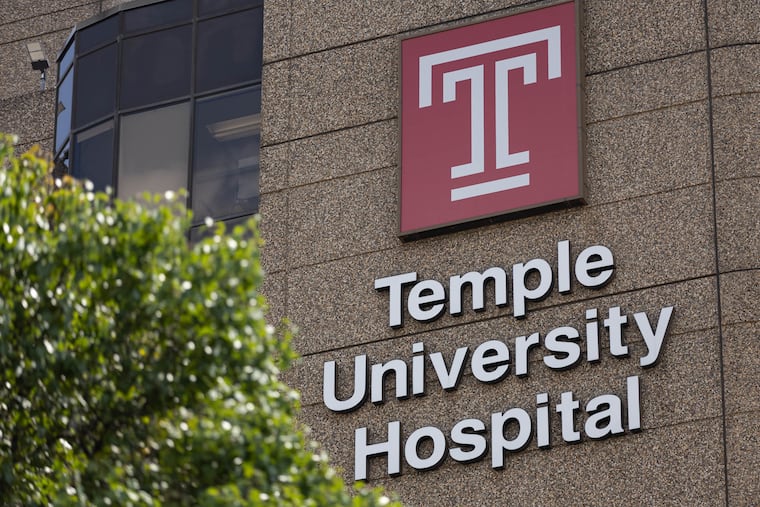
Resident physicians at Temple University Health System and Thomas Jefferson University Hospitals have ratified their first contracts with their health systems after having voted to unionize last year.
The 2,200 Temple and Jefferson residents organized with the Committee of Interns and Residents, affiliated with the Service Employees International Union, and are among the 86% of Philadelphia resident physicians who have joined a union in the last several years.
The contracts were ratified July 1 and announced Thursday.
The new contracts include “substantial” raises and “greater investment in resident education,” the union said Thursday in a news release.
In addition, residents at different hospitals in the same health systems will now receive similar salaries, the union said.
Residents at Jefferson Einstein Hospital will be paid the same as other Jefferson residents, and those at Temple’s Chestnut Hill Hospital will “achieve near pay parity” with residents at Temple University Hospital and Fox Chase Cancer Center by the second year of their contract, the union said.
Resident physicians and fellows have completed their medical degrees and spend three to seven years training in a clinical specialty, working up to 80-hour weeks for, on average, $61,000 a year. That’s a lower salary than other professionals who require special training, like flight attendants and electricians.
Union members said their new contracts would help them afford living expenses as they train. Many live paycheck to paycheck, and some take on debt to get by, Linda Li, a resident physician at Chestnut Hill Hospital, said in a statement.
“I’m incredibly proud that we stood together and won a contract that will make a material difference in our lives and for residents who come after us,” she said.
In a statement, a Jefferson spokesperson said: “We look forward to moving ahead together in support of the patients we serve.”
A Temple spokesperson said the contract “appropriately supports our residents and Temple Health and preserves our ability to provide our patients with the high-quality care they deserve.”
“We take great pride in the skill and compassion our Residents and Fellows demonstrate in caring for our patients, and in their tireless dedication to the pursuit of knowledge,” the spokesperson wrote in an email. “We remain committed to a positive working relationship which supports the finest and most rewarding physician training experience for them.”
Philadelphia-area physicians have been part of a wave of unionization efforts for years. Residents at Penn Medicine signed their first contract in 2024, just before roughly 3,000 residents at Temple, Jefferson, Children’s Hospital of Philadelphia, and Delaware’s ChristianaCare began a unionization push. ChristianaCare’s attending physicians are also unionized and signed their first contract earlier this summer.
Adrian Kase, a resident physician in physical medicine and rehabilitation at Jefferson, said in a statement that she and fellow residents were inspired by unionization efforts at Penn.
“We saw how residents at Penn were able to raise the bar for physician training and patient care by organizing and winning their first contract, and we’re thrilled to build on what they achieved,” Kase said.
While CHOP’s medical residents ultimately voted against unionizing, residents at the other health systems opted to organize with the Committee of Interns and Residents. ChristianaCare residents are still negotiating their first contract.