Andrew Bailey, a deputy director at the FBI, leaves his job
People familiar with the inner workings of the bureau have said Bailey and FBI Director Kash Patel did not get along.
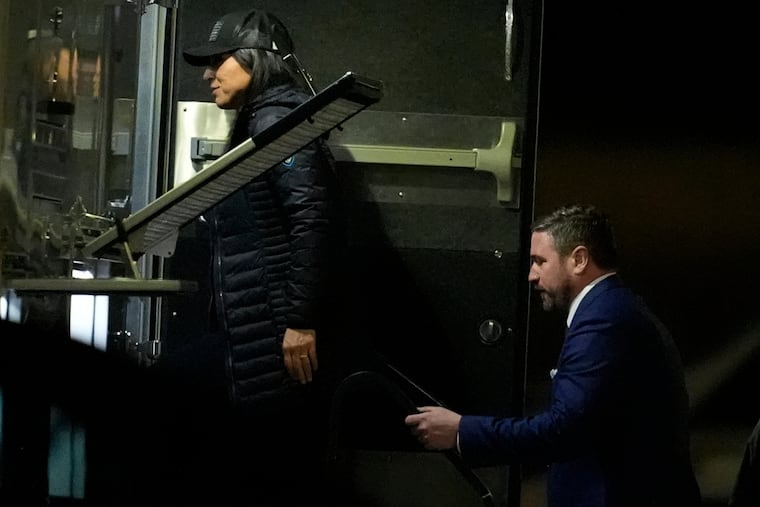
WASHINGTON — Andrew Bailey, who has served as deputy director of the FBI as part of an unusual leadership arrangement, is leaving the job after a little more than a year, the second such departure amid the turbulence in federal law enforcement agencies under the Trump administration.
An internal FBI email indicated Bailey was stepping down for family reasons, according to people familiar with the decision who spoke on the condition of anonymity to describe a move that was not yet public. In recent months, people familiar with the inner workings of the agency have described the arrangement between Kash Patel, the director, and his two deputy directors — Bailey and Christopher Raia, a longtime FBI agent and manager — as rocky.
Patel and Bailey did not get along and often went long stretches without speaking to each other, according to multiple people familiar with their interactions who spoke on the condition of anonymity.
For decades, the bureau has operated with a single deputy director, a career FBI official overseeing daily operations and reporting to the director, who is appointed by the president. But President Donald Trump upended that tradition by naming right-wing podcaster Dan Bongino, who had been a Secret Service agent but had no experience at the FBI, as the No. 2 to Patel. In essence, that put two firebrand influencers with scant management experience atop the 35,000-person agency.
Patel and Bongino had a sometimes strained relationship with Trump’s first attorney general, Pam Bondi, whom they blamed for mishandling the release of files related to disgraced financier Jeffrey Epstein. She in turn complained about Patel’s management of the bureau, including his propensity to post premature or inaccurate information about continuing operations.
In August 2025, the Trump administration announced a novel arrangement, saying that Bailey would come in as a co-deputy director alongside Bongino. At the time, Bailey was serving as the attorney general in Missouri, a post he had used to pursue Republican lawsuits related to culture-war issues.
Many agents inside the bureau believed that Bondi, a former Republican state attorney general, had brought in someone to serve as director in waiting if Trump ever tired of Patel. But Trump fired Bondi in April, and Patel outlasted Bailey.
In the interim, Patel had sidelined him, and Bailey left little imprint from his year at the bureau. His appearance when the FBI executed a warrant to see 2020 ballots from Fulton County, Ga., was notable not just because of the legal and political dispute over the inquiry — an effort to press on with Trump’s baseless rigged election claims — but because it was extraordinarily rare for Bailey to play a visible role in any operation.
This article originally appeared in the New York Times.