Letters to the Editor | Nov. 18, 2026
Inquirer readers on the boycott of Jewish-owned businesses and City Council’s hearings on Philadelphia’s troubled sheriff’s office.
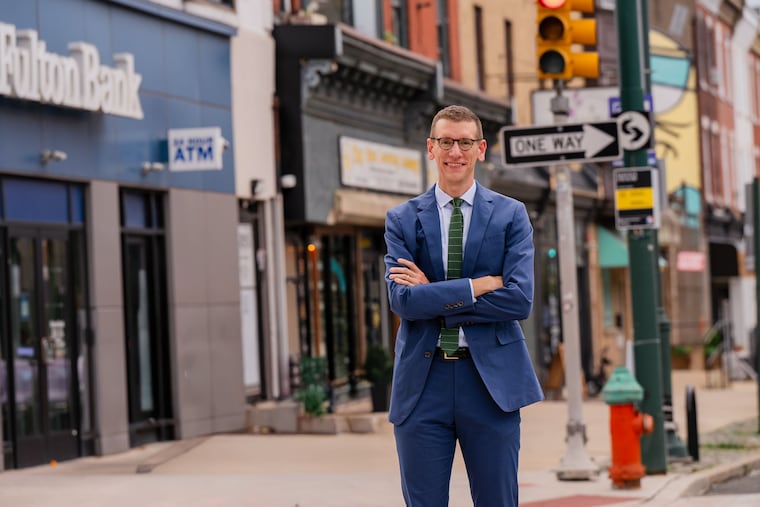
Saval responds
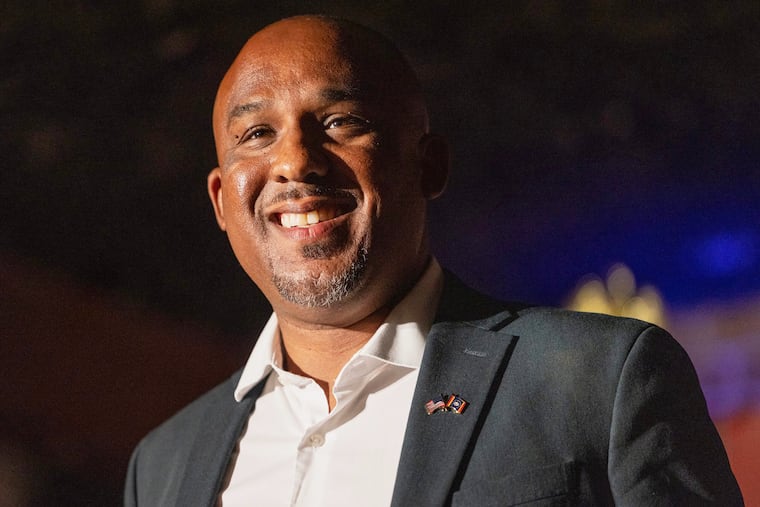
Boycotts are legitimate tactics to generate pressure and enact change, as is exercising one’s rights to speech and assembly. The Israeli government, committing genocide in Gaza and in open defiance of international law in the West Bank, should not be supported — whether by individual people, businesses, nonprofits, or any level of government.
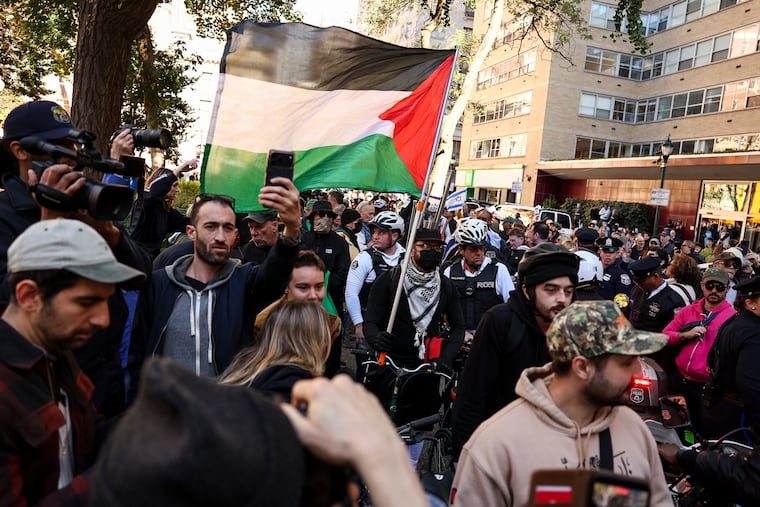
But the scattershot and, in some cases, arbitrary-seeming targets identified for the bicycle boycott Sunday, Nov. 8, obscured this fact, giving many Philadelphians reasons to fear the action and suspect the motives behind its rationale as antisemitic. I believe this protest was counterproductive and wrong, succeeding only in division.
All Philadelphians deserve to feel safe in their city and in their identity, without exception. My office, in most instances, chooses not to comment on or platform many protests, which occur with some regularity in the 1st Senatorial District. In not offering comment on this particular protest, I misjudged how much fear and concern it had engendered in constituents in our city, especially many members of the Jewish community, and I apologize.
In its editorial on the boycott, The Inquirer noted that I did not respond to a request for comment. This was not deliberate. By the time we saw the outreach, which arrived in our main inbox, the article had been published. I am remedying that oversight here.
Nikil Saval, state senator, Pennsylvania’s 1st Senatorial District
Call for unity
As a Jewish Philadelphian, I thank you for publishing Samah Elhajibrahim’s article, “The Philly Boycott Ride: A Jewish and Palestinian movement navigates a moment of tension.” I appreciate the author’s reminder that we must stay focused, identify complicit institutions, and do everything we can to stop Israel’s genocide of the Palestinian people.
I have been dismayed by the number of public officials who have fallen in line with the Jewish Federation of Greater Philadelphia’s cynical attempt to portray a small group of unstrategic but nonviolent bikers as an existential threat to the Jewish people, all while Palestinian people face a true existential threat brought on by Israeli and U.S. policy.
There are many Jews like me in Philadelphia who have joined with Palestinians to fight for a liberatory future. The Jewish Federation does not speak for us, and I hope the recent elections can show our elected officials that they no longer have to immediately and performatively regurgitate everything that groups like it tells them to. Jews are not a monolith. Anti-Zionism is not antisemitism, and portraying it as such is both wrong and dangerous in the face of actual antisemitism coming from the right. Our safety lies in solidarity.
Hannah Mermelstein, Philadelphia
. . .
Chris Rabb’s comments about the “anti-Zionist” bike ride were pathetic. The First Amendment, which he invoked, was never the issue. I am the son of German Jews who lived through Kristallnacht. Both my grandfathers were sent to Dachau in its wake (later released on the condition of leaving Germany, which they did). Even with my background, I am unafraid to condemn the Israeli government for its war crimes in Gaza. Rabb should be willing to take a stand against hate, even if it means calling out those who go too far on an issue he generally supports. Decrying that he heard some awful language from counterprotesters is akin to saying there are “bad people on both sides.” It didn’t work for Donald Trump when he found there were “very fine people on both sides” in the wake of the Unite the Right rally in 2017, and that kind of false equivalence was just as much of a failure for Rabb. He calls himself a “convener” to bring people together for meaningful dialogue on a complex issue that has way more than two sides. I await such an effort from him — but I doubt he will follow through.
Steven Morley, Philadelphia
. . .
Samah Elhajibrahim is correct that Jews and Palestinians have been navigating tensions in their shared movements — tensions that have been exacerbated by the Nov. 8 bike boycott.
Since May 2024, some of us — including Elhajibrahim — have sought to mitigate those tensions by coming together in a monthly vigil to mourn the lives of Jewish Israeli and Palestinian children lost on Oct. 7, 2023, and in the war that followed.
Last Monday, we gathered at City Hall Courtyard again to reaffirm our commitments. We refuse to be enemies. There is another way. In the midst of all the controversy, there is still enough compassion to go around.
Rabbi Nancy Fuchs Kreimer, Philadelphia
. . .
Reading the opinions about the bicycle blockade of Jewish restaurants, it was obvious that a sea change has happened with respect to attitudes about Israel. For most of my life, Israel was an admired ally of the U.S. Today, many politicians support changing the U.S. relationship and, of course, dropping all aid. A year from now, the next presidential election begins. I fear that hatred of all Jews, even those who don’t support Israel, will become far more intense in both parties. I pray I’m wrong.
Henry Lazarus, Philadelphia
Way past time
It seems a safe bet that the upcoming City Council hearings into the goings-on at the sheriff’s office will yield no consequential outcome.
Most likely it will be just another opportunity for the “Magnificent 17” to postulate and hopefully score some airtime with their reelections looming.
Council’s current iteration, as well as its predecessors, have consistently turned a blind eye to the confusion, incompetence, and veiled corruption of the sheriff. Likewise for Mayors Cherelle L. Parker and Jim Kenney.
Ludicrous as it seems, the sheriff was lauded by this august body at her last appearance and rewarded with additional taxpayer money for waste, no-bid contracts, fat salaries, and multiple whistleblower lawsuits. She was also the recipient of many accolades, including a special shout-out from Council President Kenyatta Johnson for a job well done. Really?
So can we look forward to “softball” questions and vague, hackneyed answers (missing records, shortcomings of the previous sheriff, constant underfunding, the promise of a new and improved record-keeping system, ad nauseam). In a nutshell, things will only worsen.
The recent and arduous task taken on by Municipal Court Judge Paula A. Patrick may light some spark of reform. But that’s asking a lot: An office that has acted with impunity, and has been treated for decades like a “third rail” by our elected officials, remains an anachronistic relic in a city striving for progress.
City Council: Skip the dog and pony show hearings and focus your efforts on eliminating this never-ending debacle. Philly deserves better.
J. Savage, Philadelphia
Preventative care
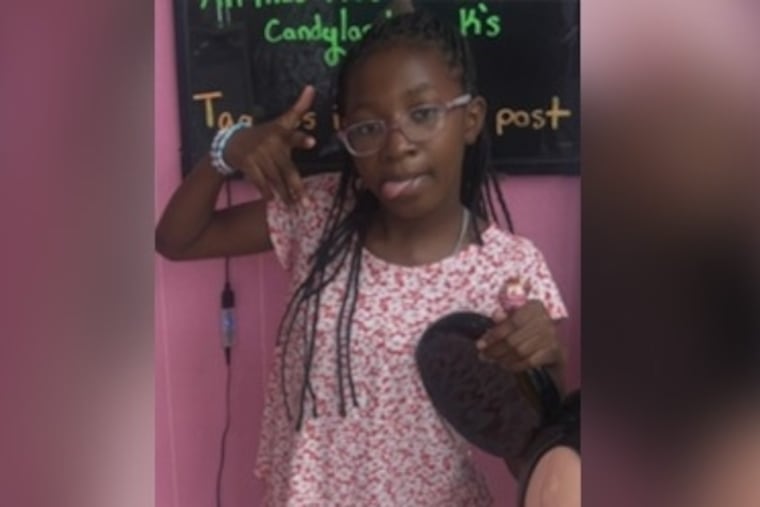
The tragedy of Malayshia Allford — the child who police say was killed by her foster mother — has appropriately renewed an age-old debate about the systems we have created to protect children and youth in our communities.
As someone who has been an administrator in this field for 30 years, it’s become clear that our challenge is in the tension between helping families with resources to raise their children in healthy ways and monitoring them to prevent behavior that crosses the line into neglect and abuse.
Unfortunately, it’s the latter approach that usually seems to win the battle for resources.
This vicious cycle traps our politicians, bureaucrats, and advocates in paroxysms of blame that never seem to result in a solution. Instead, we satisfy ourselves with reports and recommendations that, in the end, usually remain on shelves as our attention wanders to other crises.
Do we dare do it differently this time? Can we commit to prioritizing keeping kids out of the system by investing in resources to help families overcome the challenges that otherwise might put their children at risk? Can we also finally and honestly review the regulations and procedures that all too often lead us to remove children, not because it’s the only way to assure their safety, but because it’s the best way to avoid being blamed if something goes wrong?
If it’s really about the children and not who to blame, it seems to me the choice is obvious.
David R. Fair, Philadelphia
About letters to the editor
Letters feature a reader’s written opinion and are submitted in response to an article in The Inquirer or another topical issue. Submissions should be sent to letters@inquirer.com. Limit length to 150 words and include the writer’s home address and day and evening phone number. Letters are published in the Inquirer six days a week on the print opinion pages and online.