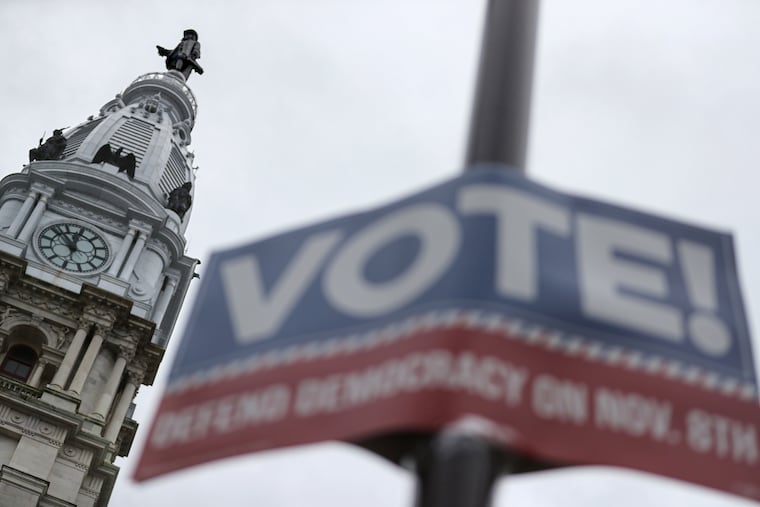
Casting a ballot by mail is safe, secure, and convenient — even Trump knows that
History shows voting by mail can help cultivate democracy, and Americans have been voting by post for more than 200 years.


I have a confession to make: I don’t like voting by mail, and I avoid doing it if I can. This has nothing to do with the false allegations of voter fraud and election integrity pushed by the likes of President Donald Trump. I’ve consistently defended the legitimacy of mailed votes and have personally counted thousands of them. I have always just loved to vote in person.
There is something about the communal experience of going to the same place on the same day with your nearest neighbors, interacting with your local election board, and getting a sticker (that in my case is almost immediately handed off to whichever of my children has tagged along).
Filling out a ballot at the kitchen table simply can’t replace that. I even miss telling the canvassers outside that I don’t need their help.
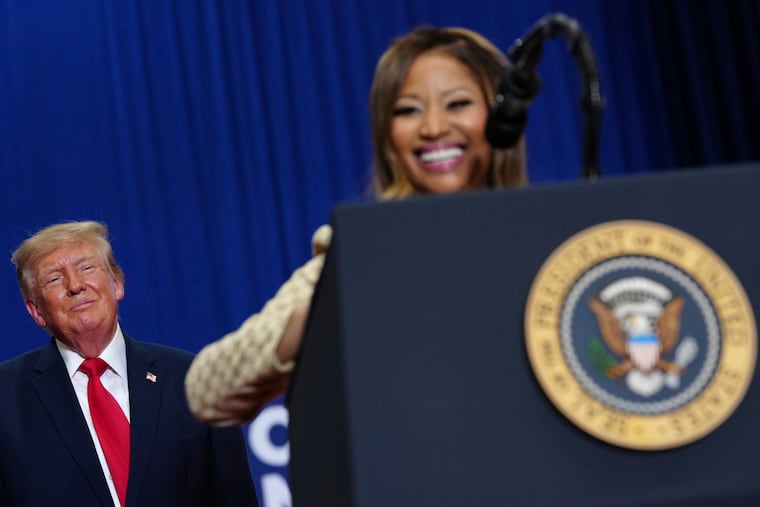
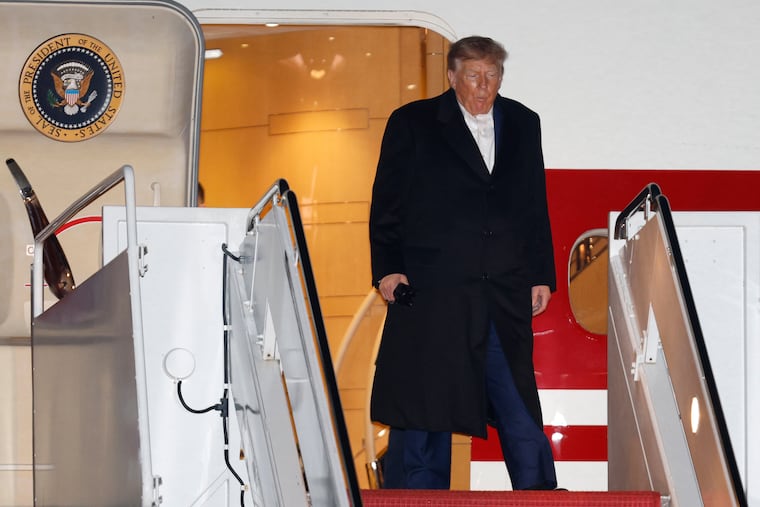
Millions of voters, however, clearly disagree — including Trump, who has voted by mail in Florida even as he attacked the process across the country.
In fact, around one in three Americans vote by mail, across political parties. The reasons why vary, including that not every voter has the same five-minute stroll to the polls that many Philadelphians enjoy. In fact, Americans have been voting by post for more than 200 years. This history shows voting by mail can cultivate democracy — if there are clear rules.
Fittingly, exceptions were first made for those serving their country, and Pennsylvania pioneered the concept.
The Military Absentee Act of 1813 was created to ensure Keystone State service members who were stationed away from home during the War of 1812 could participate in elections. By the time of the Civil War, other states had followed suit. Military votes from so-called absentee ballots helped Abraham Lincoln prevail over George McClellan in the election of 1864, saving the cause they were fighting for.
Over time, election officials began to realize that mail voting could be more than just a wartime indulgence. With the rise of the automobile, voters began traveling farther away to vote on Election Day. Because access to polling places is correlated with the likelihood of turning out, voting by mail was increasingly a necessary solution.
Municipalities and states gradually began mailing ballots to all eligible voters. Western states, which tend to be less densely populated, led in this effort. In 2000, Oregon became the first state to conduct a presidential election by mail. Turnout was 79%.
While Oregon has a well-earned reputation for progressive politics, mail voting didn’t start in Portland or Eugene. It began in 1981 in rural Linn County, where life is built around agriculture, lumber, mining, and manufacturing. Del Riley, then serving as county clerk, decided to look into voting by mail for local elections. Riley found a partner in Norma Paulus, the state’s Republican secretary of state.
In conversation with Phil Keisling, who oversaw Oregon’s shift to mail voting as secretary of state during the 1990s, he told me that partisan and ideological considerations have always played a part in opposition to voting by mail.
In 1995, it was a fellow Democrat, then-Gov. John Kitzhaber, who vetoed the initial efforts to allow mail voting in all elections. Apparently, there were concerns that higher turnout could derail efforts to fund public schools.
The partisan alignment on mail voting would soon change. After Republican U.S. Sen. Bob Packwood resigned, the Beaver State used mail voting to select his replacement. Because the contest was neither a primary nor a general election, it was able to evade the state’s restrictions. When Democrat Ron Wyden, who still represents Oregon in the Senate, won the 1996 special election, some Republicans changed their minds.
» READ MORE: Election integrity matters. So why don’t election deniers seem to care? | Daniel Pearson
A 1997 effort to broaden mail voting was blocked by some of the same legislators who’d proposed it two years earlier.
Despite this, Oregon’s voters, with Keisling’s encouragement, overwhelmingly approved a 1998 ballot referendum that allowed for mail voting in all elections.
Pennsylvania was slower to embrace a more widespread version of the practice. When I first began working at the Philadelphia City Commissioners Office back in 2014, we still required most voters to supply a reason for not voting in person. In some cases, I believe our restrictions were too harsh. Philadelphia firefighters may be stationed far from home during Election Day, but because home was still within the city limits, many found themselves unable to vote.
Some of the restrictions, however, made sense.
Voters cannot drop off a ballot for anyone else — including friends, spouses, family members, or neighbors — without special authorization. This was done to assuage fears of a practice known as ballot harvesting.
Unfortunately, we do have some local history with this phenomenon. In 1994, federal judge Clarence Charles Newcomer overturned the results of a 1993 special election for the Pennsylvania Senate. William Stinson, the Democratic nominee, had won by 461 votes out of 40,575 cast. On the actual voting machines, however, Stinson had lost by 564 votes. Absentee ballots had swung the race. Bruce Marks, the Republican candidate, sued and won.
There are legitimate reasons why results for absentees may differ significantly from day-of results. In this race, however, the disparity was the result of illegal tactics. Eighteen voters told the courts they had been misled by the Stinson campaign. In some cases, ballots were submitted by voters who were not eligible to vote by mail. Others alleged they were promised favors in exchange for their vote.
» READ MORE: I’ve caught real voter fraud. What Trump’s saying about New Jersey doesn’t come close. | Daniel Pearson
Despite the partisan firestorm around the contested election, the two parties were able to find common ground on reforms. A grand jury report issued a set of recommendations, then-Mayor Ed Rendell issued recommendations, The Inquirer Editorial Board urged action, and Judge Newcomer instituted needed restrictions on partisan operators distributing ballot materials.
But research indicates that events like the Stinson/Marks race are the exception.
A 2025 analysis from the Brookings Institution found that documented cases of mail voting fraud are very rare, accounting for only 0.000043% of total mail ballots cast. That’s about four cases out of every 10 million mail votes cast.
There used to be a strong bipartisan consensus about expanding access to mail voting in Pennsylvania. In 2019, the General Assembly passed Act 77, which allowed all Pennsylvania voters the right to vote by mail for any reason. While it passed in a bipartisan fashion, the proposal actually had more support from Republicans than it did from Democrats.
There are legitimate reasons why results for absentees may differ significantly from day-of results.
The change came just in time, as the COVID-19 pandemic made voting in person in 2020 a risky proposition.
Around half of Philadelphia’s voters chose a mail ballot during that year’s general election. For election administrators, this was an unprecedented challenge. It meant buying new equipment, hiring additional staff, and consulting experts from states with more experience with mail voting.
Pandemic safety concerns also generated an election integrity controversy. To reduce potential virus transmission, the Philadelphia City Commissioners — the three-member bipartisan board tasked with running elections — established a partition between election workers and election observers, a group that includes partisan activists, lawyers, and journalists.
Republicans sued, unsuccessfully, to get closer to the counting process. Trump himself alleged that observers were “not let into the room.” This, of course, was not accurate. Observers were close enough to have a conversation with workers, and I can attest that those of us who worked inside the Pennsylvania Convention Center that year were fastidious in how we handled and tallied ballots.
Oregon’s Keisling maintains that mail ballots help foster democracy, rather than representing a threat to it. He said making it easier to vote can help increase turnout by 5%, which in Pennsylvania would mean another 400,000 votes.
As for which candidates or political movements would benefit, Keisling was blunt: “Who cares?” In a democracy, we should all want as many people as possible to vote, even if it doesn’t always align with our side.
This Election Day, I’ll once again make the trek to the polls. But as much as mail voting may not be my personal preference, thanks to the professionals and dedicated volunteers in charge of elections, it is a safe, secure, and convenient way to vote.
About our columnists
In contrast to news reporters, who operate within an independent, nonpartisan framework, columnists are charged with including their perspectives, opinions, and viewpoints when presenting their reporting. Inquirer columnists include Jenice Armstrong, Will Bunch, Luis F. Carrasco, Paul Davies, Daniel Pearson, Trudy Rubin, and Sabrina Vourvoulias.