The biggest story from Tuesday’s Trump rebuke is what didn’t happen
There were no seized ballots, no troops at the polls — and a record turnout. America was never cut out for dictatorship.

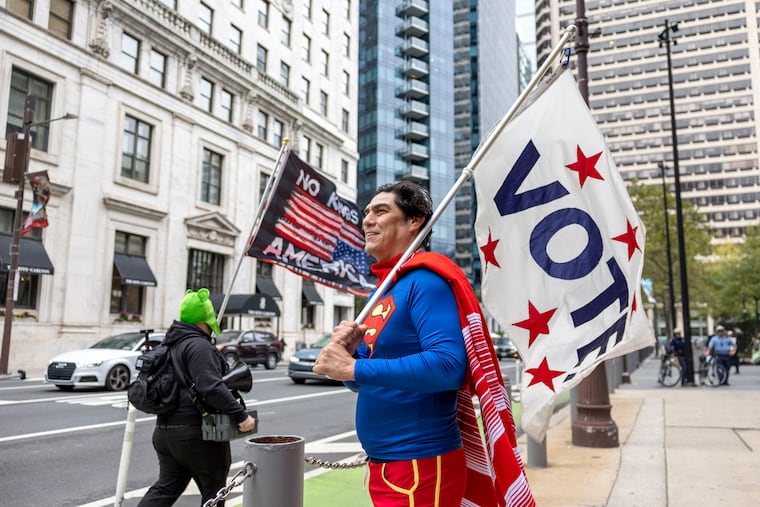
When fascism came to America, it was driven out by ballots, not bullets.
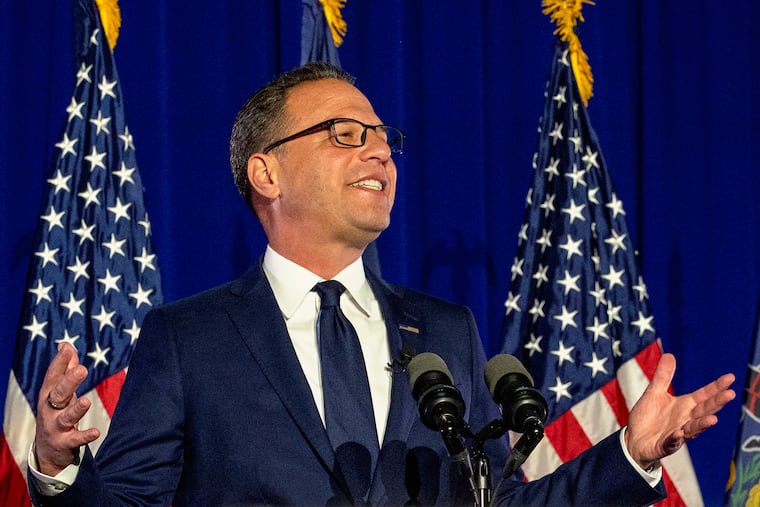
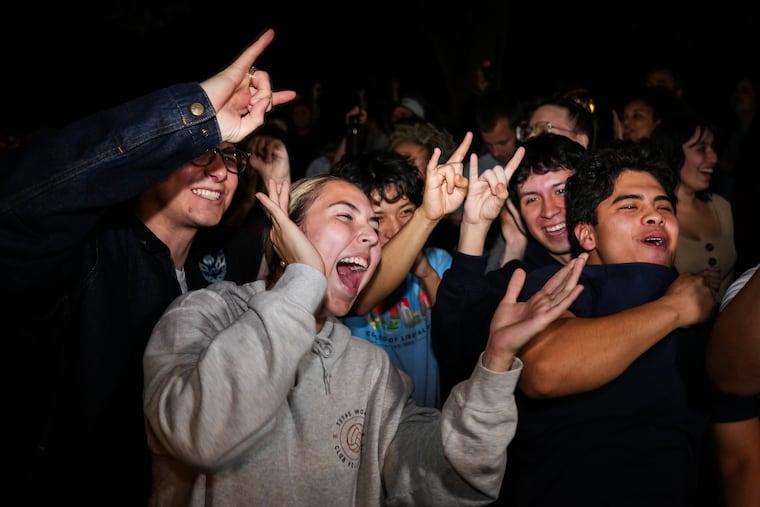
A truly remarkable day in the long, imperfect history of democracy began Tuesday at sunrise with Black voters in the Mississippi Delta lining up to cast the ballots their grandparents had fought and sometimes died for. It ended with whoops and honking cars in the streets of Texas’ capital of Austin — a scene that an online commentator compared to the overthrow of a corrupt Eastern European regime.
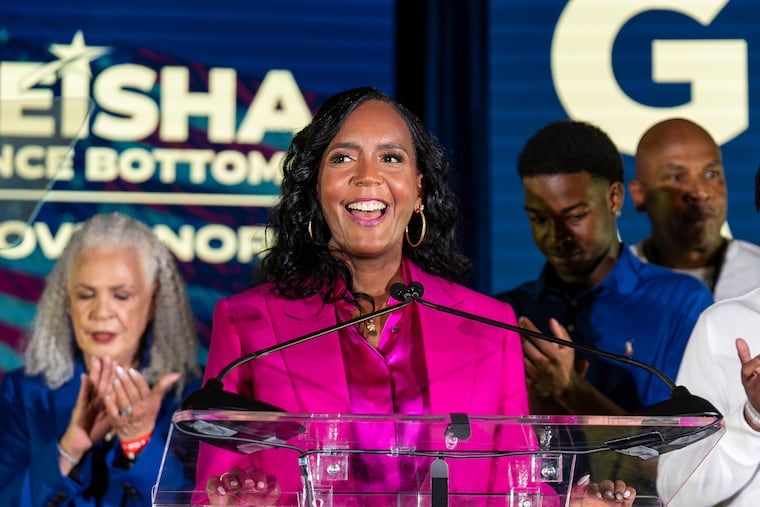
That’s because in many ways the U.S. midterm election of 2026 was a revolution, and a peaceful one at that. As the final votes are tallied, it’s difficult to single out one highlight from a night that didn’t just see voters summon an early end to the Donald Trump era by electing huge Democratic majorities in Congress, but also historic firsts for Black, brown, Indigenous, and LGBTQ communities that have seen their rights under attack for much of the last decade.
When a Republican official — David Holt, the mayor of Oklahoma City — posted on social media that “a political party that is morally and intellectually bankrupt deserves the rebuke of the American people,” it felt like the beginning of truth and reconciliation for a nation waking up from an autocratic nightmare.
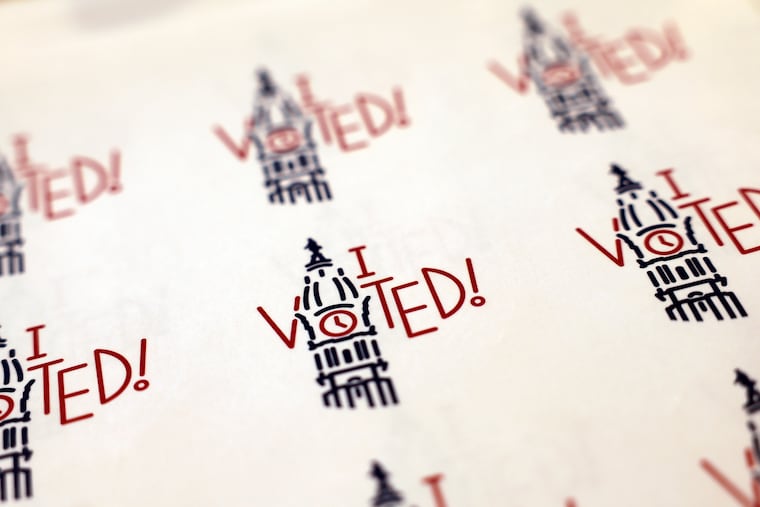
But Holt’s next words even better captured the mood of a night that saw a stream of teary-eyed citizens plant their “I Voted” stickers on the ad hoc memorials for the Minneapolis shooting victims Renee Good and Alex Pretti, when preachers and seminarians like Adam Hamilton and James Talarico reclaimed the flag of morality from the Christian right, and a majority of the American people showed up to say that, “No, MAGA is actually not who we really are.”
“It’s now time,” Holt wrote, “to make America good again.”
But sometimes the biggest story is the thing that didn’t happen, the dog that did not bark. On a night that was kind of like a political version of the Y2K scare that launched this cursed century, the meltdown of democracy that so many people had prepped for over months, with churning stomachs, never came on Tuesday.
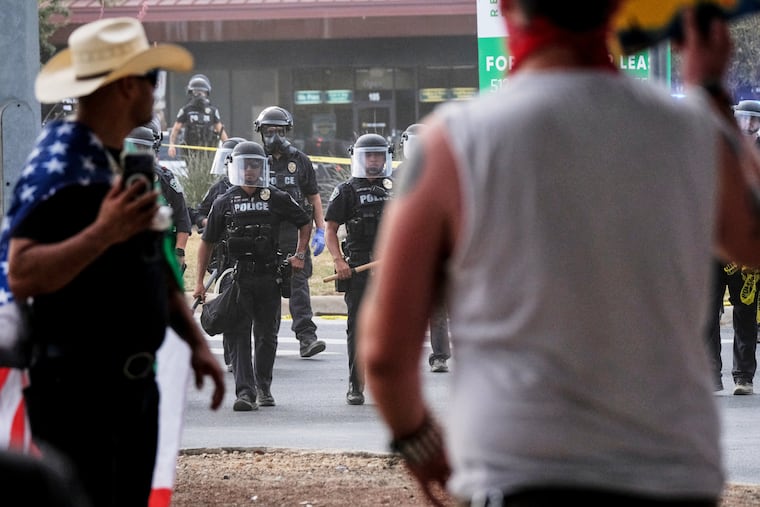
There were no reports of U.S. Immigration and Customs Enforcement (ICE) agents lurking at the polls to intimidate voters in communities with large immigrant populations.
A strutting strongman president didn’t send his troops to voting locations, and there were no tanks in the streets to prevent the opposition party from reclaiming power on Capitol Hill.
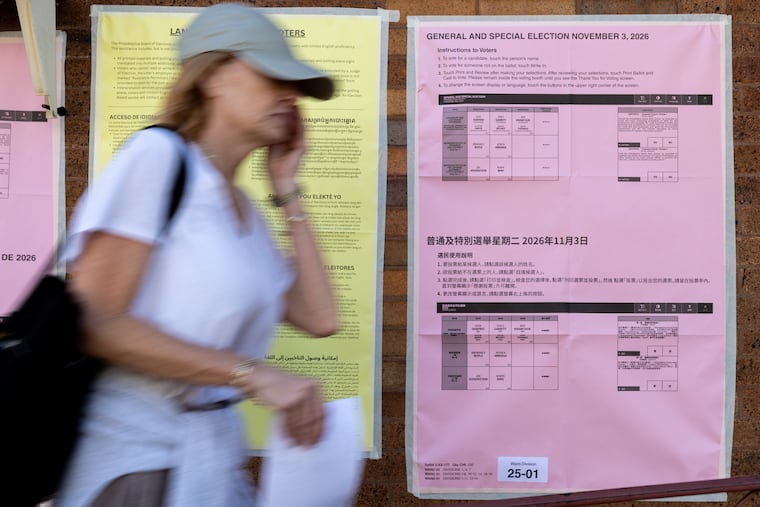
The thousands of election officials who trained for what to do if and when the FBI or other federal agents showed up to seize paper ballots or impound voting machines turned out to be overprepared. No one came.
» READ MORE: Trump’s coup begins. It’s alarming … yet weak. | Will Bunch Newsletter
Well, nearly no one. The Justice Department did announce Tuesday morning that it had dispatched 1,000 “election observers” to a list of counties that seemed largely selected for the percentage of melanin in their residents’ skin. But much like Hamlet’s Rosencrantz and Guildenstern, these government emissaries were never heard from again — dots of plastic pollution overwhelmed by the blue tsunami.
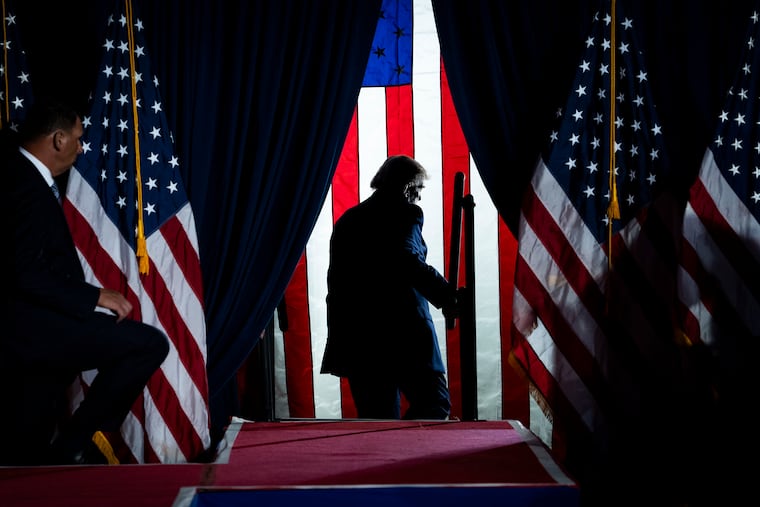
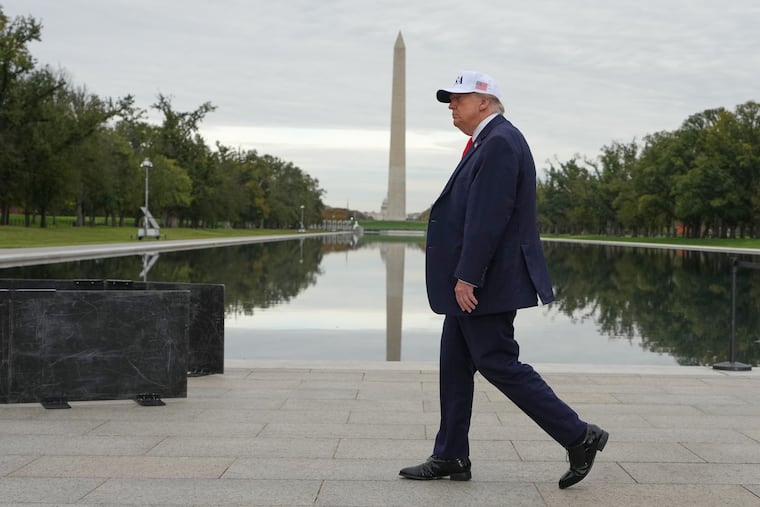
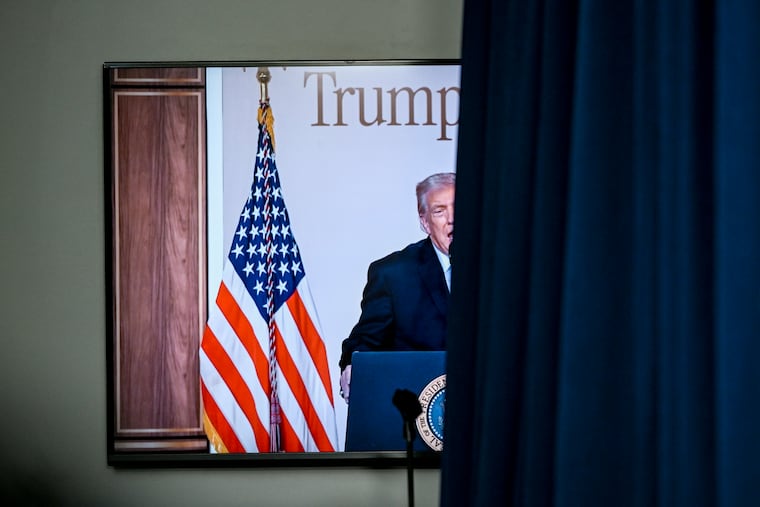
The president who suffered political defeat in 2020 and yet still walked out to declare famously that, “Frankly, we did win this election,” didn’t have it in him this time around. In 2026, Trump hopped on the phone with two reporters from the bane of his existence, the New York Times, and meekly said he “absolutely will” accept the results of the election.
So what happened? Or more to the point, what didn’t happen?
One of the few analysts who took a step back this week to look at the big win for democracy, and not just for Democrats, was Richard L. Hasen, the UCLA law school professor who publishes the Election Law Blog. He noted that Tuesday’s free and fair election was no accident —that the absence of banana-republic-style vote stealing was a tribute to the broad network of state and county election officials and poll workers, lawyers, nonprofit civic groups and political activists who stood in the way.
“We are in decent shape not because Trump’s attacks were weak, or because our election system is strong, or because we were just lucky — although the huge margins did make things ‘too big to rig,’” Hasen wrote. “The risk that Trump would interfere with our democracy in a way that made 2020 look harmless was quite serious, and it took laborious work of thousands of lawyers, election administrators, and key parts of civil society to neutralize the threat from materializing.”
Hasen is absolutely right here, and the larger essence of his point — that to keep the American republic you must never stop fighting for it — is one of the biggest takeaways from the midterms. Yet I’d argue that something even bigger was in play here.
I’ve long posited that the most sweeping platitudes about American Exceptionalism are a myth that has been punctured again and again, from the lynch mobs of Tulsa to four dead in Ohio. Yet there are ways that the American experience is different from so many other nations that have suffered under the autocratic one-man rule of an Adolf Hitler, or Pol Pot, or Louis XVI, or Henry VIII.
Over the last 22 months, U.S. citizens have looked tyranny straight in the eye — the unthinkable scenes of masked secret-police goons kidnapping our neighbors off the street, under a ruler who declared that nothing can restrain him but “my own mind,” while he siphons billions into his personal bank account — and the majority of us have been utterly repulsed by what we have seen.
Dictatorship, it turns out, is not in the American DNA.
In the end, Trump didn’t send out the tanks after the votes were counted Tuesday night, not so much because he lacked the brazen audacity to issue such a wretched order, but because deep down he knew that even his handpicked white dude-bro generals would say no, and that angry Americans would surround the White House to save democracy just like happened in Seoul two years ago.
America’s first strongman revealed himself Tuesday as the weakest president we’ve ever had — a self-proclaimed wizard who in the end could no longer fool Kansas, let alone Oz.
The utter failure of Trump’s first pathetic baby steps toward a coup — attempts to obtain state voters rolls, make bogus allegations about noncitizen voters, or preemptively cancel a Senate election in Alaska over a banal political stunt, all of it thrown out by judges — foreshadowed a much bigger truth.
While Americans historically have been pretty lackadaisical about democracy, with voter turnout that lags other developed countries, it’s a different story when you try to take away our basic rights.
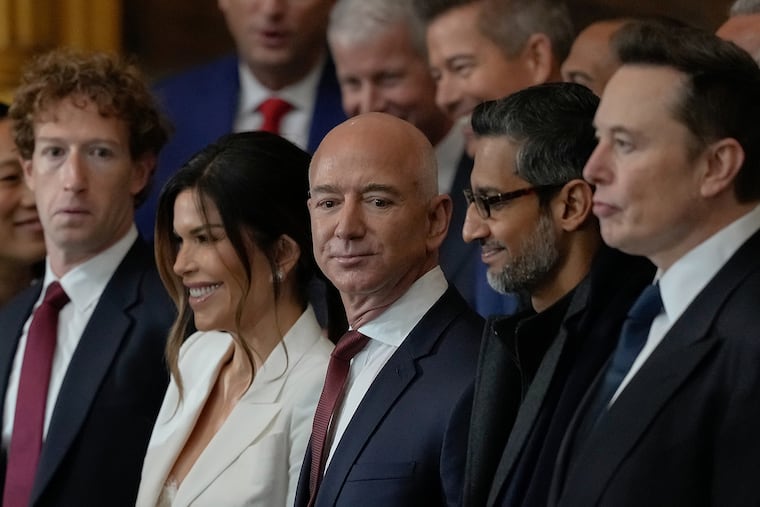
In an election where Silicon Valley billionaires spent hundreds of millions of dollars to demonize our transgender neighbors, U.S. voters took umbrage on Tuesday by electing a record 10 members of the trans community to state legislatures or Congress, including one atop the blood-red soil of Alabama.
After two years of punditry that Trump’s false machismo had won over a majority of U.S. Latinos, we learned on Tuesday that even Hispanics who are longtime citizens don’t like it when people who look like them are run over or shot dead in the street by masked thugs, and they flipped to the Democrats in huge numbers.
But we know now that the fate of Trump’s experiment of autocracy was truly sealed on April 29 of this year when the U.S. Supreme Court, in Louisiana vs. Callais, gutted the Voting Rights Act, sparked a mad dash across the former Confederacy to remap Black members of Congress out of a job — and thus energized the mass of African American voters.
Mississippi appeared to finally fulfill the dream of the Rev. Dr. Martin Luther King Jr. that “a state...sweltering with the heat of oppression will be transformed into an oasis of freedom and justice,” as record numbers of Black voters lined up to put one of their own, Democrat Scott Colom, on the brink of a U.S. Senate victory.
And yet the true meaning of Tuesday’s result — as both a repudiation of authoritarianism and an affirmation of liberty — feels even greater than the sum of these remarkable parts.
Sunday will mark the 10th anniversary of America’s darkest day in the last generation, the first shock election of Trump on Nov. 8, 2016. A decade is the perfect measure of time to finally begin understanding that this era wasn’t a one-night drunken binge, but instead something of a long national bender. It was fueled by a cocktail of grievances that was one part legit (the destruction of the middle class) and one part ungodly (a clinging to patriarchal white supremacy), and then abused by a snake-oil conman pouring poison down our gullets.
Ten years later, America woke up — sleeping with our clothes on, car in the front yard — and began the long, headache-y process of sobering up. And we learned a lesson we must never again forget. Most of us, it turns out, really are better than this.
About our columnists
In contrast to news reporters, who operate within an independent, nonpartisan framework, columnists are charged with including their perspectives, opinions, and viewpoints when presenting their reporting. Inquirer columnists include Jenice Armstrong, Will Bunch, Luis F. Carrasco, Paul Davies, Daniel Pearson, Trudy Rubin, and Sabrina Vourvoulias.

Sign up for the Will Bunch Newsletter