Republican leaders could have worked with Shapiro — now Democrats will control the legislature | Shackamaxon
Plus: Policy advice for Democrats as they enjoy their trifecta, and simpler solutions for building more housing in Philadelphia.

Welcome to Shackamaxon, a weekly politics column focused on what’s happening at City Hall and in Harrisburg. It is named for the place where the Lenape chiefs would meet to conduct the people’s business, which is now known as Penn Treaty Park.
This week’s edition reflects on Tuesday’s election results, lays out what Pennsylvania Democrats should do with their newfound power, and identifies a better way for the city to help homebuyers.
Political malpractice
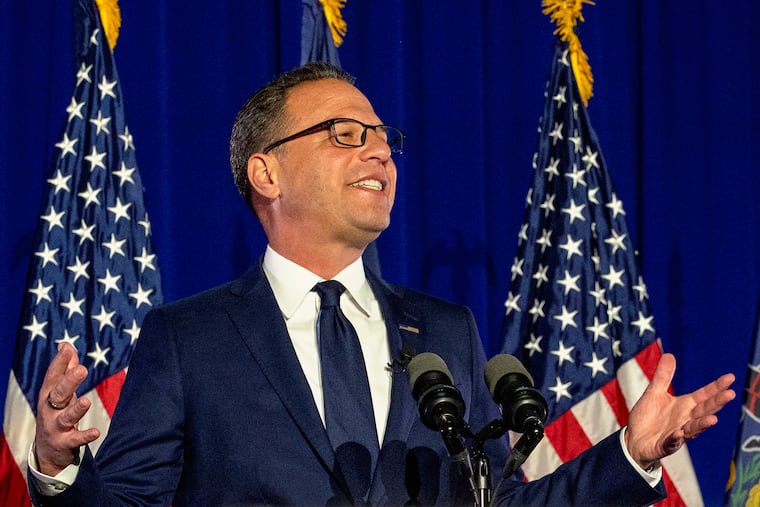
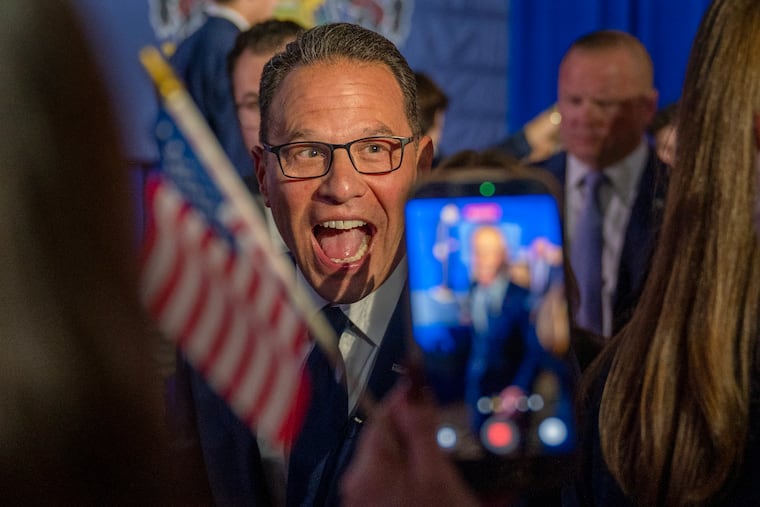
Gov. Josh Shapiro has spent his entire first term navigating a divided legislature. That ends in January.
Democrats defeated four incumbent Republican state senators and expanded their majority in the state House. Shapiro himself secured roughly 60% of the vote, including an astounding 88.81% in Philadelphia. The governor is widely popular across the Keystone State. How popular? Even if every voter in the Delaware Valley had stayed home, he still would have defeated GOP candidate Stacy Garrity.
Shapiro certainly has earned his win, and his majority. But what’s struck me over the last four years is how much Harrisburg Republicans were seemingly determined to help his reelection.
As Shapiro himself told the Editorial Board back in 2022 when he first sought our endorsement, “I’m someone who knows how to use the bully pulpit … and I will use it in a way that will get us back to baseline political cooperation.” Without that cooperation, “I will defeat a bunch of Republican state reps and senators.”
Instead of working productively with the Ambitious Abingtonian and accepting the kind of compromises that could have helped their vulnerable members survive the blue tsunami, party leaders like Kim Ward and Joe Pittman chose antagonism. When Shapiro tried to secure additional recurring revenue for Pennsylvania’s transit agencies, Republican leaders repeatedly refused to negotiate in good faith.
Shapiro’s first major push for transit funding came during the 2024 budget process. Republicans agreed to a one-time payment of $80 million and asked to delay a more comprehensive solution to the fall, and to include more funding for roads in rural areas in the deal. Shapiro and the Democrats agreed, only for Pittman to renege on the plan. Shapiro was forced to direct $153 million in federal highway dollars to avert sudden and catastrophic cuts to SEPTA service.
The following year was even worse. Disagreements over transit funding helped delay passage of Pennsylvania’s budget by more than four months. In August, Pittman, the state Senate majority leader, gave a rambling speech essentially telling the entire Southeast to get lost.
Shapiro was once again forced to redirect funding to protect transit operations, this time taking almost $400 million from Pennsylvania’s Public Transportation Trust Fund. Republicans displayed similar stubbornness on taxing and regulating games of skill, legalizing recreational marijuana, raising the minimum wage, and a host of other issues that have broad public support.
By the time 2026 rolled around, compromise was no longer the plan. Instead, Shapiro focused on changing the Senate’s math.
Every weekend, groups of Philadelphia transit advocates took the long and (infrequent) transit trip out to suburban swing districts to knock on doors and canvas for Democratic challengers. It is hard to imagine this intensity of activism occurring if a deal had been made. Southeastern State Sens. Tracy Pennycuick, Frank Farry, and Jarrett Coleman, all of whom were comfortably elected alongside Shapiro four years ago, lost. Southeastern Pennsylvania House Republicans like Joe Hogan, Shelby Labs, Craig Williams, John Lawrence, Donna Scheuren, and Milou McKenzie will not be returning to Harrisburg.
All of them can blame Pittman and Ward for their loss just as much as they can blame President Donald Trump’s disastrous war in Iran. Instead of using their leverage to influence policy in the long term and protect their most vulnerable colleagues, these two leaders repeatedly caved to their base.
Speed up Accelerate
Now, the key question is what Democrats should do with their newfound power. My advice is to focus on the issues that got them there.
While it may be tempting to check every box on the progressive wish list, doing so would endanger the gains they’ve made — essentially repeating the same mistake Republicans made when they held their own trifecta 15 years ago.
Don’t try to start a single-payer healthcare system, enact a wealth tax, raise income taxes, or anything else that lacks broad support or isn’t necessary to pursue essential goals. Do raise the minimum wage, fund public schools, find a responsible pathway to legal marijuana, enable more home-building, and explore paid family leave.
And definitely implement adequate and sustainable funding for transit agencies.
The system needs more than the bare minimum. Otherwise, much of what SEPTA has proposed in its game-changing Accelerate plan would take decades to come to fruition. For riders who have stuck with the system through its toughest years, this is not good enough.
Shapiro has pledged to fund transit — this should include replacing the roughly $400 million that was taken from the Public Transportation Trust Fund and a realistic proposal to pay for the upgrades in SEPTA’s Accelerate plan on a timely schedule.
That’s not to say that all the money should come from Harrisburg. For years, SEPTA has wanted Harrisburg to green-light the kind of local transit funding solutions cities like Seattle, Atlanta, and Denver benefit from. This would place the decision firmly within the control of the regions that would benefit most.
Simpler solutions
Housing has become a signature issue for Philadelphia Mayor Cherelle L. Parker. Her $800 million H.O.M.E. plan, policies like Basic Systems Repair and Adaptive Modification Programs, and new initiatives like One Philly Mortgage are aimed at keeping homeownership affordable for longtime residents who are struggling with the significant increase in home prices and mortgage interest rates.
There are, however, easier and cheaper ways to do things. One example comes from the commonwealth’s second-largest city, Pittsburgh.
Under Mayor Corey O’Connor, Steel City lawmakers have passed one of the most comprehensive housing reform packages in the country. The city’s inclusionary zoning requirements, which were previously a requirement for any development over 20 units, are now voluntary. Developers who choose to include affordable units will now benefit from a density bonus or choose to pay into an affordable housing fund. The city also gutted parking minimums and allowed for more accessory dwelling units.
These moves are meant to ease development in the city of bridges, which has lost half of its population since its 1950 peak. Housing experts around the country have pointed to the need for more housing to bring down costs.
In Philadelphia, there’s some consternation among policymakers about pursuing this approach. The primary concern is that new development could foment gentrification and displacement. The evidence, however, does not support this thesis. Development follows demand, rather than driving it.
America is filled with neighborhoods that have seen massive demographic changes without adding any new housing, like New York City’s Greenwich Village, Queen Village in Philadelphia, and almost the entire city of San Francisco. Cities that do build, like Austin, Texas, have seen prices decline.
While this was considered a radical idea when I first got interested in housing policy many years ago, it is now the mainstream consensus held by organizations like the Pew Charitable Trusts and the Brookings Institution. It is time for City Hall to reevaluate its assumptions.
About our columnists
In contrast to news reporters, who operate within an independent, nonpartisan framework, columnists are charged with including their perspectives, opinions, and viewpoints when presenting their reporting. Inquirer columnists include Jenice Armstrong, Will Bunch, Luis F. Carrasco, Paul Davies, Daniel Pearson, Trudy Rubin, and Sabrina Vourvoulias.