What everybody's missing about Trump and the 'rigged election'
Yes, Trump's waffling on whether he'll accept the November election result is awful. But the controversy is also preventing a discussion we need to be having about the major flaws in how America conducts its elections.
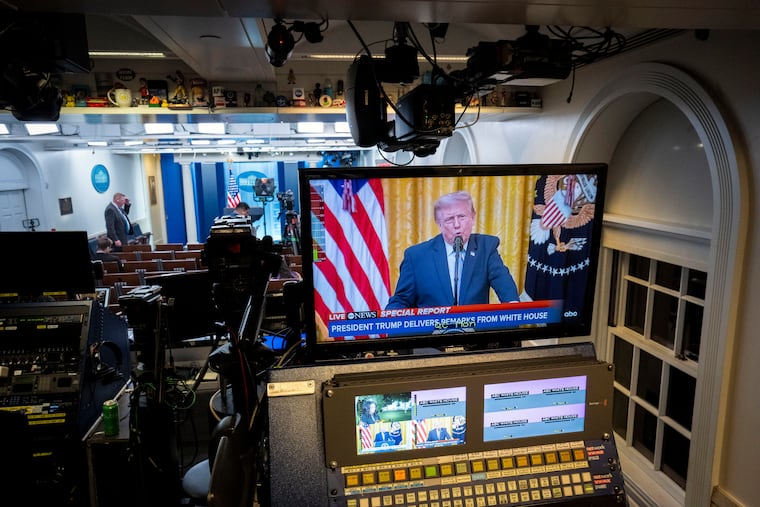
It's been nearly 24 hours (I don't know exactly, since CNN doesn't have a "count-up" clock) since Wednesday's presidential debate, and you can still here the clucking from newspaper editorial-board conference rooms and various political precincts over Donald Trump's statement that he couldn't promise that he'll accept the election result on Nov. 8, only that "I will have to look at it at the time." Today, Trump moonwalked it back about two inches or so, saying in Ohio that he would surely accept the election results "if I win."
Heh.
Arizona senator and losing 2008 presidential candidate John McCain said that "[w]hatever our differences we owe each other that respect, which we express by defending the democratic values and practices that protect us all." His state's other GOP senator, Jeff Flake, was even harsher, saying The Donald's words were "beyond the pale." Pundits who don't have to run on a ticket with Trump were even harsher. "His refusal to accept the results of this election disqualifies him automatically from any office in the United States," said Andrew Sullivan -- echoing many similar assessments.
Look, it's hard to argue: Trump's comments on this are indeed cynical and inflammatory, and will surely incite his supporters who already have expressed the view that all of American society is "rigged" against them. But I also think Trump's critics have gone a little too far in attaching a kind of holy sanctity to the U.S. electoral process that it doesn't really deserve. I think some folks -- in their perfectly understandable disgust with The Orange One -- are conveniently forgetting a history of deeply flawed presidential elections, in the recent and not so recent past. Even worse, the how-dare-anyone-question-American-democracy tone might help folks forget there are major -- and I mean major -- flaws with the way we vote today.
What's so wrong about Trump's "rigged election" jag, which has been building for a couple of weeks now, isn't so much that concept that an American presidential election could be flawed or even "rigged" -- but the fact that he's doing so before a single vote is cast, and without any actual evidence. The short-fingered vulgarian doesn't seem to be expressing any real, valid concerns about the process -- just his narcissistic belief that anything in this life that doesn't go his way means he was somehow cheated. It's not hard to imagine, though, that his ill-considered words could drive some of the least stable of his supporters -- like those Kansas thugs planning to bomb a mosque on Nov. 9 -- to actual violence.
But the denouncers of Trump, in claiming a kind of American exceptionalism in our unbroken streak of 228 years (not 240...don't folks remember the Articles of Confederation?) of peaceful transfer of presidential power without messy coups or what-not, are not taking the discussion to a helpful place. (And maybe it's also worth remembering that "the streak" includes one election -- 1860 -- which caused a civil war that killed at least 620,000 people. But, hey, at least it was a peaceful transition. For the record, I don't think even Trump is capable of something on that level.)
If you go back far enough, you can find at least one presidential election that was almost unquestionably rigged -- in 1876, when Samuel Tilden won the popular vote and appeared to have the electoral vote, until an election commission flipped three states to Rutherford B. Hayes in an unseemly deal that also ended Reconstruction and allowed the then Democratic-run South to install their Jim Crow regime that led to misery for the nation's newly freed African Americans. Not so exceptional, America.
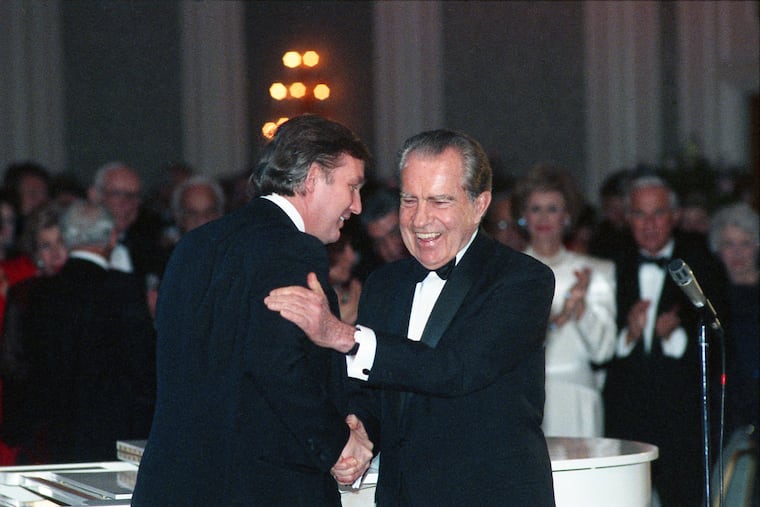
In modern times, we've seen covert efforts to manipulate -- or, arguably, "rig" -- elections like Richard Nixon in 1968 (who used backchannels to muck up peace talks with North Vietnam, arguably an act of treason) and Nixon again in 1972, with Watergate and other dirty tricks. Most famously, we had the 2000 election in which the U.S. Supreme Court blocked a full Florida recount; less remembered is that in 2004, many liberal folks questioned irregularities (like the exit polls not matching the actual results, which in any other country is considered prima facie proof of fraud) and applauded California Sen. Barbara Boxer when she stood up on the Senate floor and contested the election results. She said she was protesting "the process," not the result.
Again, these were actual dodgy things that happened in those races -- nothing like Trump's vague and menacing pre-fab attempt to rile up the torches and pitchforks crowd. The thing is that Boxer had a point in 2004 about "the process" of American democracy -- and it would be an even stronger point today. For all the sanctimonious yay-America back-patting that's come in response to Trump's demagoguery, there's been far too little talk about how our electoral process -- while maybe not "rigged" -- lets down the public.
This happens in two ways. One is structural: The United States is exceptional in finding ways to make it hard for people to vote. That includes holding elections on a regular work day, onerous registration requirements, and arcane rules (for example, New York City residents who wanted to change their party affiliation to vote in NEXT YEAR's mayoral primary had to do so by last week, more than a year ahead of time.) Remember that 2000 election and Florida? Maybe the real reason that Al Gore lost was because about 600,000 no longer in prison or paroled people with a felony conviction were barred from voting (and some legal voters were wrongly purged.) Other developed nations simply don't have such restrictions -- which are a linchpin of what writer Michelle Alexander calls "The New Jim Crow."
The other issue is a very real, concerted effort by mostly Republican politicians to, ahem, "rig" elections through laws that clearly targets groups or voters -- non-whites, or college students, or elderly, whom they believe are more likely to vote Democratic. The most loathsome of these tactics is voter ID laws; In Pennsylvania, where such a provision was enacted but struck down in the courts, leading GOP state Rep. Mike Turzai famously predicted in 2012 that passage of the law -- which would have likely blocked thousands of legitimate votes -- would "allow" Mitt Romney to carry the state that year.
Voters in other states aren't so lucky. In North Carolina, officials are working to impose what the New York Times calls an "anti-voter law" that includes strict voter-ID requirements while slashing early-voting hours and eliminating same-day registration, out-of-precinct voting and preregistration for voters younger than 18 -- all despite a judicial order seeking to block many of its provisions. Remember Arizona, where primary voters this winter waited on lines as long as five hours (many just gave up) after election officials slashed the number of polling places?
Voting rights in America -- including the key provision of the 1965 Voting Rights Act that was shockingly gutted by the Supreme Court a few years ago -- should be a front-burner issue in the 2016 presidential election. Yet it wasn't even brought up at the debates, where valuable time was wasted stoking billionaires' unfounded fears over the national debt instead. Now suddenly there is a national conversation about the health of American democracy -- but only about why Trump won't accept the election result.
On Nov. 9, barring the unexpected, all Americans should accept the election results, as determined under the deeply flawed rules that we have. But five-hour lines or laws crafted to turn legitimate voters away at the polls or other efforts to restrict polling places or times?
No American should accept those.