Ruinous weather year batters farm tourism
INDIANAPOLIS - Devastating spring freezes and a historic drought have stripped some charm from rustic fall destinations, leaving some corn too short to create mazes, orchards virtually devoid of apples, and fall colors muted.
INDIANAPOLIS - Devastating spring freezes and a historic drought have stripped some charm from rustic fall destinations, leaving some corn too short to create mazes, orchards virtually devoid of apples, and fall colors muted.
Extreme weather has forced agritourism ventures in the heart of the country to scramble to hold on to their share of an industry that generates hundreds of millions of dollars each year.
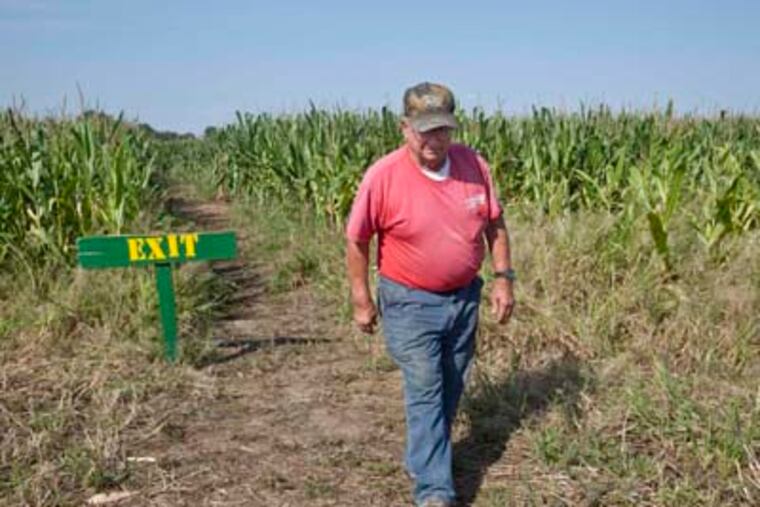
Pat Schaefers, who runs Schaefers Corn Maze near Lollie, Ark., hopes visitors to the farm's two mazes won't mind that the corn is just six to eight feet this fall - up to four feet shorter than the wall of corn that families and school groups normally pay to get lost and turned-around in.
Yet Schaefers was one of the lucky ones.
Sam Brown, who owns A-Maizeing-Farms in Mayfield, Ky., said the summer drought and 100-degree days ruined his farm's 20-acre corn maze, leaving stalks knee- to waist-high - far too short for use as a maze.
"The object of our maze is to find hidden checkpoints, and our checkpoints literally would have been taller than the corn in some of the fields," he said. "It would have pretty much been pointless."
For many farms and orchards, autumn is the peak agritourism season as families seek out a taste of rural life with outings to explore corn mazes, take hay rides and pick their own apples or pumpkins. Tourism generated about $566 million for more than 23,000 U.S. farms in 2007, according to the U.S. Department of Agriculture's most recent agriculture census - a survey conducted every five years.
Apple orchards across the Midwest and New England suffered huge losses when blossoms lured into early bloom by a warm March were killed in April freezes.
Indiana apple growers have had one of their worst crops in eight decades.
Tuttle Orchards, a central Indiana farm with 30 acres of trees, lost all but about 10 percent of its apple crop in April. Mike Roney, who co-owns the orchard near Greenfield, Ind., said it might have been the worst freeze damage ever at the farm his family has owned for 84 years.
At the 120-acre Crane Orchards, a top U-pick tourist destination in Fennville, Mich., co-owner Rob Crane said just 5 percent of his apple crop survived the icy nights on his family's fifth-generation farm a few miles from Lake Michigan. With so few apples, its normal 60-day U-pick season shrank to a couple of weeks, and the last trees were picked clean before October.
Despite the lack of apples, Crane is hoping people still come to the farm for a hay ride along its lake and rolling hills, to navigate its corn maze or indulge in fruit pies and other homemade treats served at its restaurant.
Roney, the Indiana orchard owner, found a bright spot in his pumpkin patches, which were irrigated and emerged from the drought with a fine crop.
"We actually have one of the best pumpkin crops we've ever had as far size goes and quantity," Roney said. "I don't know why that is. Maybe they just liked the heat."