Making wise school choices
Watching the proliferation of charter schools in Philadelphia and across America reminds one of the monotone pronouncement of the part-robot, part-human Borg as they conquer planet after planet in Star Trek: "Resistance is futile."
Watching the proliferation of charter schools in Philadelphia and across America reminds one of the monotone pronouncement of the part-robot, part-human Borg as they conquer planet after planet in Star Trek: "Resistance is futile."
The National Alliance for Public Charter Schools says the number of charter students has increased sixfold in 15 years to nearly three million. They attend more than 6,800 public charter schools in 42 states and the District of Columbia. California ranks first, with 1,234 charters; Pennsylvania is 10th, with 175. More than 400 new charters opened this school year, but 270 others closed for various reasons - a reminder that charters, like traditional schools, vary in quality.
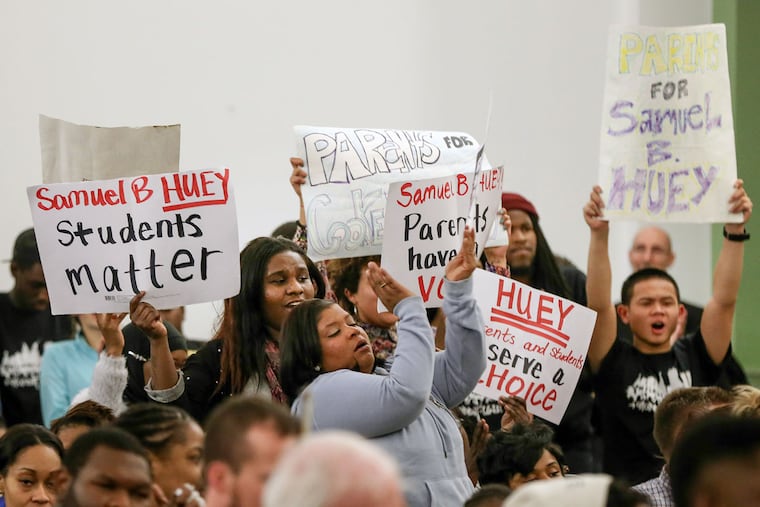
The question of quality was at the root of the recent showdown involving John Wister School in Germantown. Citing improvements at Wister, Philadelphia schools Superintendent William R. Hite Jr. withdrew a proposal to turn it into a charter, only to have the School Reform Commission overrule him.
SRC member Sylvia Simms, who led the blindsiding of Hite, said she was responding to parents who believe the pace of change at Wister has been too slow. It's hard to argue with that. Every additional year a child spends in an underperforming school reduces his or her chances of going to college and achieving success. Charters will continue to grow as long as parents lack confidence in traditional public schools to get their act together before it's too late for their children.
Poor funding is the biggest obstacle facing many traditional schools trying to get better faster, but it's not their only problem. The best charters typically have teachers and administrators who, while they may not be any better than their counterparts in traditional public schools, often seem more motivated. Flexibility in teacher assignments, work rules, and schedules at nonunion schools is also a plus for charters.
That doesn't mean school districts should roll over and let charters procreate at will. If anything, it means Pennsylvania needs to get serious about updating its 1997 charter law to ensure that parents seeking a better alternative actually get one. Hite, for example, pointed out that Wister was outperforming some schools run by Mastery, the charter group likely to take it over.
One critic of Philadelphia's apparent surrender to charters is freshman Councilwoman Helen Gym, a longtime education activist and charter school founder who told the Philadelphia Public School Notebook that alternative reform efforts have been abandoned. "The problem is that there is no other plan for turnaround other than the closure of schools and turnover to charters," Gym said.
The late Arlene Ackerman included so-called Renaissance charters in the five-year strategic plan she unveiled as superintendent in 2010. Twenty district schools have since become charters, run by six operators. Unlike other charter schools, they must accept all students in their catchment areas. So far, the Renaissance charters don't appear to be doing much better academically than regular public schools, but it's early.
In any case, there will be more charters even as Hite finds ways to improve regular schools. But he will need what every other debt-laden district needs in a state that has gone seven months without a budget: the funding to do the job.