Kentucky’s curious cast of political characters
Rep. Thomas Massie is just one of a tradition of powerful and iconoclastic politicians from Kentucky.
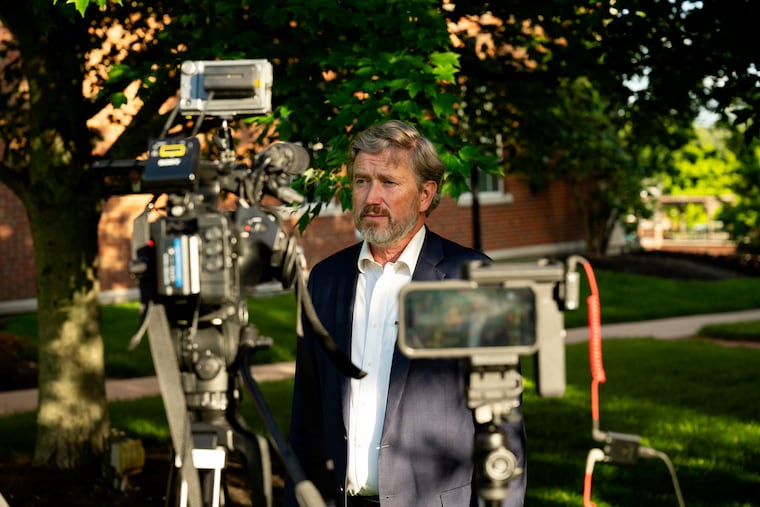
WASHINGTON — Rep. Thomas Massie (R., Ky.) is no ordinary politician.
A Massachusetts Institute of Technology-educated member of Congress from a rural county, he lives off the grid, drives a Tesla with a “Friends of Coal” label on the license plate, and has registered 30 patents for his myriad inventions.
A proud libertarian, he has pushed back against President Donald Trump on the Jeffrey Epstein files and the war in Iran, which has left him fighting for his political life against a Trump-backed challenger in a closely watched Republican primary contest Tuesday.
But Massie fits neatly into Kentucky’s unpredictable political landscape. Its governor, Andy Beshear, is one of the few Democrats to lead a deep-red state and is the son of a former governor. One of its senators, Mitch McConnell, who is not seeking reelection, was the ultimate Washington insider, serving as majority leader. The other, Sen. Rand Paul, was long more of an outsider — a libertarian iconoclast.
Ever since Daniel Boone crossed the Cumberland Gap into what is now Kentucky, the state has served as an incubator for colorful figures who stand out for their quirks, their rejection of party orthodoxy, and their national success despite long odds.
The reasons are complicated and have partly to do with a political culture dominated by the state’s 120 counties — more than any state except Texas and Georgia — as well as a Civil War border-state history and diverse geographic regions. Kentucky politicians “usually start out as smaller characters on the local scene,” said Greg Stumbo, a Democrat who served as the state’s attorney general.
Below is a look at some of Kentucky’s most prominent political leaders — most of whom, in a heavily white Southern state, have been white men.
But first, a poem, written around the turn of the century by a Kentucky politician named James H. Mulligan, who captured the state’s political essence:
Mountains tower proudest
Thunders peal the loudest
The landscape is the grandest —
And politics — the damnedest
In Kentucky.
Henry Clay: House speaker and secretary of state
No U.S. president has claimed Kentucky as his home, but Clay came the closest.
(We are not counting Kentucky-born Abraham Lincoln, whom everyone recognizes as being a political son of Illinois.)
Kentucky’s first great national politician, Clay served as House speaker, secretary of state, and senator. He is often credited with helping hold the United States together as it was fractured by slavery before the Civil War, earning him the nickname “the Great Compromiser.”
But despite seeking the White House three times, he never ascended quite that far: “I would rather be right,” he famously said, “than president.”
Kentucky’s local politics remain influenced by the war that Clay spent decades trying to avoid. A border state where some wealthy landowners, including Clay, enslaved people, Kentucky was split between Union and Confederate sympathizers. In the state’s east, where slavery was less common, counties often picked sides based on how the leading families fought.
Those allegiances formed loyalties to political parties that stood for more than a century until the state’s rural areas turned deep red.
Albert Chandler: Governor and senator
Though he was twice elected governor and served one term as a senator, Chandler is best remembered for his tenure as the commissioner of Major League Baseball. There, he oversaw the integration of the national pastime when Jackie Robinson made his debut with the Brooklyn Dodgers in 1947.
Chandler, eulogized by the New York Times as “jovial,” was seen as a champion for the poor and for Black people in his state at a time when doing so was not politically expedient.
As an indication of the dynastic nature of Kentucky politics, Chandler’s grandson, Ben Chandler, went on to represent the state in Congress and served as attorney general.
He is hardly the only Kentucky official to follow a relative’s footsteps into office.
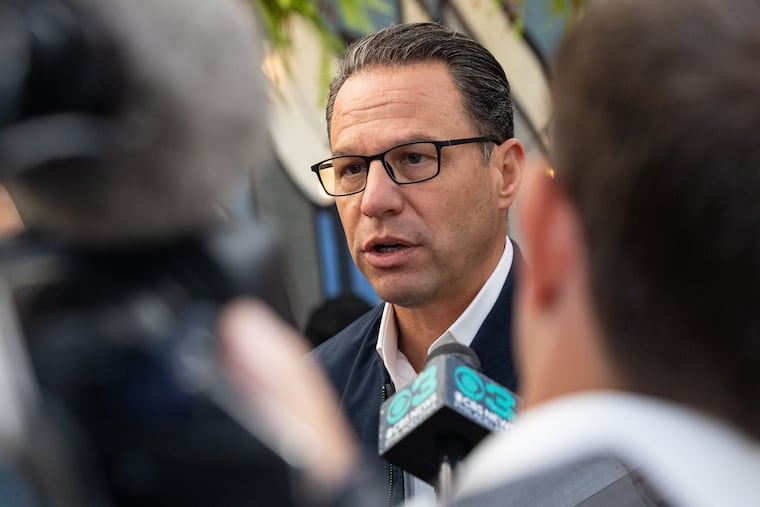
Andy Beshear: Governor and potential 2028 contender
Perhaps no modern Kentucky politician professes a love for the state more enthusiastically than Beshear, the son of a former governor and himself a potential candidate for president in 2028.
A rare red-state Democratic governor, Beshear has gotten by on his moderate politics, infectious optimism, and a cheerleading spirit at the state’s signature moments: college basketball games and the Kentucky Derby.
Beshear is unabashed in his local boosterism. In Kentucky, plenty of voters do not call him governor; they know him as just “Andy.” When he won his reelection campaign in 2023, he promoted his economic development work by bragging about a popular national outlet that had just opened in the state.
“We even brought a Buc-ee’s to Madison County,” he said, to regular applause on the campaign trail.
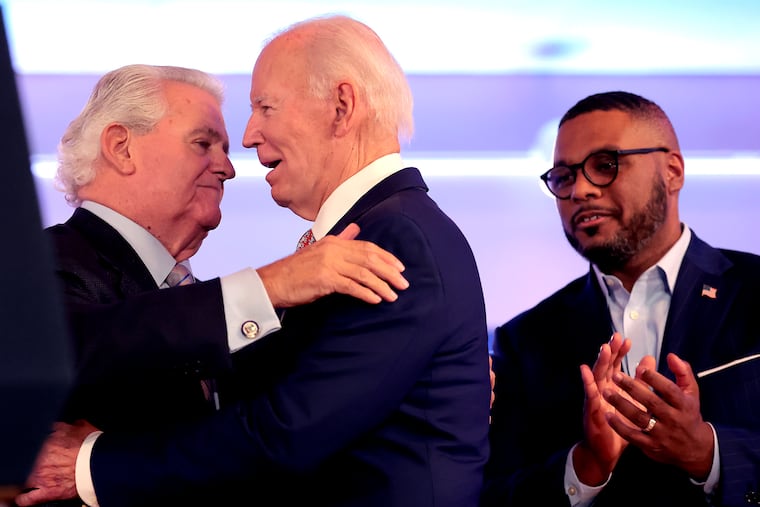
Mitch McConnell: Senate majority leader
McConnell, Kentucky’s most powerful modern-day politician, has been in elected office since 1978 and was first elected to the Senate in 1984. Over that time, Kentucky completed its migration from Democratic stronghold to presidential battleground to a Republican lock in national elections.
McConnell has a well-deserved reputation as a skilled behind-the-scenes operator in Washington. So when a West Virginia Senate candidate he opposed began airing TV ads in 2018 calling him “Cocaine Mitch” — a name that had to do with the unproven notion that a ship tied to his father-in-law had once smuggled the drug — the senator’s aides leaped at an opportunity to add some spice to his public reputation.
McConnell’s political team embraced the nickname and began selling merchandise with the slogan.
Despite the perception that he is now a creature of Washington, McConnell has remained a regular and entertaining speaker at Fancy Farm, Western Kentucky’s annual political roast, where candidates and officials razz one another.
The Fancy Farm tradition dates back far enough that it is said in Kentucky that oratory there gave the country the term “stump speech,” since politicians once stood near an old oak tree to deliver their remarks.
“I’m so happy,” McConnell said at last year’s Fancy Farm event, “that you can’t find a Democrat with a flashlight anymore down here.”
Rand Paul: Senator
Kentucky’s junior senator contains many contradictions.
In a state where most statewide politicians have cut their teeth in local office, Paul first ran for the Senate in 2010 as a Tea Party candidate with support from a political movement inspired by his father, Ron Paul, a three-time presidential candidate and member of Congress from Texas.
Lately, Rand Paul has edged closer to the “Make America Great Again” wing of the Republican Party.
A libertarian conservative who rose to national fame on a platform of opposing unnecessary government spending, he said last month that he would support a measure to spend $1 billion on the new White House ballroom that Trump desires.
Perhaps his most infamous moment came in 2017, when he broke five ribs and suffered bruises to his lungs when a neighbor attacked the senator while he was doing yard work.
The episode was not forgotten by Paul’s Senate colleagues.
During a confirmation hearing this year for Markwayne Mullin, who is now secretary of the Department of Homeland Security, Mullin told Paul that he “understood” why the senator had been attacked.
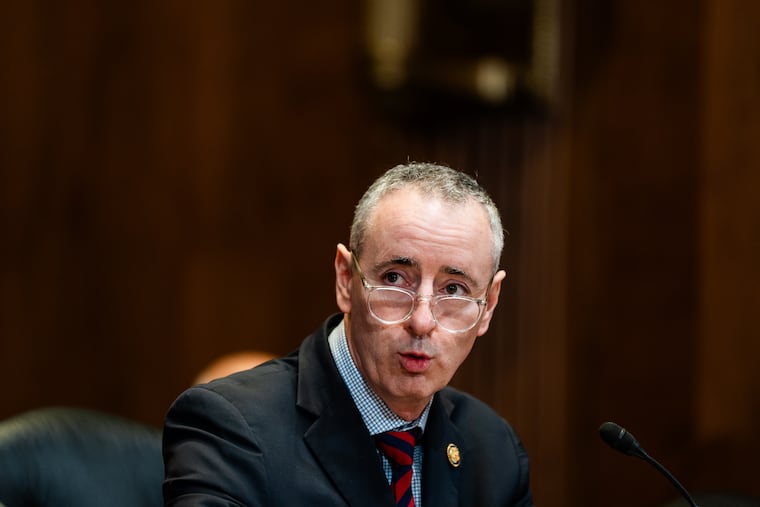
Thomas Massie: Member of Congress
Even before he became more prominent last year, Massie had carved out a reputation in Washington as a bit of a nonconformist. He was often one of a handful of votes against overwhelmingly popular legislation, earning him the nickname “Mr. No.”
It was not until he emerged as the leading Republican voice against some of Trump’s top priorities that Massie’s defiant nature brought him renown outside Washington.
While his political mentor and longtime ally, Paul, shifted his libertarian politics to be in line with the president, Massie remained true to their once-shared cause.
Last year, he voted against Trump’s signature domestic policy legislation. In a more consequential blow to his relationship with Trump, Massie teamed up with Democrats to force the release of the Epstein files.
The rift led Trump to endorse a challenger, former Navy SEAL Ed Gallrein, in what has become the most expensive House primary on record. Trump has a strong record in ousting foes in Republican primaries — yet if Massie prevails, the president will have cemented him as a power center of intraparty opposition.
“If he does win and Republicans start standing up to Trump on things, that’s not just a win for him, that’s him influencing the country and he’s the head of a new movement,” said Trey Grayson, a Republican who served as Kentucky’s secretary of state. “All the things he’s being criticized for now reinforce the notion that he’s an independent thinker.”
This article originally appeared in The New York Times.