Who’s behind the orange signs around Philly criticizing rogue developers?
The “Build Fair Philly” campaign is taking aim at irresponsible home construction, the regional council says.
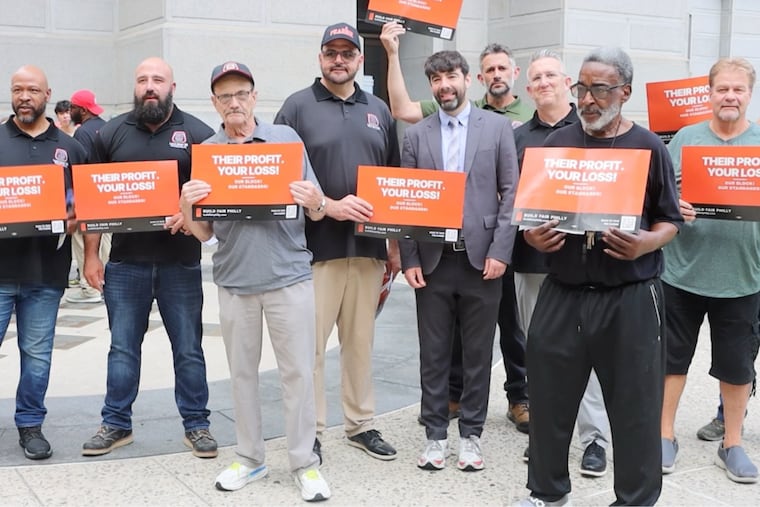
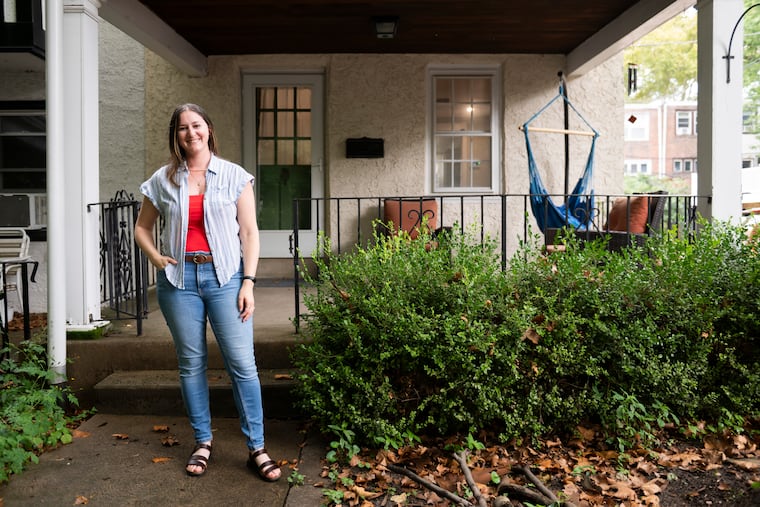
In May, Passyunk resident Peter Kim found a vivid orange flyer on his door that read, “Their Profit. Your Loss!”
The messaging on the material inveighed against shoddy and irresponsible real estate development, without naming any particular company or specific foe.
It encouraged residents to sign the Build Fair Philly pledge and attend registered community organization (RCO) meetings, which developers have to hold in advance of large projects or a zoning change.
Kim is a pro-housing advocate, and after checking out the website he at first thought that some new antidevelopment political organization had come to town.
“While on the surface, the talking points sound reasonable, I think because I’ve become so conditioned to NIMBY [not in my backyard] groups finding any reason to oppose new development, I just assumed this campaign was from some NIMBY anti-housing group,” Kim said.
But Build Fair Philly’s website lists as its address 1803 Spring Garden St., which is the Philadelphia headquarters for the Eastern Atlantic States Regional Council of Carpenters until its forthcoming move to the Navy Yard.
The Carpenters, like the rest of Philadelphia’s building trades unions, are generally pro-development. After all, the more projects — especially big ones — that get built, the more their members work.
“[I] was surprised to learn it’s the Carpenters union because, obviously, they’re not anti-housing,” Kim said.
In recent months, conspicuous orange Build Fair Philly lawn signs have been popping up on rowhouses and lawns around Philadelphia, decrying harmful real estate development. (Another common message: “Our block! Our standards!”)
The campaign’s sponsor is not listed on its material, leaving many recipients wondering what the notices are about.
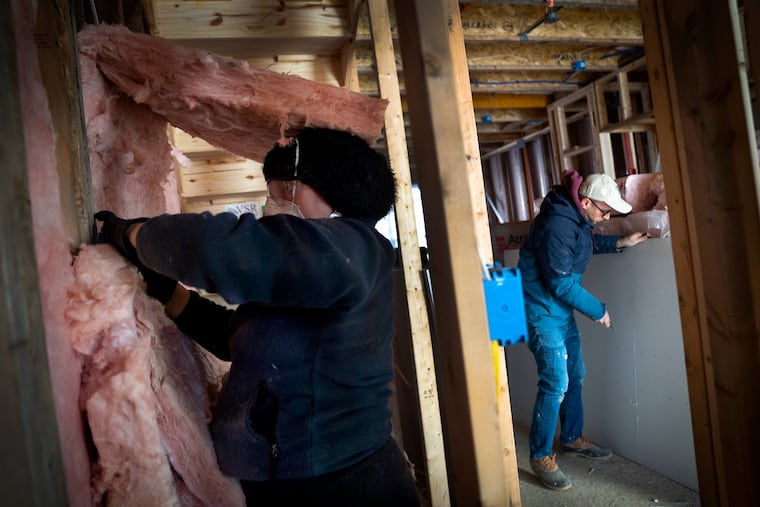
In an interview, leaders of the Carpenters said that the Build Fair Philly campaign is an attempt to raise popular consciousness about irresponsible construction — which Philadelphia’s rowhouse neighborhoods are very familiar with.
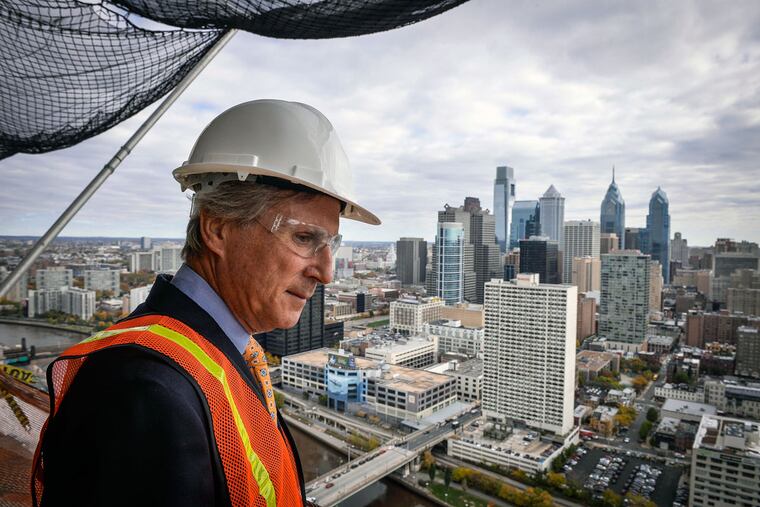
“We are not against development; if anything, we want more development,” said James Hocker, assistant executive secretary-treasurer with the Eastern Atlantic States Regional Council of Carpenters.
“But we want more responsible development, development that’s built in a fair way that is creating opportunities,” Hocker said. “We want to see licensed contractors on these projects. We want to see contractors that are paying their workers a responsible wage.”
The Carpenters say Build Fair Philly is an effort to give community members a way to get involved in a campaign to better regulate the construction industry, forging alliances with community groups to ensure quality building and get pro-labor laws enforced.
The move comes amid a difficult environment for Philadelphia’s building trades unions. (The Carpenters are not part of the Philadelphia AFL-CIO or the Philadelphia Building and Construction Trades Council.)
After interest rates spiked in 2022, construction slowed. The commercial sector, which is most likely to employ union labor, has taken a hit from the remote work-induced cessation of new office construction. That is part of why the trades fought so hard on behalf of the proposed, then abandoned, 76ers Center City arena.
Mayor Cherelle L. Parker’s $800 million housing initiative will create work for the unions. But a lot of the funding — like the signature Turn the Key program — goes into rowhouse construction and rehabilitation, which labor has largely ceded to nonunion, often immigrant, workers.
There also are not many public works projects currently in the pipeline, and longtime fonts of trades work like the Philadelphia Housing Authority are less reliable sources of employment.
The website Unionstats.com shows a steady downward trend in union representation in the Philadelphia metropolitan area’s private construction market since the pandemic.
“I think it’s part of a general campaign by unions in the Northeast to reverse their declining market share,” said Stephen Jacob Smith, executive director of the Center for Building in North America.
“Exactly what they have in mind as the mechanism, I do not know,” Smith said of the Carpenters. “They have a bunch of political levers, and I don’t know which of them they’re trying to pull with this.”
But Hocker says the effort is not only about winning more work for the Carpenters members. It is also about holding contractors and developers accountable for not hiring in the city.
After all, the building trades unions have been criticized for having memberships that do not represent the demographic makeup of Philadelphia. Why are developers not getting attacked if they are also not doing representative hiring?
“We want development that’s going to create opportunities, whether it’s union or nonunion, for individuals that live in the city of Philadelphia,” Hocker said. “We feel that the development that happens in these communities should reflect what the community looks like. It shouldn’t be a bunch of out-of-state license plates.”
Build Fair Philly’s Instagram account includes footage of a rally with City Council members, including Quetcy Lozada, Jeffery Young, and a cigar-wielding Jimmy Harrity.
But the union leadership says that the campaign is not necessarily about passing new legislation — which many other trades have successfully won before — but about getting the city to enforce the regulations that are already on the books.
“We’re not asking for elected officials or anybody in any kind of position to create new laws and policies,” said Joseph Lockley, senior council representative for the Carpenters. “These are laws, policies, and procedures that are already in place that are just not being pushed and enforced, or even prioritized.”
As of early July, the Carpenters said, they had already had 10,000 people sign on to Build Fair Philly’s pledge. “I believe Philadelphia’s development should be safe, fair, and built for all of us — not just for investors and insiders,” it reads.
They had distributed 6,536 signs and canvassed 17,537 people, knocking on doors and interacting with people on the street.
They have also put up nine billboards attacking Post Bros., a major Philadelphia developer. (“Philly’s Worst Neighbors. Stop Post Brothers,” the signage reads.)
A variety of contractors that work with the Carpenters are currently in a legal dispute with Post over the company’s large apartment development at Broad Street and Washington Avenue.
As part of the canvassing effort for Build Fair Philly, the Carpenters have been engaging with community members to hear about their experiences of development in the city. They said they are using that information to formulate the next steps for Build Fair Philly.
“This is also a social justice issue,” said Mungu Sanchez, deputy political director for the Carpenters.
“This is about fairness and this is about making sure that we’re organized with other community groups who also care about growth and care about making sure that communities are able to have the same options and the same sort of resources that every American should have,” Sanchez said.