Cheltenham School District faulted by prosecutors in locker-room assaults: ‘It put every young man ... at risk’
A grand jury said Cheltenham school officials ‘put every young man on the football team at risk.’

When prosecutors unveiled charges this week against Cheltenham football coaches and players in connection with two violent locker-room attacks on a teammate involving a broomstick, they did not reserve blame only for the criminal defendants.
The Cheltenham School District’s “level of incompetence didn’t just fail one child — it put every young man on the football team at risk,” the Montgomery County grand jury that recommended the charges against four coaches and six players said in a report released Wednesday.
The August and September 2025 assaults threw the football program into turmoil, with the district canceling last year’s season in October and announcing this spring that the forthcoming fall season would also be scrapped. While district officials shared little about what happened in the locker room, videos were widely circulated within the school community depicting one of the attacks, the grand jury found.
Yet the district did not punish any players; a Title IX investigation that could result in discipline is still underway. The two players charged as adults, Isaiah Simpson and Josiah Peeler, both graduated from Cheltenham High School this year, district officials said. While the district parted ways with all of its football coaches, at least one charged this week had been hired by another local school: Neumann Goretti tapped Benjamin Johnson as head football coach in January, but on Wednesday the school announced he no longer had the job.
Released nearly a year after the student reported his injuries to his mother and she told a school official, the grand jury report offers a window into a district response that the grand jury described as mishandled from the start.
When the mother of the 15-year-old who was attacked reported to the high school administration that her son had been jumped by his Panther football teammates in the locker room last September, injuring his genitals, an employee who texted two other employees about the allegation said the student had “a chip on his shoulder” from not making the varsity team, the grand jury report said.
District employees took the team’s then-head coach, Terence Tolbert, at his word and included him in “every step” of their investigation, according to the report. Tolbert, whose lawyer did not return a request for comment Thursday, was charged Wednesday with endangering the welfare of a child and conspiracy.
Employees were also confused about their requirements to report child abuse allegations to law enforcement, the report said.
And the district’s three investigations were “so flawed they failed to even identify that two separate instances of hazing took place in the locker room,” the report said. The district in January released a summary of findings to the public of an investigation that said it had confirmed “a student-on-student assault” took place Sept. 3, witnessed by nearly 20 students.
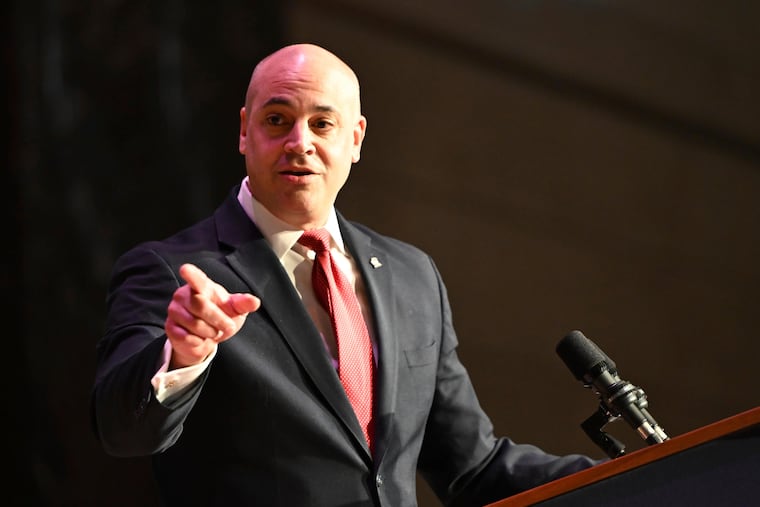
Cheltenham Superintendent Brian Scriven said in a statement Wednesday that “every report brought to the district’s attention was addressed based on the information available at the time.” He also noted that “individuals did not cooperate with the investigative process.”
On Thursday, Scriven addressed some additional questions about the district’s response. “At no point in time was Coach Tolbert involved in planning or executing any investigation,” he said in a written response to questions.
He also said the Montgomery County District Attorney’s Office had directed the district to pause its Title IX investigation into the allegations while it was investigating.
Now that charges are filed, the Title IX investigation “has resumed and will be concluded promptly,” Scriven said, with possible “school-based” discipline.
‘Backed her off coming to the building’
In addition to issuing findings supporting criminal charges, the grand jury released a separate report focused on the school district that included recommendations for new legal requirements for schools to report hazing allegations to law enforcement.
The report described the actions of three employees at the high school, identified only as Employee #1, Employee #2, and Employee #3.
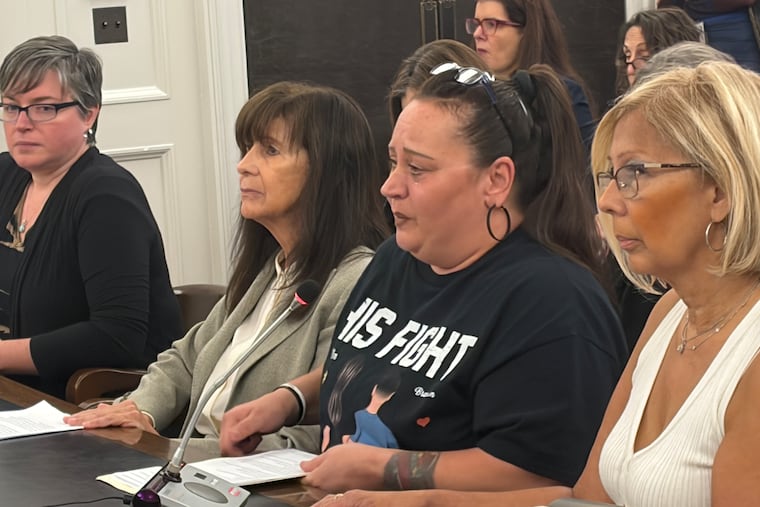
The mother of the student who was attacked told The Inquirer earlier this month that she had texted Mark Hoff, then the assistant vice principal at the high school, on Sept. 7 after learning that her son had been jumped in the locker room. Hoff was named vice principal at Wyncote Elementary School in the district on July 20. Hoff could not be reached for comment Thursday.
The high school’s principal, Benjamin Hammond, referred a reporter to the district’s spokesperson Thursday.
The person identified as Employee #1 in the grand jury report, who texted two other employees about the student having a “chip on his shoulder,” also suggested in the text exchange that the administration was trying to keep the mother from the school.
“I THINK I backed her off coming to the building in the AM,” Employee #1 texted, according to the report.
Employee #2 called Tolbert that same day, and texted the other two employees that the coach denied that anyone told the student not to tell his mom.
“At this point in the conversation, all three employees vouched for Tolbert’s credibility,” the report said.
Employee #2 began his investigation by interviewing Tolbert, who said he did not know anything, according to the report.
He also spoke to other coaches and took them at their word because he “thought that they would be forthcoming, mature adults and do the right thing and not lie to him,” the report said.
Scriven did not address a question Thursday about employees’ response to the mother. But he said they appropriately went to Tolbert to ask “what he knew of the situation.”
“At the time, there was no reason to believe Coach Tolbert was being untruthful,” he said.
Tolbert had previously served as head coach of the varsity team at Abington Senior High School for the 2023-2024 season. An Abington spokesperson said on Thursday that the district had opted not to renew his appointment after one year.
Insufficient supervision
The grand jury also found fault with Cheltenham’s supervision of the football program.
While there was an office for coaches in the football locker room, “they rarely used it,” the report said. (Tolbert had become the head coach in June 2025; coaches had used the office the season before, according to the grand jury.)
Employee #2 testified to the grand jury that he did not do anything to ensure that football players were supervised, the report said.
The grand jury also found that “at least” five paid Cheltenham football coaches were not up to date on Act 126 clearances. The Pennsylvania law requires schools to provide employees who have direct contact with children with at least three hours of child abuse recognition and reporting training, every five years.
In releasing findings from its investigation in January, the district acknowledged “insufficient student supervision in the locker room by the coaching staff” and “a failure to prioritize student safety by the coaching staff” and volunteers.
Circulating video footage
There were two videos taken of the Aug. 15 assault, prosecutors said. The grand jury findings characterized the footage — which it said depicted a student moving a broomstick toward the bottom of the student’s shorts while at least one player chanted “broomstick him” — as circulating widely within the school community.
One witness told the grand jury there was a TikTok video “going around where two boys were making fun of the juvenile victim with a Meek Mill video playing in the background.”
The victim testified that he believed many people had seen a video, because “random people” approached him about it in the cafeteria and hallway. Another student, who was not on the football team, told the grand jury she had been shown a video at school of the victim being kicked by multiple people.
While the district had been aware only of an incident on Sept. 3, questioning of one of the players by the grand jury in January led to the discovery that the video footage depicted an Aug. 15 assault.
Players told the grand jury that an administrator, identified only as “Administrator #2″ in the grand jury findings, met with the team after the Sept. 3 incident.
One player reported that “days” later, the administrator “addressed the team about ‘stuff’ and warned the players if there’s ‘another one,’ the season would be canceled,” according to the grand jury findings.
Another told the grand jury that the administrator met with the team while coaches were present, and told players not to fight with one another and that there would be consequences “if anything else occurred.”
That player said neither the coaches nor the administrator “encouraged anyone with information about the incident to come forward,” according to the grand jury findings.
‘Consistent confusion’ about reporting requirements
Prosecutors said the district contacted Cheltenham police after an anonymous Sept. 18 tip through the state’s Safe2Say hotline. The mother previously told The Inquirer that the tip was how she learned a broomstick was involved.
The grand jury report said district employees were unclear on their requirements as mandatory reporters.
“There was consistent confusion about what type of assault allegation would prompt an immediate report to ChildLine and the police,” the report said. It said the unidentified Employee #3 displayed “especially concerning judgment” by concluding that coaches never told the student not to tell his parents “simply because a coach said it never happened.”
Mandatory reporting laws currently do not require that allegations of hazing, committed by a child on another child, be reported as suspected child abuse — unless sexual assault is alleged, the grand jury report said.
Acts of hazing that “fall short of a completed sexual assault, touching or exposure, such as the threatened sexual assault in this case,” do not meet the mandatory reporting threshold, the report said.
It recommended that hazing be incorporated into mandatory reporting requirements. If it had been, the report said, “the Cheltenham High School administration would not have had the opportunity to mishandle the juvenile victim’s disclosure and the ensuing investigation as poorly as they did.”
In his statement Wednesday, Scriven said the district would welcome additions to the mandatory reporting laws. But he said hazing would not necessarily be immediately identifiable to school staff, noting that the law defines the offense as “for the purpose of initiating, admitting or affiliating a minor or student into or with an organization.”
Scriven did not address questions Thursday about employees’ understanding of reporting requirements.
Asked why the district did not contact police after the mother’s Sept. 7 report of an assault, Scriven said Thursday that it was “not reported as a sexual assault.”
“A ChildLine report was properly made when the district learned that a reportable offense may have been committed,” Scriven said.
In testimony, the player who was attacked described being stomped in the head and groin with cleats during the September assault, and being “tucked up” on the floor as teammates tried to poke him in his butt with a broomstick, according to the grand jury findings.
“He said that he feared for his life and did not want to go back to school or play football for the team anymore,” the findings said.
Staff writers Jess Rohan and Vinny Vella contributed to this article.