Tensions run high in Northern Ireland after contentious march blocked from historic flashpoint
It’s the first time in nearly 30 years that the Orange Order parade has been allowed to go down the Garvaghy Road.
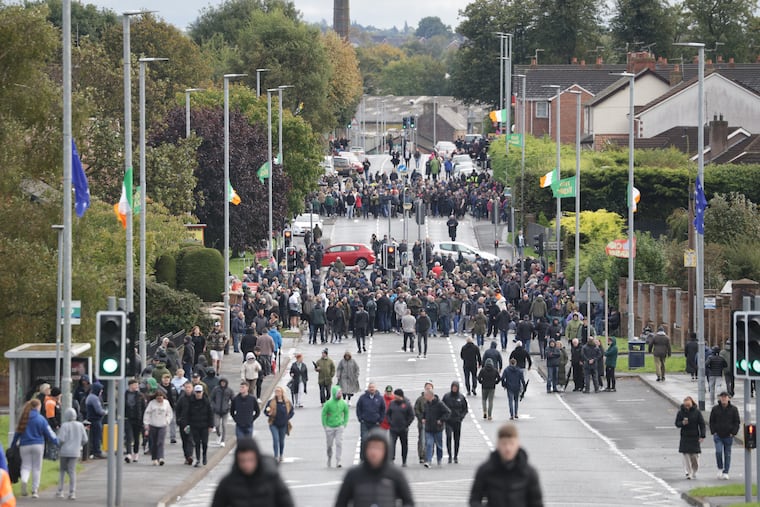
LONDON — Tensions ran high in Northern Ireland on Sunday after a contentious parade was blocked from making its way through the town of Portadown by thousands of protesters.
The demonstrators, many wearing balaclavas, congregated on a street in the town, where many favor unification with the Republic of Ireland. They came after an early hours decision from the High Court in Belfast to give the parade the go-ahead.
It’s the first time in nearly 30 years that the Orange Order parade has been allowed to go down the Garvaghy Road, which had been a notorious flashpoint between the communities in the years before the Good Friday Agreement of 1998 largely ended the bloodshed in Northern Ireland. During the so-called Troubles, some 3,600 people were killed while some 50,000 were wounded.
Ending the Troubles meant balancing competing identities in Northern Ireland, which remained in the United Kingdom when the rest of Ireland won independence a century ago. Irish nationalists in the north — most of them Catholic — seek union with the Republic of Ireland, while largely Protestant unionists want to stay part of the U.K.
Both sides appeared to be adhering to calls from across the political spectrum, including from British Prime Minister Andy Burnham, to avoid stoking tensions further.
“I am hoping we will bring all of today’s events to a sensible and peaceful conclusion,” said Jon Boutcher, the head of the Police Service of Northern Ireland.
Boutcher said there had been many “sensible voices” calling for calm which he thought had been “listened to by all parties.”
Northern Ireland First Minister Michelle O’Neill, who represents Sinn Fein, the party historically linked to the Irish Republican Army, faced criticism for attending the unlicensed protest on the Garvaghy Road to support the local community.
“She’s the head of an executive and she is prepared to willfully disregard the ruling of our courts, the determination by the statutory body charged with determining parades in Northern Ireland,” said Gavin Robinson, who is the leader of the Democratic Unionist Party, the largest pro-U.K. party in Northern Ireland.
O’Neill, whose government is made up of a cross-section of Northern Ireland parties as part of the power-sharing agreement within the Good Friday Agreement, defended her actions, saying “the progress of the last 28 years have been brought into question by the actions of the Orange Order and those within political unionism that want to drag us backwards.”
For days, there had been uncertainty about whether the parade, which celebrates Northern Ireland’s Protestant heritage and links with the U.K., would happen. It was given the final go-ahead at a court hearing concluded at 2:15 a.m. Sunday, a move that prompted the protesters to take to the street.
The Orange Order is named after William of Orange, a Protestant prince of Holland who defeated the Catholic King James to take over the British throne in the 17th century.