Despite good intentions from the city, Philly’s streets remain deadlier than those in New York and Chicago | Shackamaxon
Plus: The mayor loses two key staffers, smoking on SEPTA is ubiquitous, and the Sixers welcome the King.
This week, a couple of big names leave City Hall, Philadelphia’s Vision Zero struggles, SEPTA’s biggest woe, and LeBron James comes to town.
Topline turnover
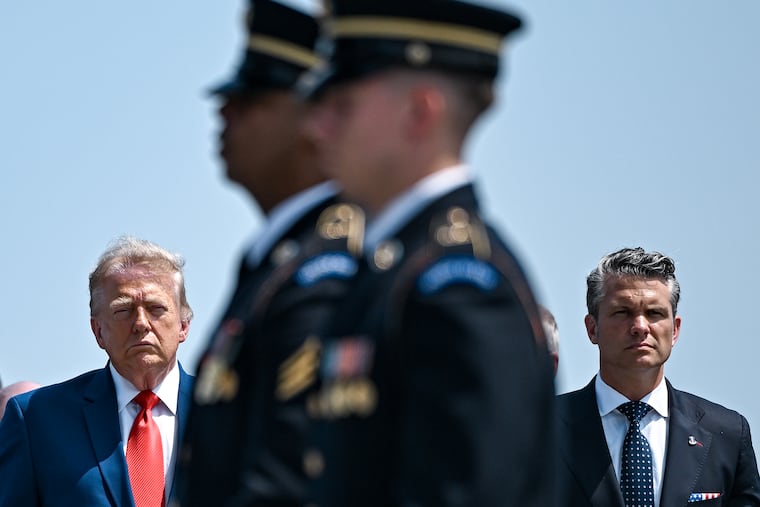
Philadelphia Mayor Cherelle L. Parker has experienced some turnover during her first term, but this week saw the biggest personnel changes yet. Managing Director Adam Thiel and City Solicitor Renee Garcia are both leaving city government. They’ll be replaced by Carlton Williams and Monique Galloway.
While Thiel hasn’t answered questions about his departure, it also isn’t very surprising.
As Inquirer reporters have thoroughly documented, Thiel’s attention has been pulled in multiple directions. In addition to his job with the city, he also serves in the Army Reserve and works as a consultant. In fact, he made more money working outside of city government than he did in it.
Thiel always claimed that his extra jobs did not create a conflict with city work, but this was harder to believe as time went on. He missed five months of work last year because of his Army duties alone. His absence during events like the month of snowcrete was conspicuous. Indeed, it was Williams who seemed to step into the role of coordinator.
Garcia’s departure is a little more surprising, especially given her central role in defending the administration’s toughest calls.
When Parker endorsed the proposed and then canceled Sixers arena on Market Street, Garcia spent hours testifying about the deal at City Council. It also fell to Garcia to defend Parker’s cautious approach to the Trump administration, including the choice to allow some of Council’s “ICE Out” agenda to become law without the mayor’s signature. She’s absorbed a lot of political arrows on Parker’s behalf.
A sign of how important these roles are to Parker’s success? Both were replaced immediately. Meanwhile, the city still lacks a permanent commerce director over a year after Alba Martinez left the role.
Blurred vision
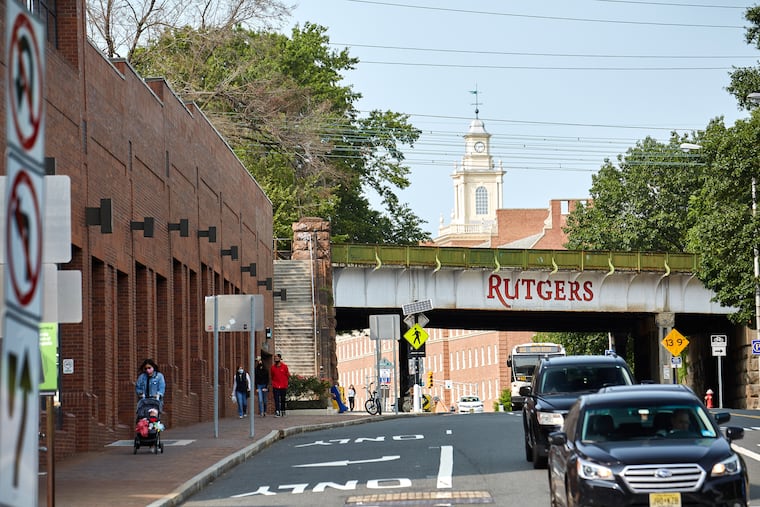
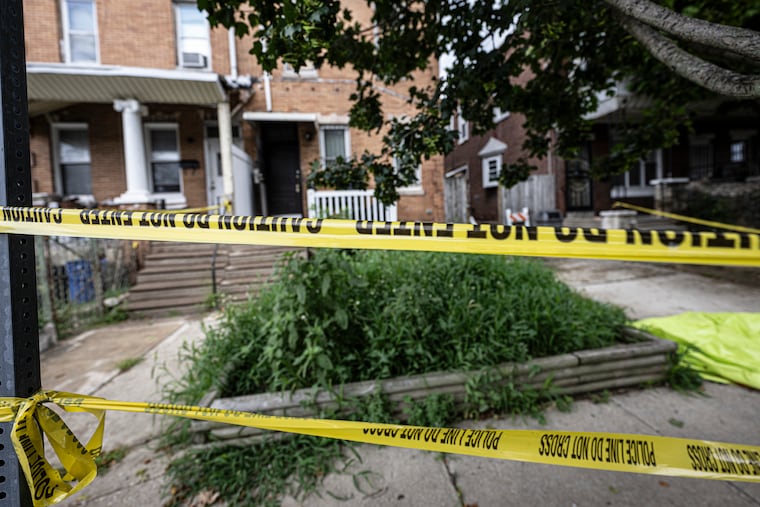
Philadelphia’s roadways remain overly dangerous. In fact, according to a report compiled by City Controller Christy Brady, the city’s fatalities outpace our peers.
Our traffic fatality rate of 9.04 deaths per 100,000 residents is triple New York’s 2.86 and roughly double Washington’s 4.73. The next closest city, Chicago, came in at 7.15. This means that Philadelphia’s streets are significantly more dangerous than comparable communities.
To be clear, City Hall is trying to bring these numbers down. Alongside the Philadelphia Parking Authority, city officials have blanketed the roads with speed cameras, which have successfully reduced crashes and fatalities along corridors like Roosevelt Boulevard.
The city is also working to lower speed limits. While 25 mph may feel slow behind the wheel of a car, research quantifies just how much danger pedestrians face because of a vehicle’s speed. At 20 mph, pedestrians have a 10% chance of death and a 25% chance of serious injury. At 30 mph, this jumps up to a roughly 25% chance of death and a 50% chance of severe injury. At 40 mph-plus, there’s a 50% chance of death, and severe injury is nearly a guarantee.
This explains why speed limits on roads like Broad Street are set to 25 mph. Given the cameras only give out tickets once a driver is 11 mph over, setting them higher would leave pedestrians exposed to dangerous conditions.
It is easy for opponents of speed cameras, street redesigns, or concrete protections for cyclists to complain about the supposedly all-powerful and nefarious “bike lobby,” but the data are quite clear. Philadelphia needs to do much more to protect its most vulnerable road users.
Up in smoke
After yet another year without a funding deal from Harrisburg, mass transit advocates and their supporters decided to raise awareness by embarking on a 24-hour public transportation marathon. They were joined, at least for part of the journey, by a plethora of elected officials.
Raising awareness is important because SEPTA won’t survive without sustainable funding from the General Assembly. Still, a trip down to Washington this week reminded me of a problem that can’t be blamed on Harrisburg: the behavior of some of SEPTA’s riders.
To be clear, the Washington Metropolitan Area Transit Authority system struggles with behavioral issues as well. Fare evasion, especially on bus routes, is out of control. Smoking on the metro, however, seems to be far less common.
On SEPTA, however, it is ubiquitous.
More than one person I’ve confronted over it has claimed, “I didn’t know you weren’t allowed to smoke down here.”
It would be unfair to compound the frustration of riders who already deal with this phenomenon by failing to fund adequate service. At the same time, the constant smell of cigarettes and marijuana must be addressed. Even if SEPTA secures sustainable funding in next year’s budget, it won’t fulfill its potential until quality of ridership issues like smoking have been addressed.
There’s no question in my mind that this behavior keeps people from riding the system. Beyond the discomfort of secondhand smoke, it also sends a message that the stations and vehicles are out of control. This makes them feel dangerous, even if SEPTA has posted record declines in serious crime.
Every rider who doesn’t take the subway because of the dive bar atmosphere costs the system money. Some people have even resorted to taking buses, which are slower (and are more expensive for SEPTA to operate), just to avoid showing up at work smelling like a music festival.
I’ve spent plenty of time in bars that allow smoking and I support the legalization of recreational marijuana. But it is one thing to engage in these behaviors in your own home or at a place of business where it is welcomed. It should never happen on public transit.
The King’s landing
When Philadelphia was first mooted as a potential landing spot for LeBron James’ swan song, I was a bit skeptical. After all, how often do good things happen for the Sixers?
That changed when I heard about a conversation between Gov. Josh Shapiro and the Akron, Ohio native. It isn’t that Shapiro has superpowers when it comes to persuasion. In fact, my guess was that LeBron was most of the way toward choosing Philadelphia when that interaction happened. If the discussion hadn’t gone well, I doubt Shapiro would have ever mentioned it.
After all, if Shapiro had publicly lobbied LeBron, only for the legend to land elsewhere, he’d have looked inept and desperate. Now, he looks savvy.
Although there are reports that James may live in New York City while playing for the Sixers, his decision to take his talents to South Philadelphia is another corrective to the old and tired narratives about our city.
Like a lot of Philadelphians, I can’t wait for the Xfinity Mobile Arena to become the court of King James.