Should you vote? Yes. But fighting for our rights demands more.
Political engagement and civic responsibility must be practiced every day of the year, not just on Election Day.
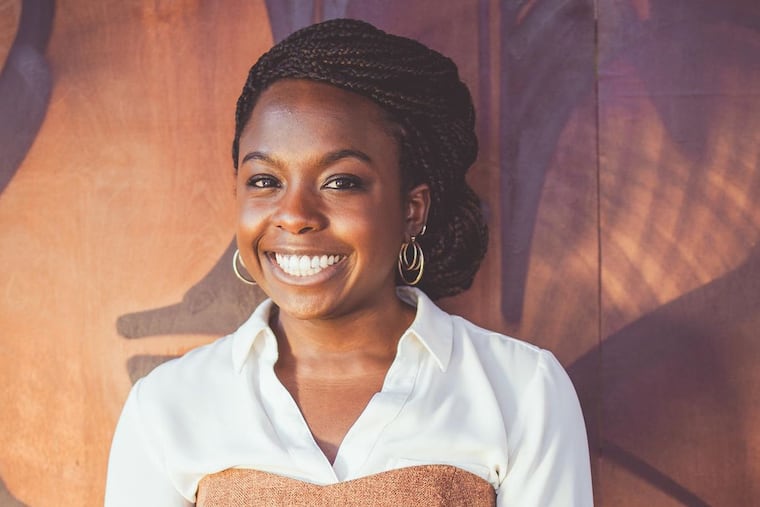
Cambriae Lee is the communications director at the American Civil Liberties Union of Pennsylvania.
Does my vote count? As a Black woman from West Philly, 49th and Lancaster to be exact, I’ve often found myself holding a self-debate about whether it does.
I was able to elevate out of my childhood neighborhood, away from needing supplemental food programs that often came from generous, elderly neighbors, like Ms. Carry down the street, who would hand out free lunch boxes to kids and serve as the block chaperone.
Now, with kids of my own and a middle-class life (though I still have to count my coins), I’m no longer, as my mother put it, “turning pennies into dimes.” But the privilege of higher education and economic mobility hasn’t protected me from many of the challenges that come with being a Black woman in America. And they haven’t silenced the pain I carry for the communities my identity is rooted in.
Power and purpose
For many Black, brown, low-income people, and anyone who has felt the weight of being historically disenfranchised, moving up doesn’t erase the concerns we have for our own existence, the fragility of our rights, or the alarmingly measurable disparities we experience every day. So when election season comes around, I often feel tempted to agree with friends who say, “Neither does a vote.”
Is our vote solving access to quality, free schools? Is our vote lowering the cost of healthcare? Is our vote bringing healthy, affordable options to neighborhoods with food deserts? Is our vote fortifying the rights that our ancestors sacrificed their lives for?
Whenever I reach that last question, I catch myself and feel shame. This isn’t a negotiation — how can I even consider that my vote lacks power and purpose?
People rarely die fighting for rights and resources that hold no value, and those in power rarely spend decades strategizing to roll back those same rights once they’re won if they don’t matter. From gerrymandering to the push to pass the SAVE Act to the U.S. Supreme Court decision earlier this year that weakened the Voting Rights Act, this administration and those who faithfully follow it are trying to disenfranchise us for a reason.
As we sit in the midst of midterm elections, I understand that many people are weighed down by the cost of gas, groceries, and childcare, just trying to make it to the next paycheck.
At its core, democracy is about voting for the most persuasive ideas and protecting our freedom to live a life with choices and opportunity.
When the conditions are so unbearable that you feel tired of trying, it can be difficult to believe any action you take can change your day-to-day life. But that’s exactly when we have to lock in and use all the tools our democracy provides to force those in power to respond accordingly.
Democracy is a 365-day-a-year job. At its core, democracy is about voting for the most persuasive ideas and protecting our freedom to live a life with choices and opportunity. If our ideas aren’t winning at the ballot box, that means we have to do more on the front end — the other 364 days of the year — to make our ideals the best choice for the most people.
If we only show up to vote and then wait until next year to do it again, we’re likely to be disappointed every time.
How we win
We have to organize, advocate, shape the narrative, encourage visionary community members to become elected leaders, petition our representatives, and tell them how we feel about their job performance. That’s how we win in Pennsylvania.
It took years of grassroots organizing to secure the 2019 voting reform law that went into effect during the pandemic and made no-excuse mail voting possible.
It took long-term advocacy to pass a 2024 law protecting critics from being silenced by wealthy interests, corporations, and government officials through SLAPP lawsuits.
Since 2011, the American Civil Liberties Union of Pennsylvania and allied organizations have defeated bills six times that would let law enforcement collect DNA from people who have been accused, but not even convicted, of a crime.
These wins weren’t just about electing the right leaders. They were about electing leaders willing to work with the community and then working year-round to hold them accountable. This starts with research, using resources from trusted organizations, and plugging into grassroots and public interest organizations focused on helping us move forward.
Politics are a constant cycle of wins and losses, echoing the difficult dualities we navigate routinely. They are inseparable from who we are and what we face, because they are our lives; they can’t be separated. If we’re not giving up on making our lives better, then we can’t give up on engaging in the democratic process.
About guest essays
Guest essays, or op-eds, are commentary pieces that present the opinion or perspective of the author. Many are submitted to us by Inquirer readers and writers with insight on the news, but we also solicit op-eds from authors on specific topics. For more information visit our guidelines.

Inquirer Opinion Newsletter