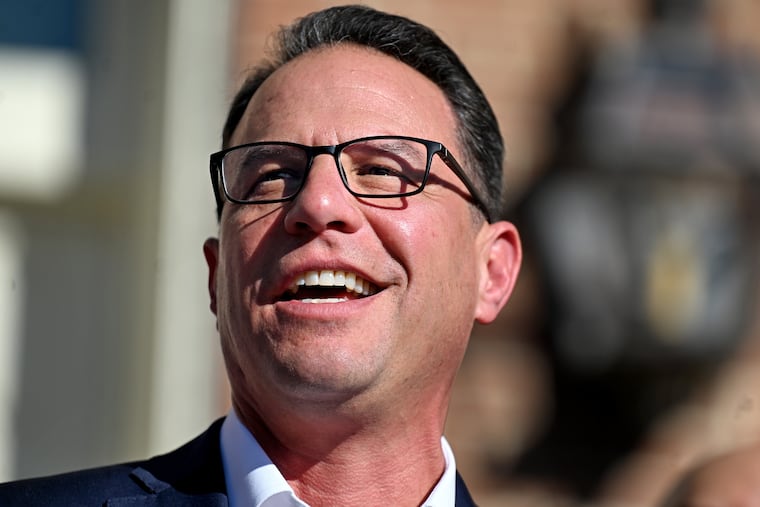
Pa. Republicans offered plenty of reasons for their midterm losses, but maybe voters just like Gov. Shapiro | Shackamaxon
Plus: The pain of property tax reassessment, the killing of Malayshia Allford, holding the sheriff’s office accountable, and who gets to comment?


This week’s edition of Shackamaxon covers the fight over property assessments, a horrific failure in the system designed to protect children, why Gov. Josh Shapiro and the Pennsylvania Democrats won so big, City Council finally holding the sheriff’s office accountable, and a surprising admission from the city’s law department.
Values vs. valuations
Property tax reassessment is one of the most contentious, and essential, parts of city government. For years, Philadelphia used out-of-date valuations that left some paying far too much and others paying far too little. After Mayor Michael A. Nutter instituted the Actual Value Initiative, the system has become significantly more accurate. To some, however, regular reassessment simply feels unfair.
That group seems to include most members of Philadelphia City Council, who have faced a flood of phone calls from residents who have seen significant increases in valuation from the Office of Property Assessment.
At Monday’s hearing on assessments, however, I could not help noticing that the debate was less about the specifics of OPA’s methodology and more about the inability of Council to control the real estate market that determines valuations. After all, experts at the hearing praised OPA’s accuracy. Monty Wilson, an attorney at Community Legal Services, went as far as calling it the best office in the state, even as he acknowledged that this isn’t good enough.
What frustrated the city’s legislators wasn’t the process but the results — including large increases in Kensington and other low-income areas. While the significant investments the city has made in combating the drug trade, reducing homicides, and cleaning up the streets (and the measured success of these efforts) means that some increase is expected, many residents were shocked that the home they once stepped over needles — or even people — to get to could now cost so much.
The good news is the city has the tools to help. Instead of pausing reassessments, which would slowly take us back to the days of widespread inaccuracy, Council can increase the Homestead Exemption, which is the only exception to statewide uniformity rules. This would eliminate the tax burden for the city’s poorest homeowners and lessen it for everyone else. Panelists also suggested extending the appeals period.
Demand answers
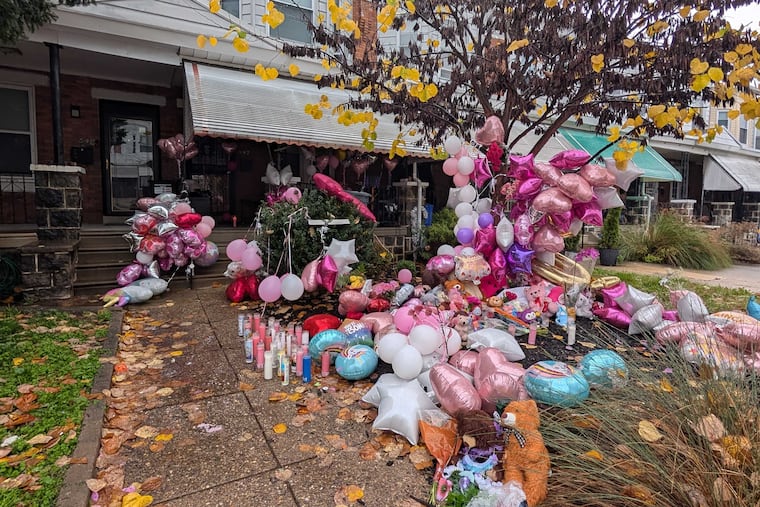
The murder of Malayshia Allford has refocused attention on Philadelphia’s foster care system. I know firsthand how important human services are. My younger brother and I are both adoptees, my older sister served as a social worker for years, and my parents fostered several newborns before adopting me.
I understand there are times when the state must intervene in the private affairs of families to protect the interests of vulnerable children. At the same time, Philadelphia separates children from parents at the highest rate of any major city — four times the rate of Chicago.
This separation can induce its own form of trauma. While infants like my brother and I benefited from placements with families, older children are often forced to live in group homes. This can be a miserable experience. My parents and the families that fostered my brother and me treated the babies in their homes like their own children. That’s less likely to happen in a group facility.
What happened to 10-year-old Malayshia, however, went beyond denial of the love and support all children need. Authorities failed her. Her foster mother, Caprice Williams, is now accused of her murder. Making matters worse, Williams has prior abuse allegations, and state officials had recommended not placing any more children in her care. How Williams was able to maintain her job as a public school teacher given these claims is also worth further exploration.
Three different Council members have moved to authorize hearings, and Mayor Cherelle L. Parker has vowed to investigate. This is a good start. But we’ve investigated the system before, and it still failed to protect Malayshia. This round must be different.
Illuminating exits
After last week’s landslide election, politicians and pundits gave their own interpretation of the results. Soon-to-be former state Senate president pro tempore Kim Ward blamed “national headwinds” for her party’s poor results. Supporters of State Sen. Doug Mastriano, who ran and lost to Shapiro in 2022, took to social media to blame Pennsylvania Republican insiders for anointing state Treasurer Stacy Garrity all the way back in September of 2025, bypassing the primary process that had previously selected Mastriano.
Pollster Jim Lee, with Susquehanna Polling, has his own theory for why Shapiro won big: Pennsylvanians, including a significant chunk of Republicans, just like the guy.
In his organization’s exit polling, they asked why voters selected Shapiro and Garrity. In Shapiro’s case, 53% said he was doing a good job, while another 23% said they agreed with the Ambitious Abingtonian on the issues.
As for Ward’s suggestion that President Donald Trump doomed her colleagues by bombing Iran and inflating gas prices, there are mixed signs. On the one hand, just 6% of Shapiro’s voters picked “standing up to Trump” as a reason he earned their vote. On the other hand, 44% of voters said they voted mostly for Democrats to send a message to the president. Still, that’s not enough to win, let alone score the first Democratic trifecta in decades. This means Shapiro and other Pennsylvania Democrats also did well with the 33% of voters who said Trump did not affect their vote this year.
In fact, Democrats across Pennsylvania did exceptionally well with Republican voters in this election. Around 44% of voters selected a straight Democratic ticket, while just 33% of voters voted for just Republicans.
It’s not all good news for Harrisburg Democrats, however. While their candidates may have earned Republican votes this year, these folks have not become progressives overnight. About 43% of voters identified themselves as Republicans, just one point shy of the 44% who called themselves Democrats. This means that going too far afield from the causes they campaigned on could erode their gains.
Accountability at last?
After years of scandals, City Council has finally seen fit to hold hearings into the Philadelphia Sheriff’s Office, which is led by Rochelle Bilal. From the very beginning of her tenure, whistleblowers have alleged that Bilal has misused public funds and failed to perform the essential functions of her office. During that time, City Council has refused to hold her accountable, at one point even honoring her via resolution.
On Thursday, that finally changed. Council President Kenyatta Johnson moved to hold hearings into the operations and policies of the office, with the aim of restoring public confidence.
This is a good start, but the best way to improve the office remains abolishing it.
No comment
My newsroom colleague Jake Blumgart has chronicled the most recent chapter in the fight over the Washington Square West Historic District. The city’s appeal of the court ruling abolishing it, however, makes an interesting claim.
It said Judge Christopher Hall should not have considered public comment in his ruling, because “The record does not reflect the overall views of affected owners, businesses, or residents, but only the self-selected bias of the limited number of persons who provided public comments.”
Policy experts have raised similar concerns about public comment for years. Research shows that people who testify at public hearings are unrepresentative of the community at large.
At the same time, city officials often lean on this testimony while making decisions. I expect developers and institutions to cite this filing going forward when their own ideas meet a skeptical public.
About our columnists
In contrast to news reporters, who operate within an independent, nonpartisan framework, columnists are charged with including their perspectives, opinions, and viewpoints when presenting their reporting. Inquirer columnists include Jenice Armstrong, Will Bunch, Luis F. Carrasco, Paul Davies, Daniel Pearson, Trudy Rubin, and Sabrina Vourvoulias.