The way out of Trump’s failed Iran war | Editorial
The president is proving the necessity of the diplomacy he has dismissed and undone.
Much like the rest of President Donald Trump’s war with Iran, the latest outbreak of hostilities has produced nothing but death, destruction, and disorder. The current flow of traffic through the Strait of Hormuz makes the Schuylkill Expressway look fast, Tehran retains its capacity to terrorize its neighbors with cheap drones, and more American service members and civilians in the region have been killed or wounded.
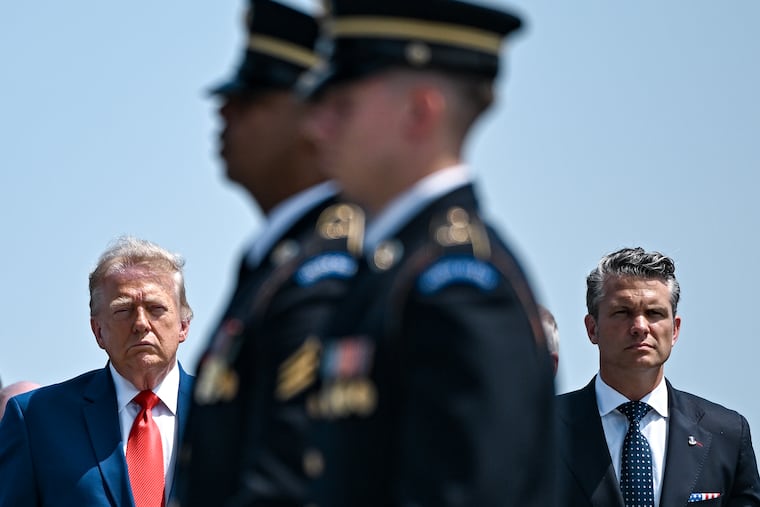
Last week, the Trump administration brain trust devised a horribly creative means of adjusting this abysmal cost-benefit ratio: blaming the latest U.S. losses on some other war. The Pentagon now categorizes four of the service members killed in the region and more than 200 of those injured as casualties not of the Iran conflict, but of unspecified “overseas operations.” This is based on the notion that the U.S.-Iranian ceasefire and memorandum of understanding ended the war, which it obviously didn’t.
This accounting trick is an insult to the troops and their families. But the impulse behind it is correct in one sense: It’s time to actually cut American losses and end this misbegotten war for good.
Five months after the United States joined Israel in waging war on Iran for the second time in as many years, the effort has achieved none of the administration’s various stated aims. Iran continues to be ruled by an oppressive theocratic regime with nuclear ambitions and proxy forces that menace its neighbors.
» READ MORE: Trump’s war on the media is really a war on the truth | Editorial
The Islamic Republic is, in some respects, stronger than before, having shown it can fight the most powerful militaries in the region and the world to a standoff. At the same time, it now wields a weapon that may be more effective than a nuke: its ability to rattle the global economy by strangling oil and gas shipments through the strait.
Trump, meanwhile, is under pressure from his vulnerable allies (and business partners) in the Gulf, congressional Republicans staring down a midterm shellacking, and dwindling supplies of munitions. Sure, he can keep threatening to resume the American onslaught to the extent of committing war crimes. But the president has already done more than his share to prove the ultimate inefficacy of both the rhetoric and the bombs.
Rather than risk the lives of more Americans and others, and spend more billions to no avail, the administration must accept the necessity of a tactic it has largely avoided: multilateral diplomacy.
» READ MORE: What John Fetterman forgot about his U.S. Senate seat | Editorial
Trump himself has shown intermittent glimmers of understanding this, having periodically groused about the refusal of NATO and other allies to come to America’s aid in the war. Such complaints also revealed the president’s fundamental misunderstanding of the transatlantic alliance, which exists to deter rather than further military aggression, and the nature of international relationships, which rely on the sort of mutual respect to which Trump has laid waste.
It was the hard work of diplomacy that forged the Obama-era agreement among the world’s major powers to prevent an Iranian nuclear bomb, subject to verification by United Nations inspectors, until Trump unilaterally withdrew from the pact during his first administration. The peaceful transit through the Strait of Hormuz that prevailed before Trump’s war likewise rested on broad compliance with international maritime law.
A lasting peace and resolution of the U.S.-Iranian standoff over the strait and the nuclear question may not be possible even with the benefit of broader international cooperation. But they will be impossible without it.