Letters to the Editor | Aug. 11, 2026
Inquirer readers on AI data centers and President Trump’s claims of election fraud.
Bogus claims
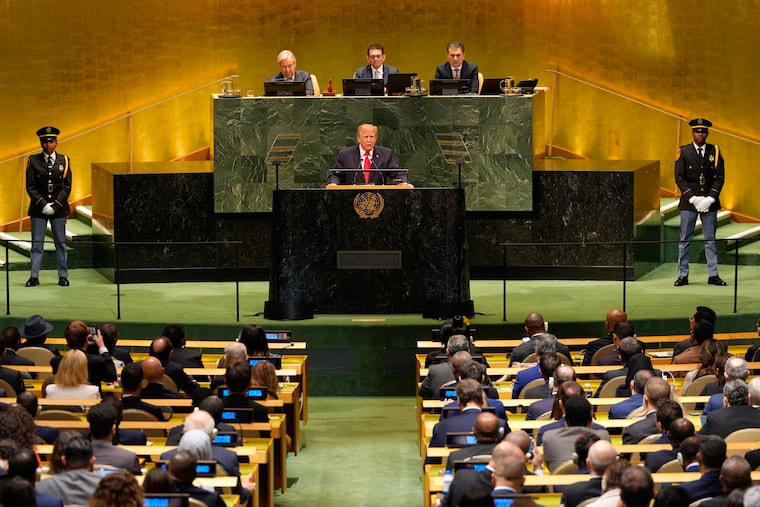
It’s time America goes on the offensive regarding Donald Trump’s lies about his winning in 2020 and his unfounded statements about weakness in the security of our elections. He presented little or no evidence to support his claims. Immediately after Trump’s speech, some GOP pols were pushing for the passage of the SAVE America Act, which is a blatant attempt to stop some citizens from voting.
In Trump’s second term, the FBI’s Foreign Influence Task Force has been shut down, the Office of the Director of National Intelligence has been cut back sharply, and a task force that warned against foreign meddling and the Cybersecurity and Infrastructure Security Agency have been gutted.
In 2020, Christopher Krebs was fired by President Trump as head of the cybersecurity agency known as CISA after contradicting the president’s baseless claims of widespread election fraud. The same people who perpetuated the lie that the 2020 presidential election was stolen are now embedded in the White House and throughout the federal government.
I suggest we call our federal and state senators and representatives and demand they publicly denounce Trump’s lies about him winning in 2020 and his baseless allegations of fraud in our elections.
Steve Clifford, Langhorne, hs12@verizon.net
Power paradox
The blindness community has always had a certain degree of smugness, particularly around energy sources. Using mass transit or various forms of power transit, we did not contribute significantly to the use of fossil fuel. We were not the ones going up to the gas station and driving off — polluting all the way. We frequently worked from home and did not clog the highways. We weren’t the ones snarling traffic. Most blind people have some usable vision, but for those of us with next to no vision, we would often turn off the lights and do whatever tasks needed to be done. Then artificial intelligence came along.
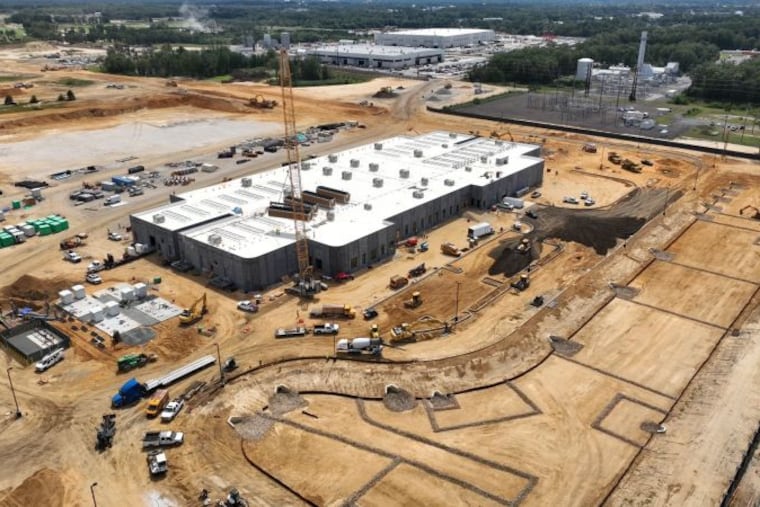
Now there are data centers that use a lot of energy and water. AI tools, such as smart glasses and advanced GPS units, are marketed heavily to blind people. Many blind people have devices that tell them what is in their environment and describe things around them.
Blind people are beginning to take photos and videos. AI is able to tell them when something is in the center of the photo frame. It’s also easier to get information off the web by using a chatbot. I find that my ability to cook has been enhanced. I can pick up a package from my spice cabinet and have my smart glasses identify the item. The possibility of needing to open the package and smell it to identify it has been eliminated. I can ask my smart glasses about cooking times and proportions. If I need to find something in my apartment, I no longer need to feel around or think about where I might have put something. The smart glasses can help me find the item.
This has all been very useful to me, yet I still have concerns about data centers and their power and water usage. I sometimes feel guilty about using AI to do many of these tasks. I used to accomplish so much without AI, but now it’s becoming a default. I do have one question for those technology experts out there: With artificial intelligence and quantum computing becoming so much more advanced every day, why don’t we ask these advanced technological wonders to solve their own energy dilemma? Perhaps quantum computing and AI can figure out how they should be empowered. Perhaps the energy and environmental solution to the data center difficulty can be solved by the very technology that requires the data centers.
David W. Wannop, former music business worker, Philadelphia
Join the conversation: Send letters to letters@inquirer.com. Limit length to 150 words and include home address and day and evening phone number. Letters run in The Inquirer six days a week on the editorial pages and online.