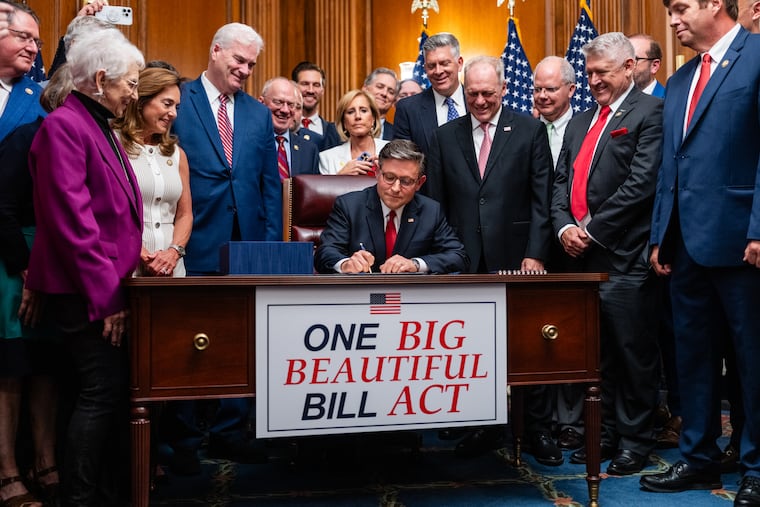
How Watergate showed Dems a ‘slow burn’ strategy for Trump impeachment
A Democratic Congress should use aggressive probes and prime-time hearings to make case against Trump and his cabinet.
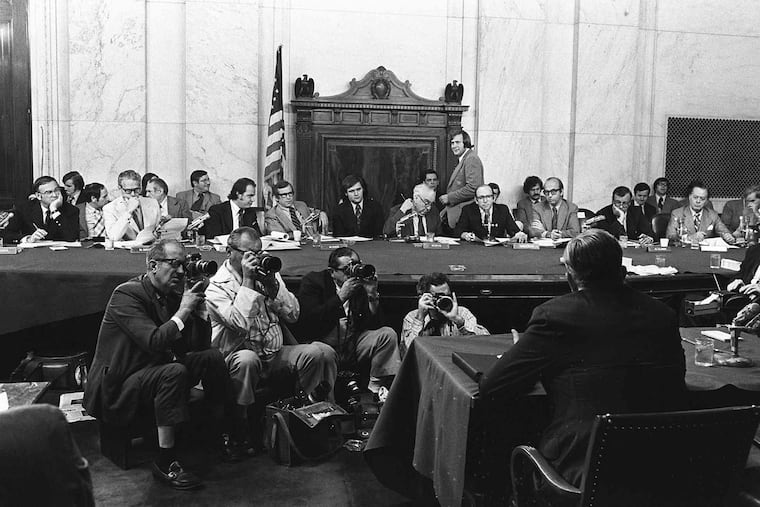

The slow fuse of Richard Nixon’s Watergate scandal had been burning for more than two years on the night of July 25, 1974, when millions turned on their TV sets and watched a woman who’d been previously unknown to most Americans — even after making history as the first Black congresswoman from a former Confederate state.
The nation was riveted by Barbara Jordan of Texas.
In a booming voice, the Democrat from Houston spoke of her passion for the U.S. Constitution after people like her had fought for nearly 200 years and counting for full recognition. “My faith in the Constitution is whole; it is complete; it is total,“ Jordan said, in what is now regarded as one of the most memorable speeches of the 20th century. ”And I am not going to sit here and be an idle spectator to the diminution, the subversion, the destruction, of the Constitution."
In the most enduring moment of a televised debate that was watched at least in part by an estimated 90% of all Americans, Jordan outlined Nixon’s abuses of power in seeking to thwart probes into the 1972 Watergate break-in, and his other abuses. “If the impeachment provision in the Constitution of the United States will not reach the offenses charged here,” she concluded, “then perhaps that 18th-century Constitution should be abandoned to a 20th-century paper shredder.”
Jordan’s speech set the tone for a week of sober and sometimes moving debate that ended in the House Judiciary Committee, with bipartisan majorities, approving three impeachment counts against the embattled 37th president. Meanwhile, a unanimous Supreme Court forced Nixon to finally release incriminating Oval Office tapes sought by the committee and a special prosecutor. On Aug. 8, 1974 — two weeks after Jordan’s speech — Nixon became the first and only president to resign.
Over the long half-century since then, it’s been easy to forget how improbable Nixon’s ouster had truly been. In November 1972 — five months after the Watergate break-in — he’d been reelected with nearly 61% of the vote in one of the biggest landslides in the nation’s history. In late 1973, after a summer of explosive Senate hearings and Nixon’s firing of the first special prosecutor in the notorious “Saturday Night Massacre,” support for impeachment rose, but only to about 37%.
There’s a reason that one of the best modern histories of Watergate, a Slate podcast series, was named Slow Burn. The Democratic-led Congress took months to bring in top lawyers, gather evidence, hold hearings — both behind closed doors and on primetime television — and build a case for impeachment that a majority of Americans — even some of Nixon’s fellow Republicans — could support.
In 1974, the House Judiciary Committee — led by a rising-to-the-moment ex-Newark ward-heeler, Rep. Peter Rodino — didn’t just make history. It also created a roadmap for today’s Democrats facing the quandary of how to address Donald Trump, his cabinet, and their growing list of high crimes, misdemeanors, and abuses of power. The Trump rap sheet makes Watergate actually seem like the “third-rate burglary” Nixon’s spokesman claimed that it was.
Monetizing the presidency to make billions of dollars for himself and his family through everything from scammy meme coins to wired Pentagon contracts to stock trades with insider information. Murdering fishermen on the high seas and starting a major war without congressional approval. Creating a pay-for-pardon industry that makes a mockery of the Constitution, while abusing his power to sic the Justice Department on his enemies. Impounding money legally authorized by Congress, sometimes with deadly consequences.
Just to name a few.
And think about this: These are just the impeachable offenses that we’ve learned about in two years of a GOP-led do-nothing Congress, a DOJ that sees itself as representing Trump and not the American people, and a partially cowed news media. Imagine what a thorough and intense investigation led by Democrats could additionally uncover about the questionable business dealings of the Trump family, including its hedge-fund envoy Jared Kushner, or the real motivations for the White House to look the other way on Nvidia’s chip sales to China.
A lot of rank-and-file Democratic voters will look at this laundry list of outrageous offenses and ask: Why not impeach Trump and his worst-of-the-worst cabinet secretaries on Jan. 4, 2027, the day after Hakeem Jeffries is elected House Speaker? There’s a mechanism, after all, for the House to take a snap impeachment vote that was attempted this year not just for Trump but for his unctuous “Secretary of War,” Pete Hegseth.
Both those efforts failed, and while in a moral sense sooner would be better for removing both men — especially Trump, with the nuclear football in his deteriorating grasp — from power, it’s politically much better for the Democrats to go the “slow burn” route of gathering every scrap of evidence and laying it out in dramatic public hearings over the course of 2027.
But that won’t be easy. House Democrats face pressure not just from their base voters demanding immediate action but also from many in their own party who think impeachment is a waste of time either because “the votes aren’t there” to convict in the Senate, or because they believe voters want Congress to only focus on lowering prices. That’s in addition to a Trump White House with a new combative chief of staff in Stephen Miller that will fight every subpoena to the death.
The good news is that after the Democrats’ “blue tsunami” in the midterm election there seems to be growing consensus and understanding that a) the voters who elected them want accountability as much as affordability and b) a thorough and intentionally deliberate investigation into Trump’s corruption — one that could see impeachment (or impeachments, including other top officials) — is the strategy that makes the most sense.
The even better news is that the point man for all of this — the 21st century heir to Rodino — is someone who seems to get it: Maryland Rep. Jamie Raskin, a top constitutional lawyer, breakout star of Trump’s second impeachment in 2021, and a child of Watergate.
Raskin pointed out to famed Watergate whistleblower John Dean at a 2019 hearing of the House Judiciary Committee — which he’s expected to chair when the Democrats take power in January — that his father, a liberal thought leader and former John F. Kennedy administration official named Marcus Raskin, was on Nixon’s notorious “enemies list.” And he’s said that Trump’s conduct “makes Watergate look like a Cub Scout picnic.”
Raskin told Politico last week that he shares the concern of other Democrats that a rushed impeachment of Trump might benefit the president by giving him a rallying cry to reunite his fracturing base. What’s more, there’s a legitimate concern that an instant Trump impeachment would bog down the Senate in a winter trial that would delay votes on popular issues such as healthcare or the minimum wage.
But Raskin’s belief in White House accountability makes him the right man to lead — and work collaboratively with colleagues such as Rep. Robert Garcia — the kind of “slow burn” investigation over the course of 2027 that would not only educate the public about Trump regime wrongdoing, but would build support for impeachment beyond the roughly half of voters in the most recent polling. He told Politico on Thursday that the committee is bringing in a couple of dozen new investigators to probe “pardon brokers” and other alleged wrongdoing,
» READ MORE: Trump will be impeached in ’27. Here’s how. | Will Bunch Newsletter
“I think we need a national conversation,” Washington Democratic Rep. Zoe Lofgren, who was a Trump impeachment manager in 2020, told Politico. That’s correct. When done properly, as it was in 1973-74, impeachment is just the end result of a process that will allow Democrats to use their newfound subpoena powers to pry free documents and obtain new witness testimony, and to hold prime-time hearings to win over the not-yet-convinced.
There’s an even more recent example in 2022’s congressional hearings on the Jan. 6. 2021 Capitol Hill insurrection and Trump’s attempted election interference, with televised testimony that pressured then-Attorney General Merrick Garland into naming a special prosecutor who then indicted the between-presidencies Trump.
It’s certainly true that crusading for truth in prime time can be good politics. Just three months after the House Judiciary hearings and Nixon’s resignation, Democrats gained 49 seats in the 1974 midterms for a veto-proof House majority, on a path toward regaining the White House in 1976.
But the best argument for impeaching Trump with all deliberate speed is the one that Jordan made that summer night in 1974 — respect for the rule of law. The Constitution that Trump has tossed into a 21st century shredder demands it.
“If there is something that is worthy of impeachment, we should have impeachment, even if it’s bad politics,” Democratic Rep. Suhas Subramanyam of Virginia told Politico. That’s not quite the poetry of Barbara Jordan, but he’s exactly right.
About our columnists
In contrast to news reporters, who operate within an independent, nonpartisan framework, columnists are charged with including their perspectives, opinions, and viewpoints when presenting their reporting. Inquirer columnists include Jenice Armstrong, Will Bunch, Luis F. Carrasco, Paul Davies, Daniel Pearson, Trudy Rubin, and Sabrina Vourvoulias.

Sign up for the Will Bunch Newsletter