Letters to the Editor | July 22, 2026
Inquirer readers on solar energy initiatives in New Jersey and the nation’s historic labor shortage.
Garden State bound?
As I weigh the decision of whether to move my family to New Jersey or stay in Philadelphia, the newly signed Pennsylvania state budget makes moving across the Delaware River just that much more appealing. In Pennsylvania, House Bill 504, a solar energy initiative, was supported by Gov. Josh Shapiro but was held back by the Senate leadership.
But New Jersey is one of 24 states that have passed community solar legislation, enabling residents to save on their utility bills — even renters and others who can’t install solar panels can benefit as subscribers. Community solar facilities provide subscribers with access to clean and cheap solar energy, and a monthly credit on their utility bill. People shouldn’t have to put a solar panel on their own roof to benefit from the electricity it generates. And I want to live in a state where all my neighbors can access solar as a way to reduce their energy bills and live their values.
Community solar deserves consideration in the next legislative session. In the meantime, I’ll be on Zillow looking at houses in South Jersey.
Miranda Bennett, Philadelphia
The Gaza crisis
I want to thank The Inquirer for having the courage to publish two articles in the July 8 print edition talking about Israel. Being anti-genocide or even pro-Palestinian is not being antisemitic. Accordingly, honest conversations about Israel should not be taboo.
People may debate specific numbers and whether to use the term genocide, but what is clear is that there has been a hugely disproportionate use of force against Gaza.
On Oct. 7, 2023, there were a reported 1,200 deaths, 5,430 injuries, and 250 Israelis and other nationalities taken hostage. What occurred that day was horrific and cannot be condoned.
Since then, Israel has been responsible for a reported 73,000 deaths, 173,000 injuries, and upwards of 1.9 million Gazans being driven from their homes, according to the United Nations Relief and Works Agency.
While criticizing Israel is an uncomfortable topic, looking away from this Gaza crisis (and what’s also going on in the West Bank and Lebanon) and pretending it is not happening is not going to make it better, so the more we know and talk about it openly and understand what is actually taking place, the better we will be able to decide whether we as taxpayers want to continue providing aid to the oppressor or the oppressed.
Kent Kingan, Malvern
Refugee resettlement
I completely endorse the views in the recent op-ed on refugee resettlement by Kelly Ryan, the head of the Jesuit Refugee Service (JRS) and longtime U.S. government refugee official.
I remember when JRS started after I had left the U.S. House immigration and refugee subcommittee and started in the federal departments working on refugee matters. The views expressed by Ryan represent those of us who created the Refugee Act of 1980, which opened the legal door to refugees (and really just reestablished an American tradition that had been closed off by changes to our law).
The idea for the comprehensive 1980 act (the first comprehensive U.S. refugee law) was initiated by our subcommittee staff in the late 1970s, and we persuaded the Senate committee, headed by then-Sen. Edward Kennedy, and the Carter administration to support it.
The JRS and the events discussed by Ryan are part of a continuing story of the admission of refugees that is not only the humanitarian thing to do, not only consistent with American law and tradition, but also in our national interest in many ways.
And, as Ryan notes, it is tragic to see the destruction of the program under the current administration, both in the U.S. and abroad. We can correct this situation, and should work to see that we will.
Mark R. Zecca, Philadelphia
Labor shortage
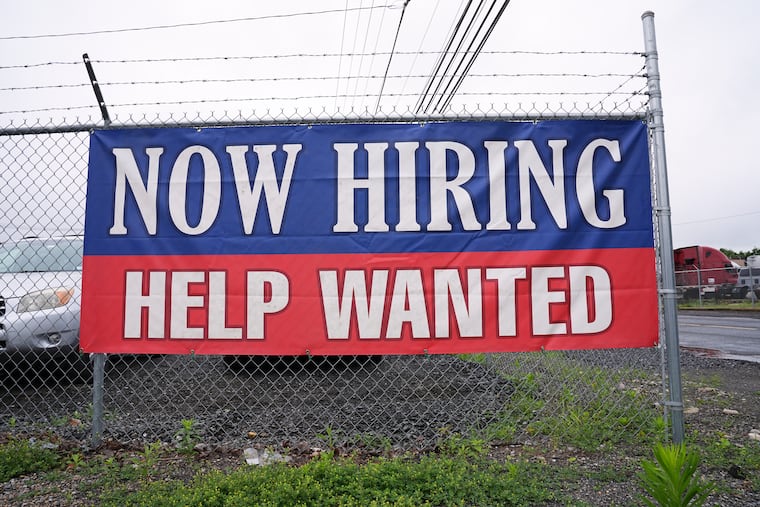
What a disconnect in the print edition of The Inquirer Sunday: An editorial mentions the Trump administration’s target of arresting 2,000 immigrants each day. Meanwhile, an article in another section reports that the United States is facing what’s projected to become one of the largest labor shortages in its history. It quotes a labor market expert as saying this could hobble the American economy for years to come.
The article says there will be shortages of tens or even hundreds of thousands of nurses, physicians, teachers, engineers, pharmacists, mental health counselors, construction workers, and airplane mechanics. Forty-one percent of home health aids who are increasingly needed to care for the nation’s aging population have historically come from somewhere else, along with a fifth of nursing assistants, dentists, pharmacists, and registered nurses. Right here in Pennsylvania, we will face a shortage of 218,000 workers by the year 2032.
It seems obvious that a sane and well-managed immigration program is critical to our country’s future economic success. When will Congress figure this out?
Ann Clausen, Philadelphia
Zero-waste future
Thank you for your informative article on the mayor’s plan to renew Philadelphia’s contract to use the Chester incinerator. This renewal will combine waste incineration and landfilling with a rather vague reference to exploring “alternative methods for disposal.”
I highly recommend, as an alternative method, a citywide zero-waste program for composting food wastes, complemented by active recycling and upcycling of non-compostable wastes. This approach would solve multiple problems at the same time. It would avoid landfill methane emissions, thus proactively reducing the impact of climate change, and would eliminate the need for incineration as well, with its concomitant release of toxic emissions that cause deleterious public health impacts, especially on the citizens of Chester.
Moreover, my suggested initiative would create many more new jobs in waste handling compared with the current plan, which opponents of Councilmember Jamie Gauthier’s bill claimed would jeopardize 120 jobs. San Francisco, the gold standard for a comprehensive zero-waste program, supports approximately 1,000 union jobs dedicated to collecting, sorting, and processing recyclable and compostable materials. Philly’s population is approximately twice as large, suggesting that a comparable program would create about 2,000 jobs.
William M. Stigliani, Philadelphia
Shortsighted
The recent article about the “short war fallacy” was spot on. Donald Trump and his advisers ignored the Iraq-Iran War of the 1980s, reckoning Iran would quickly crumble when the U.S. attacked it. Iraq invaded Iran in September 1980, spurred by concerns about political and ideological tensions. With a superior military force, Iraq made quick inroads and expected an easy victory. However, by December its offense stalled. Buoyed by resurgent morale and military capability, Iran launched a counteroffensive into Iraq. Iraq’s perceived short war dragged on for years, resulting in a massive death toll. In 1988, the United Nations mediated a ceasefire. Estimates of war dead range from 500,000 to one million. Iran suffered the majority of fatalities. The war ultimately strengthened Iran’s Islamic Revolutionary Guard Corps. Iran’s ability to withstand military setbacks was well-documented and remains intact.
The administration’s failure to consider that conflict helped suck the U.S. into a war it is attempting to win by air superiority, an increasingly discredited notion. Air superiority isn’t control on the ground. Relying on that strategy exclusively will further draw down key air weapons stockpiles that are already seriously depleted. It may also cause the U.S. to start committing war crimes that military experts were warning against back in April. Trump and his advisers need to seriously consider ending the war with a hollow victory that will extricate the country from another hot spot where a short war victory is proving elusive and likely unattainable absent an escalation in hostilities. Such an escalation wouldn’t guarantee an actual victory. America doesn’t need another win like the ones it achieved in Vietnam, Afghanistan, and Iraq.
Stewart Speck, Wynnewood, speckstewart@gmail.com
Join the conversation: Send letters to letters@inquirer.com. Limit length to 150 words and include home address and day and evening phone number. Letters run in The Inquirer six days a week on the editorial pages and online.