Medical mystery: What's causing terrible abdominal pain?
A 77-year-old woman came to Crozer-Chester Medical Center suffering from severe abdominal pain. She was a heavy smoker but did not have any other known major health concerns that could be causing the pain.
A 77-year-old woman came to Crozer-Chester Medical Center suffering from severe abdominal pain. She was a heavy smoker but did not have any other known major health concerns that could be causing the pain.
The emergency department physician ordered a CT scan to see what could be causing her distress. The test revealed a large abdominal aortic aneurysm.
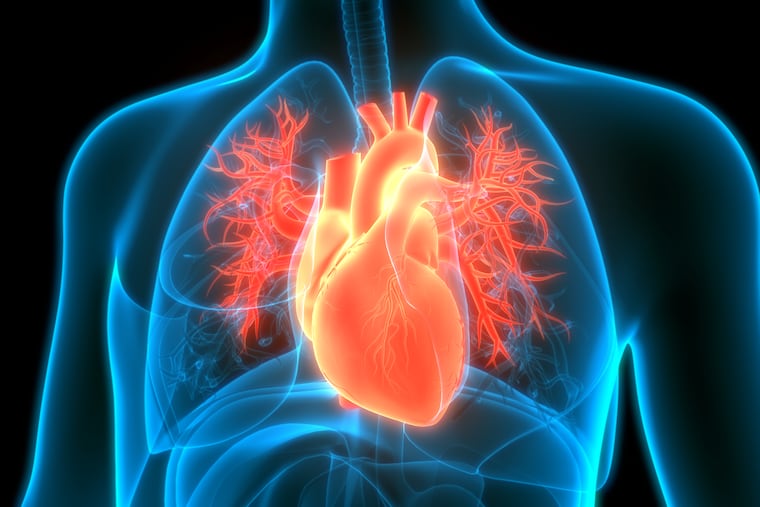
This is an enlargement in the lower aorta, the major blood vessel that runs from the heart through the chest and abdomen. Normally about the thickness of a garden hose, this vessel is the main supplier of blood to the body. So the sight of this large aneurysm - and the risk it posed to the patient should it burst - prompted an immediate vascular-surgery consultation.
But when we examined the patient and the CT scan more closely, we determined that the aneurysm, though concerning, was not her greatest immediate threat. Nor was it the cause of her pain.
Solution
In addition to the abdominal aortic aneurysm, we saw that our patient had severe narrowing of the arteries supplying her intestines. She had developed mesenteric ischemia, meaning her small intestine was being damaged by lack of blood supply.
Early gangrene was causing her terrible pain.
She had emergency surgery to install a stent in her superior mesenteric artery, the main source of blood to the intestines. We placed a small needle into the groin and guided a wire and stent into the abdominal vessel. The stent then opened, almost like an umbrella, to prop up the narrowed vessel, restoring normal blood flow to the intestines.
After recovering from the stent procedure, the patient returned a couple of months later so we could repair her aneurysm, which we had been monitoring since the initial diagnosis.
At six centimeters, the aneurysm needed to be repaired to prevent rupture, which is most often fatal. A percutaneous endovascular aneurysm repair was performed by inserting a stent-graft through the femoral arteries via small openings in the groin. Once in place, the stent-graft is expanded and attaches to the wall of the aorta, eventually shrinking the aneurysm down onto the stent-graft.
The patient was doing well for a while, until three years later, when she returned again with abdominal pain. After examining her, we discovered that the superior mesenteric artery stent was blocked and that the patient again was developing early signs of bowel gangrene. We couldn't repair the blockage in the stent through a needle stick as we had before, because the artery was 100 percent blocked. So instead, she needed an open bypass operation on her intestinal arteries.
There is always a risk of another blockage, but today, an additional three years later, our patient remains well. She has reduced her risk factors for recurrence by quitting smoking, following a healthy diet, and visiting the hospital twice a year to get ultrasounds and testing done to monitor the bypass graft and the stent-graft.
Though aneurysms typically have no symptoms until they rupture, adopting the kind of healthy lifestyle our patient follows is the best way you can reduce your risk, not only for such aneurysms, but also for peripheral artery disease, the widespread accumulation of fatty deposits in arteries that can reduce blood flow to the heart, brain, intestines, and limbs. The fatty deposits are known as atherosclerosis, which can lead to heart attack, stroke, intestinal gangrene, even loss of limbs.
Gregory Domer, M.D., is chief of vascular surgery in the Crozer-Keystone Health System.
Read more from the Check Up blog »